Google Ads for Business: Complete UK Guide 2026
Running a successful business in 2026 means meeting customers where they're actively searching for your services. Google Ads for business has become an essential tool for tradespeople, local businesses, and service providers across the UK who want to appear at the top of search results when potential customers need them most. Whether you're a plumber in Manchester, an electrician in Bristol, or a builder in Edinburgh, understanding how to leverage paid advertising can transform your lead generation and revenue streams. Combined with a verified Google Business Profile, your advertising efforts become significantly more powerful, especially in local search results where trust and visibility matter most.
Understanding Google Ads for Business in Local Markets
Google Ads for business operates on a pay-per-click model where you only pay when someone clicks on your advertisement. This makes it particularly attractive for small businesses and tradespeople who need to control their marketing budgets carefully.
The platform offers several campaign types, but for local businesses, Search Ads and Local Services Ads deliver the most immediate results. Search Ads appear at the top of Google search results when potential customers type in relevant keywords, whilst Local Services Ads showcase your business with a Google Guaranteed badge.
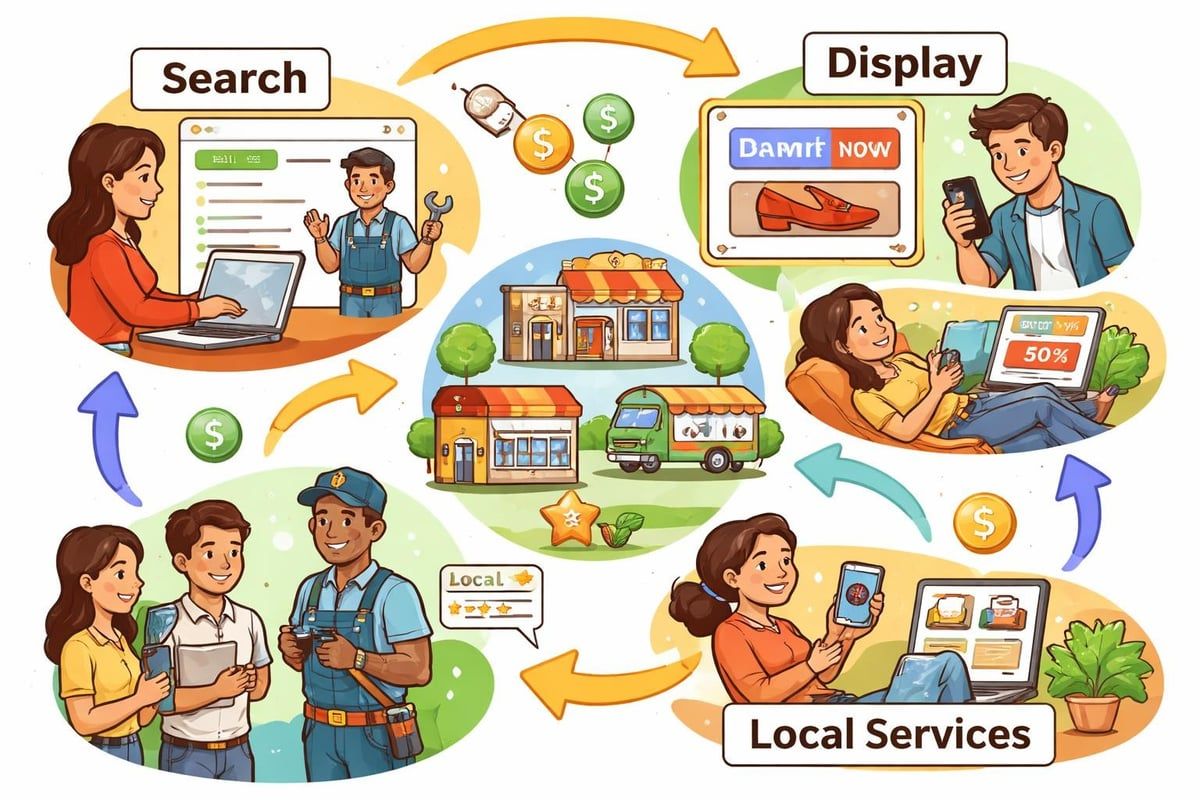
One significant development in 2025 was Google's requirement that businesses must have a verified Google Business Profile to run Local Services ads, impacting millions of small businesses. This change reinforced the critical connection between profile verification and advertising success.
Why Verification Changes Everything
Without a verified Google Business Profile, your advertising options become severely limited.
Here's what verification unlocks:
- Access to Local Services Ads with the Google Guaranteed badge
- Higher ad quality scores leading to lower cost-per-click
- Better ad positioning in local search results
- Customer trust signals that improve conversion rates
- Integration with Google Maps for location-based advertising
Many businesses discover too late that their unverified profile has been preventing them from accessing premium advertising features. Professional Google Business Profile verification services can resolve these issues quickly, ensuring your advertising investment isn't wasted.
Setting Up Your First Campaign
Creating an effective Google Ads campaign requires strategic planning and attention to detail. Following
proven Google Ads best practices ensures you're not burning through your budget on ineffective clicks.
Campaign Structure Fundamentals
Start with a clear campaign structure that separates your services and locations. This allows you to control budgets, test different approaches, and measure what actually drives business results.
Campaign hierarchy for local businesses:
- Account level - Your overall Google Ads account
- Campaign level - Separate campaigns for different service types
- Ad group level - Grouped keywords within each service
- Ad level - Multiple ad variations for testing
- Keyword level - Specific search terms you're targeting
For example, an electrician might create separate campaigns for "Emergency Electrical Repairs" and "Kitchen Rewiring," each with dedicated budgets and geographical targeting.
The PPC advertising specialists at Connect SEO understand how crucial proper setup is for trade businesses, having helped numerous local service providers achieve sustainable ROI.
Keyword Research That Converts
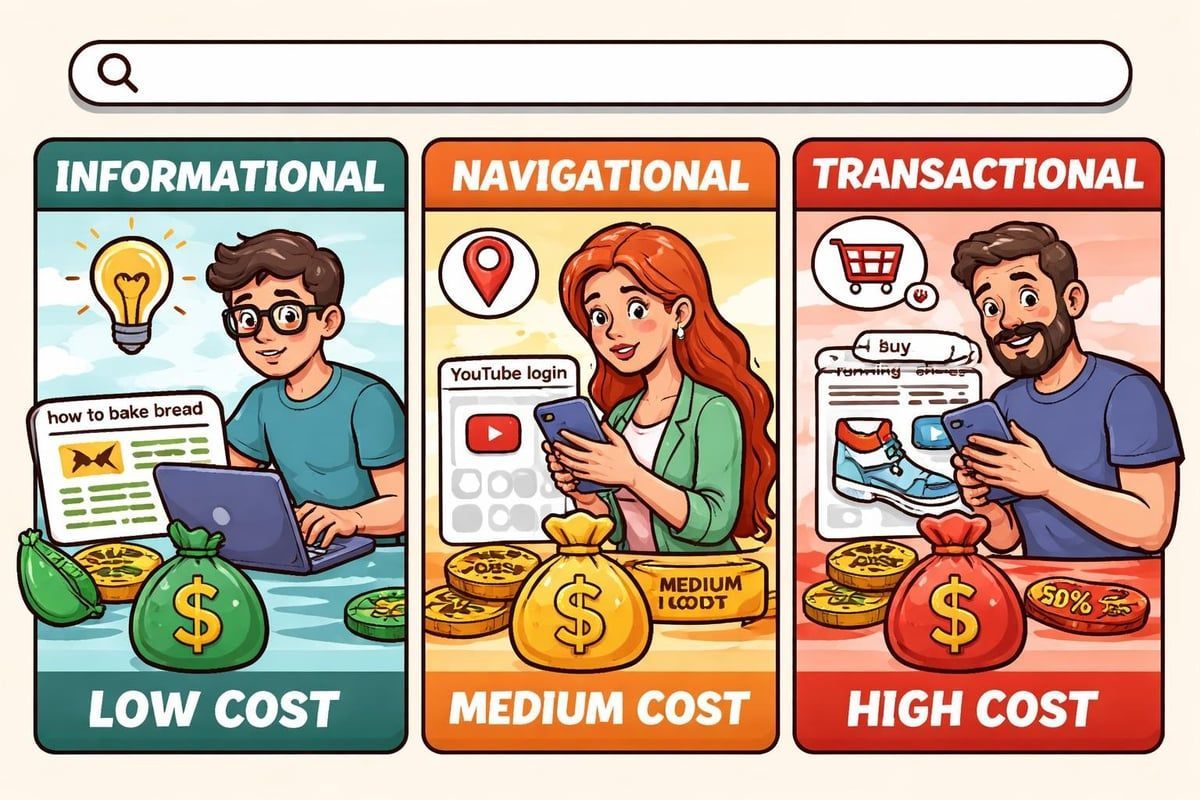
Choosing the right keywords separates profitable campaigns from expensive failures. Focus on commercial intent keywords that indicate someone is ready to hire, not just browsing.
High-intent keywords for trade businesses:
- "emergency [service] near me"
- "[service] cost in [location]"
- "hire [tradesperson] [location]"
- "same day [service] [area]"
- "[service] quotes [location]"
Avoid broad, informational keywords that attract researchers rather than buyers. Someone searching "how to fix a boiler" probably wants DIY advice, whilst "boiler repair engineer near me" signals immediate hiring intent.
Crafting Advertisements That Generate Calls
Your ad copy determines whether searchers click your listing or your competitor's. In local service markets, trust signals and clear value propositions make the difference.
Essential Ad Components
Every Google Ads advertisement consists of headlines, descriptions, and extensions. Each element serves a specific purpose in convincing potential customers to choose your business.
Headline formula for local businesses:
- Headline 1: Service + Location (e.g., "Emergency Plumber Leeds")
- Headline 2: Unique selling point (e.g., "24/7 Same Day Service")
- Headline 3: Trust signal (e.g., "Fully Qualified & Insured")
Your description should address the customer's problem and explain why they should trust you. Mention your experience, guarantees, and what makes your service different from competitors.
Ad Extensions Maximise Visibility
Extensions provide additional information and increase your ad's size on the search results page.
For google ads for business campaigns, these are particularly valuable:
- Call extensions - Display your phone number with click-to-call functionality
- Location extensions - Show your address and distance from the searcher
- Callout extensions - Highlight features like "Free Quotes" or "Same Day Service"
- Sitelink extensions - Direct users to specific service pages
- Structured snippets - List your service areas or specialties
A verified Google Business Profile automatically populates some extensions, creating seamless integration between your organic presence and paid advertising. This is why Google Business Profile management should work hand-in-hand with your advertising strategy.
Budget Management and Bidding Strategies
Understanding how to allocate your advertising budget determines whether
Google Ads becomes a profit centre or an expensive experiment. Most local businesses waste money through poor budget management rather than ineffective targeting.
Starting Budget Recommendations
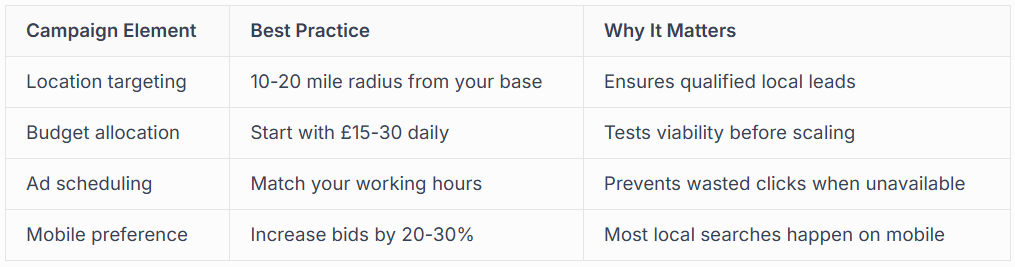
For trade businesses testing google ads for business for the first time, start conservatively and scale based on results. A typical local service campaign needs approximately £300-£600 monthly to gather meaningful data.
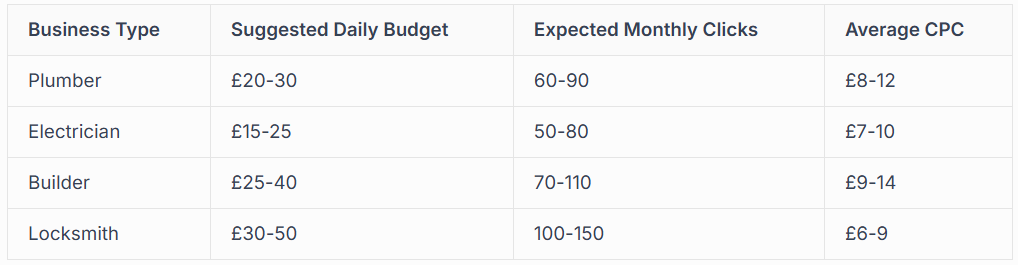
These figures vary significantly by location, with London and Southeast markets typically commanding 30-50% higher costs per click than Northern regions.
Smart Bidding Options
Google offers automated bidding strategies that use machine learning to optimise your bids. However, these require sufficient conversion data to work effectively.
Bidding strategy progression:
- Manual CPC - Start here to understand your market (Weeks 1-4)
- Enhanced CPC - Add automated adjustments (Weeks 5-8)
- Maximise Conversions - Let Google optimise for leads (Week 9+)
- Target CPA - Specify your ideal cost per lead (After 30+ conversions)
Following methodical approaches grounded in proven techniques helps you lower costs and attract higher-quality traffic as your campaigns mature.
Tracking Performance and Conversions
Running google ads for business without proper tracking is like driving blindfolded. You're spending money but have no idea what's working or where improvements are needed.
Essential Conversion Tracking
Set up conversion tracking to measure actual business results, not just clicks and impressions.
For local service businesses, the most valuable conversions include:
- Phone calls lasting longer than 60 seconds
- Contact form submissions from your website
- Directions requests through Google Maps
- Website visits lasting over 2 minutes
Google's conversion tracking code must be installed on your website to measure these actions. Many businesses discover their highest-quality leads come from phone calls, not form fills, making call tracking particularly crucial.
Key Performance Indicators
Monitor these metrics weekly to identify problems early and capitalise on successful elements:
Primary metrics:
- Cost per conversion
- Conversion rate
- Average position
- Quality score
Secondary metrics:
- Click-through rate (CTR)
- Impression share
- Cost per click (CPC)
- Return on ad spend (ROAS)
A case study on local business Google Ads demonstrates how tracking these metrics over the first 30 days reveals crucial insights for optimization.
Optimisation Strategies for Maximum ROI
Launching your campaign is just the beginning. Continuous optimisation separates businesses that achieve exceptional ROI from those that break even or lose money on advertising.
Weekly Optimisation Tasks
Dedicate 30-60 minutes weekly to these improvement activities:
- Review search terms report - Add negative keywords for irrelevant searches
- Test new ad variations - Try different headlines and descriptions
- Adjust bids - Increase bids on high-converting keywords, decrease on poor performers
- Check mobile performance - Ensure mobile ads are converting effectively
- Update ad schedules - Focus budget on hours when you convert best
Many successful local businesses work with Google Ads management services to handle ongoing optimisation whilst they focus on delivering excellent service to customers.
Advanced Optimisation Techniques
Once your campaign is generating consistent conversions, implement these advanced strategies:
Audience layering - Add remarketing lists to target previous website visitors with adjusted bids
Geographic bid adjustments - Increase bids in high-converting postcodes, decrease in areas with poor conversion rates
Competitor targeting - Bid on competitor brand terms (where legally appropriate) to capture comparison shoppers
Ad customizers - Dynamically insert location, pricing, or countdown timers into your ads
The secrets to skyrocket ROI with Google Ads often lie in these advanced techniques that many small businesses never implement.
Integration with Your Google Business Profile
Your
Google Business Profile and google ads for business campaigns work synergistically to dominate local search results. When properly integrated, they create multiple touchpoints with potential customers.
Profile Elements That Enhance Ads
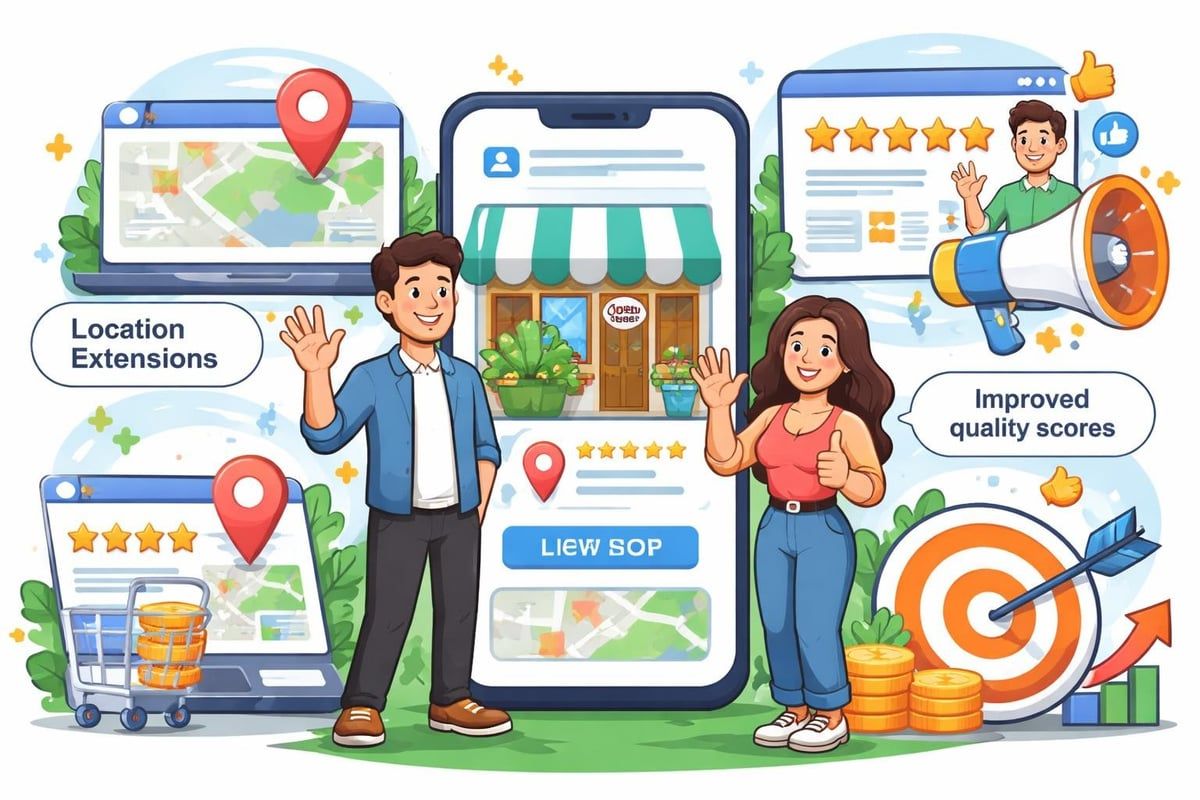
A complete, verified profile improves your advertising performance in several ways:
Trust signals:
- Customer reviews appear alongside your ads
- Response time badges demonstrate reliability
- Google Guaranteed badge available for Local Services Ads
- Verification badge confirms legitimacy
Functionality improvements:
- Automatic population of location extensions
- Integration with Google Maps advertising
- Business hours sync with ad scheduling
- Service menu feeds into ad customization
Businesses without verified profiles often experience significantly higher costs per click and lower conversion rates because they lack these trust signals.
Handling Suspensions and Issues
Profile suspensions can devastate your advertising campaigns overnight.
Common causes include:
- Address changes without proper verification
- Business category violations
- Review policy infractions
- Service area disputes
If your profile faces suspension, professional reinstatement services can resolve issues quickly, minimizing advertising downtime and revenue loss.
Landing Page Optimization
Your advertisement is only half the equation. The landing page where clicks arrive determines whether you convert visitors into paying customers or waste your advertising budget.
Landing Page Essentials
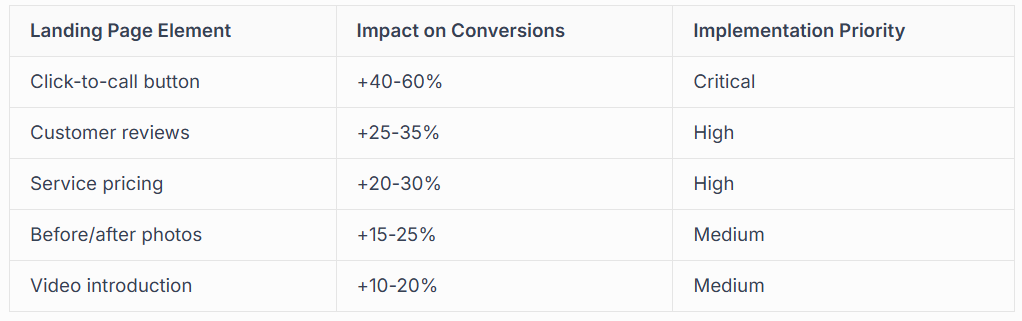
Create dedicated landing pages for each major service rather than sending all traffic to your homepage. This improves relevance and conversion rates substantially.
Must-have landing page elements:
- Clear headline matching your ad's promise
- Prominent phone number above the fold
- Trust indicators - certifications, insurance, reviews
- Service details addressing common questions
- Simple contact form requesting only essential information
- Mobile optimization for seamless phone viewing
Your landing page should load in under 3 seconds. Google penalizes slow pages with lower quality scores, increasing your cost per click and reducing your ad visibility.
Professional website development services can create high-converting landing pages optimized specifically for your Google Ads traffic.
Common Mistakes to Avoid
Learning from others' errors saves thousands of pounds and months of frustration. These mistakes plague many businesses attempting google ads for business campaigns without expert guidance.
Critical Errors and Solutions
Mistake 1: Targeting too broad an area
- Problem: Advertising 50+ miles from your base generates unqualified leads
- Solution: Restrict targeting to your realistic service area (typically 15-25 miles)
Mistake 2: Ignoring negative keywords
- Problem: Paying for clicks from job seekers, DIY researchers, and students
- Solution: Build comprehensive negative keyword lists from search term reports
Mistake 3: Using single keyword ad groups
- Problem: Difficult to maintain adequate quality scores and ad relevance
- Solution: Group 5-15 closely related keywords per ad group
Mistake 4: Setting and forgetting campaigns
- Problem: Market conditions, competition, and seasonality change constantly
- Solution: Schedule weekly optimization sessions or hire management services
Mistake 5: No conversion tracking
- Problem: Cannot identify which keywords, ads, or times generate actual business
- Solution: Implement comprehensive tracking before spending significant budgets
Understanding key Google Ads best practices helps you avoid these pitfalls and build profitable campaigns from the start.
Seasonal Strategies for Trade Businesses
Different trades experience significant seasonal fluctuations in demand. Your google ads for business strategy should adapt to these patterns rather than maintaining static campaigns year-round.
Budget Allocation by Season
Smart businesses increase advertising spend during peak seasons when customers are actively seeking services, and reduce it during slow periods when conversion costs spike.
Typical seasonal patterns:
- Plumbing - Peak: Winter (frozen pipes, boiler failures) / Low: Summer
- Electrical - Peak: Autumn (heating system prep) / Low: Spring
- Building/Extensions - Peak: Spring/Summer / Low: Winter
- Roofing - Peak: After storms, Spring / Low: Mid-winter
- Landscaping - Peak: Spring/Early Summer / Low: Winter
Adjust your daily budgets by 50-100% during peak seasons to capitalize on increased search volume and customer urgency. During slow seasons, reduce budgets by 30-50% and focus on longer-term projects rather than emergency services.
Emergency Service Advertising
Trades offering emergency services should bid aggressively on high-intent keywords during times when emergencies peak:
- Night hours (10pm-6am) - Emergency plumbing, locksmith, electrical
- Extreme weather periods - Roofing, glazing, emergency repairs
- Holiday periods - When other businesses close, capture premium rates
Competitive Analysis and Market Positioning
Understanding your competitive landscape helps you identify opportunities and avoid battles you cannot win with limited budgets.
Researching Your Competitors
Use Google's Auction Insights report to see which businesses compete for the same keywords.
This reveals:
- Competitors' impression share percentages
- How often you appear above them in results
- Their average position compared to yours
- Overlap rate (how often you compete directly)
Don't try to outbid large national companies on broad terms. Instead, focus on location-specific, service-specific long-tail keywords where you can achieve top positions affordably.
Winning strategies against larger competitors:
- Emphasize local credentials and community involvement
- Highlight faster response times and personal service
- Target hyperlocal neighborhoods they ignore
- Bid on service combinations they don't offer
- Leverage your Google Business Profile reviews and verification
Working with PPC specialists who understand trade businesses provides insights into competitive positioning that generic agencies miss.
Scaling Successful Campaigns
Once you've identified profitable keywords and ad combinations, strategic scaling multiplies your results whilst maintaining healthy ROI.
Expansion Strategies
Grow your advertising presence through these proven methods:
Geographic expansion:
- Gradually extend your service radius by 5-10 miles
- Test new towns or districts individually
- Monitor travel time impact on profitability
Service expansion:
- Add related services your existing customers need
- Create campaigns for higher-margin specialized work
- Test seasonal services during appropriate periods
Increased budget allocation:
- Increase daily budgets by 20-30% monthly on winning campaigns
- Maintain consistent ROI by monitoring cost per acquisition
- Reinvest profits from successful campaigns into expansion
Avoid the temptation to double or triple budgets overnight. Gradual scaling allows you to maintain quality scores and prevents cost-per-click inflation from sudden demand surges.
Google Ads for business represents one of the most powerful tools available for local service providers to generate consistent, high-quality leads. The key to success lies in proper setup, continuous optimization, and most importantly, maintaining a verified Google Business Profile that builds customer trust and unlocks premium advertising features. If you're ready to dominate your local market through strategic paid advertising combined with expert profile management, Connect SEO Ltd offers comprehensive solutions designed specifically for UK trade businesses, backed by real-world experience and proven local SEO success.