Proven ways to improve google ads performance in 2026
Have you noticed your Google Ads campaigns are still not delivering the results you hoped for, even as you invest more time and budget? It can feel frustrating, especially when every click matters to your business goals.
You are not alone. Many advertisers struggle with this, but the good news is you can improve Google Ads performance by applying the latest strategies proven to work in 2026. In this article, we will guide you through seven actionable steps designed to boost your targeting, ad copy, bidding, and tracking.
Get ready to unlock higher returns, outpace your competitors, and turn every pound spent into measurable results. Let us dive in and transform your Google Ads together.
Understanding Google Ads Performance Metrics
Measuring the right metrics is at the heart of every effort to improve google ads performance. It’s easy to get caught up in surface numbers, but true success comes from understanding the KPIs that actually drive results.
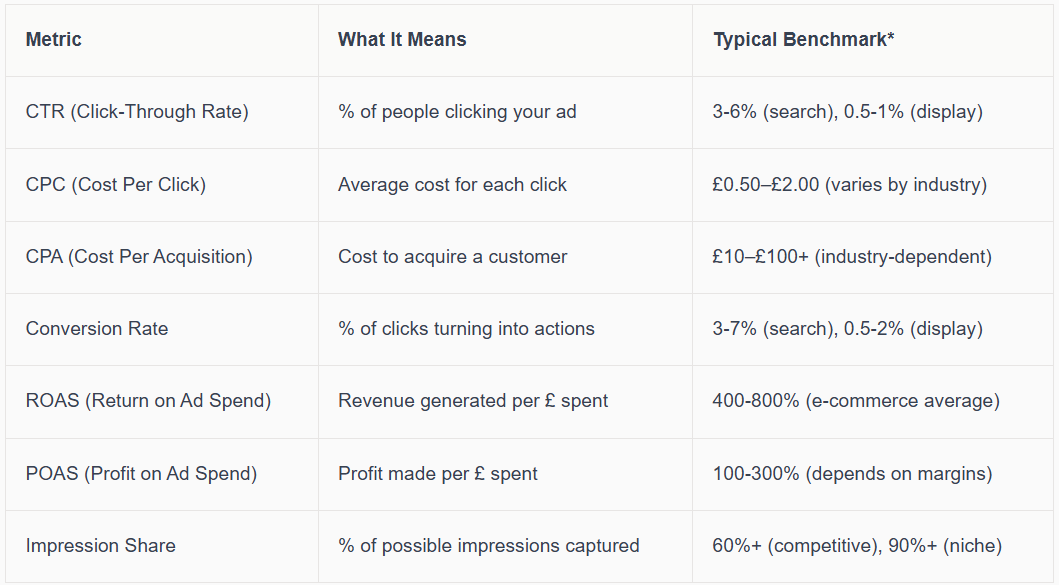
Benchmarks can vary, so always compare with your industry. For the latest figures, see Google Ads performance benchmarks 2025.
Why do these numbers matter so much if you want to improve Google Ads performance? Each metric tells a different part of your campaign’s story. For example, if you have a high CTR but a low conversion rate, your ads are engaging, but something’s off after the click. Maybe your landing page needs work, or your offer isn’t clear.
Here’s a common pitfall: relying solely on vanity metrics like impressions or clicks. These numbers might look impressive, but they don’t always reflect meaningful progress. Focusing only on clicks without considering conversions or ROI can leave you blind to what really helps improve Google Ads performance.
It’s also important to see how metrics work together. If your CPA is rising while your ROAS is falling, it’s time to dig deeper. Maybe your targeting is too broad, or your bids are too high for the keywords you’re chasing.
Luckily, Google Ads in 2026 offers advanced tools to help you improve Google Ads performance. Automation features can track conversions across devices, while smarter dashboards make it easier to spot trends and issues. Tools like enhanced conversion tracking and predictive analytics give you a fuller picture so that you can make smarter decisions.
Competitor data is another valuable resource. For low-competition keywords, aim for an Impression Share of 90-95%. For highly competitive terms, hitting 60% or above is a strong result.
By focusing on meaningful KPIs, using up-to-date tools, and benchmarking against your industry, you’ll have a clear path to improve google ads performance and drive better results for your business.
7 Proven Ways To Improve Google Ads Performance In 2026
Are you ready to supercharge your campaigns and truly improve google ads performance this year? Let’s dive into the practical, actionable strategies that will help you outperform competitors and get the results you deserve. Each step below is designed to be simple, effective, and based on what’s working for top advertisers in 2026.

1. Refine Audience Targeting with Advanced Segmentation
To improve google ads performance, start by getting laser-focused with your audience targeting. In 2026, Google’s AI-powered audience segments and predictive analytics make it easier than ever to reach the right people at the right time.
Tap into first-party data and build high-intent lists using Customer Match. This lets you target users who have already interacted with your brand, making your ads more relevant and increasing conversions. Combine this with in-market, affinity, and custom intent audiences to cover every stage of the customer journey.
For example, segment users who have abandoned their carts and serve them tailored remarketing ads. This simple tweak can significantly improve google ads performance by reconnecting with users ready to buy.
Don’t forget to use demographic exclusions to avoid wasting budget on low-value groups. Monitor audience overlap so you’re not bidding against yourself. Adjust bids for your best-performing segments to maximise results.
A recent study by Benjamin Mangold confirms that advanced targeting options can dramatically improve Google Ads performance. The key is to continually test, monitor, and refine your segments as your audience evolves.
2. Optimise with Negative and Long-Tail Keywords
Negative and long-tail keywords are your secret weapons to improve Google Ads performance. Regularly reviewing your search term reports helps you spot irrelevant queries that eat up your budget.
Add negative keywords to filter out traffic that’s unlikely to convert. For example, if you’re running commercial campaigns, exclude terms like “free” or “review” to focus on buyers, not browsers.
Long-tail keywords, typically three to five words, attract users with higher intent and less competition. This makes it easier to improve Google Ads performance, as you’re reaching people who are closer to making a decision.
Here’s a quick breakdown:
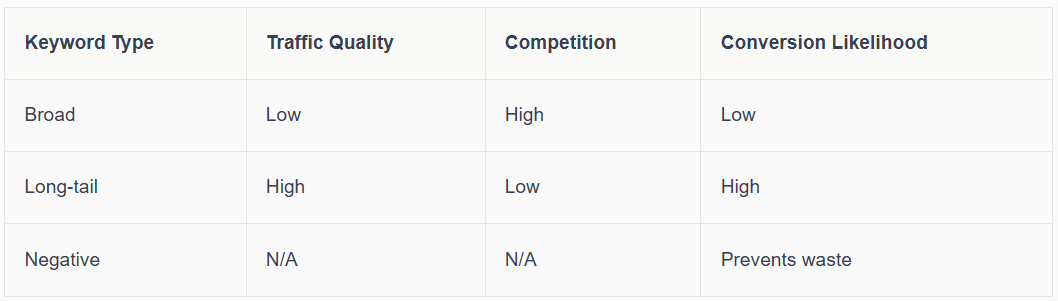
Use Google Keyword Planner alongside your search terms report to discover new opportunities. Trends shift quickly, so refine your keyword lists regularly to consistently improve google ads performance over time.
3. Enhance Ad Copy and Creative for Higher CTR
Your ad copy plays a crucial role in helping you improve google ads performance. Crafting compelling headlines and descriptions that speak directly to user intent is a must.
Leverage dynamic keyword insertion to make your ads more relevant and engaging. Responsive Search Ads (RSAs) allow you to test multiple variations, so Google can automatically show the best-performing combinations.
Try including strong calls-to-action and unique selling points in your ads. For instance, highlight limited-time offers or showcase exclusive features to grab attention and encourage clicks.
Here are some best practices for ad copy:
- Focus on clear, benefit-driven headlines.
- Use A/B testing to fine-tune messaging.
- Monitor ad strength and quality scores regularly.
According to Nutshell, focusing on headline quality and running frequent A/B tests are top ways to improve google ads performance. Remember to review your results and iterate based on what works best for your audience.
4. Improve Landing Page Experience and Site Speed
Optimising your landing pages is essential if you want to improve google ads performance. Fast, mobile-friendly pages that match your ad content keep users engaged and boost conversions.
Keep calls-to-action clear and minimise distractions. Regularly update your content to ensure it aligns with user expectations and any current promotions. Companies with mobile site speeds under three seconds enjoy much higher conversion rates.
Consider this: even a one-second delay in load time can reduce conversions by up to 20 percent. Implement server-side tracking to improve both data accuracy and page speed.
Use Google’s PageSpeed Insights and Core Web Vitals to monitor and enhance your site. Improving landing page experience is one of the simplest ways to improve google ads performance, as it directly impacts conversion rates and user satisfaction.
5. Leverage Automated Bidding and Smart Campaigns
To improve google ads performance at scale, embrace Google’s automated bidding strategies. Smart Bidding options like Target CPA and Target ROAS use machine learning to adjust bids in real time, maximising conversions for your budget.
Switching from manual to automated bidding not only saves time but can also unlock better results. Set clear goals for automation, such as a specific CPA or ROAS target, and let Google’s algorithms do the heavy lifting.
Portfolio bid strategies allow you to group campaigns with similar objectives, making it easier to improve google ads performance across multiple products or services. Regularly monitor performance and tweak automation settings as needed, especially as algorithms evolve in 2026.
For more practical advice, you might find these Effective Google Ads Management Tips helpful, especially if you’re aiming for continuous optimisation and up-to-date best practices.
Advanced bidding not only increases impression share but can also lower your CPA, freeing up budget for further growth.
6. Monitor Competitors and Adapt Strategies
Keeping an eye on your competitors is a smart way to improve google ads performance. Use tools like Google Ads Transparency Center to review rival ad creatives and placements.
Analyse competitors’ keyword strategies to spot gaps and opportunities. Benchmark your copy and offers against industry leaders, and adjust your messaging or bids to stand out on high-value terms.
Auction insights reports are invaluable for understanding your position in the ad landscape. Stay agile and ready to adapt as competitors change tactics or new trends emerge.
Regular competitor analysis can lead to a higher impression share and lower CPC, which in turn helps you improve Google Ads performance. Make it part of your routine to review what others are doing and adjust your strategy for the best results.
7. Track and Attribute Conversions Accurately
Accurate tracking is fundamental if you want to improve Google Ads performance consistently. Implement server-side tracking using tools like Google Tag Manager or Stape Gateway to overcome browser restrictions and ad blockers.
Connect Google Ads with Google Analytics 4 for unified reporting and deeper insights. Enhanced conversion tracking lets you capture offline and cross-device actions, giving you a full picture of what’s working.
Segment your audiences based on post-click actions for smarter remarketing. Monitor conversion paths to identify where users drop off and optimise those touchpoints. Server-side tracking not only improves data accuracy but also helps with compliance as privacy regulations change.
Regularly audit your tracking setup to ensure you’re capturing all relevant conversions. This ongoing attention will make a real difference as you continue to improve Google Ads performance in 2026.
Integrating Google Ads with Your Broader Marketing Strategy
Is your business running Google Ads in a silo, separate from your other channels? If so, you might be missing out on a huge opportunity to improve Google Ads performance. By weaving your Google Ads efforts into your wider marketing strategy, you can amplify results and create a seamless experience for your audience.

Why integration matters?
When you align your Google Ads with SEO, content marketing, and social media, you unlock powerful synergies. Each channel feeds the others with valuable data. This cross-pollination helps you improve google ads performance by ensuring every campaign is informed by the bigger picture.
Share keyword data and audience insights
Your paid search campaigns generate a wealth of keyword and audience data. Sharing this data with your SEO and content teams lets you spot trends and high-converting terms faster. For example, if a certain keyword drives strong conversions in Google Ads, it likely has potential for organic search, too. This feedback loop empowers all channels to perform better.
If you want a solid foundation for this approach, check out the Beginner's Guide to Google Ads for practical integration tips.
PPC data to inform SEO and content
Let’s say you notice a particular phrase is delivering great results in paid campaigns. Why not create blog posts, landing pages, or social media content focused on this theme? This strategy not only helps improve Google Ads performance, but also boosts your visibility and authority across search engines.
Consistent messaging and branding
Consistency is key. Make sure your brand voice and message are aligned wherever your audience encounters you. Whether someone clicks a Google Ad, finds you on social media, or reads your blog, they should experience a unified journey. This builds trust and improves conversion rates.
If your ads are not converting as expected, it might be due to inconsistencies between your channels. To learn more, explore common Reasons Google Ads Don't Convert and how to fix them.
Coordinate your campaigns
Try these strategies to make the most of integration:
- Run synchronised promotions across Google Ads, email, and social media.
- Use retargeting to re-engage users who interacted with your content, wherever they are.
- Leverage lookalike audiences from your best-performing segments.
Google Business Profile for local success
For local businesses, integration goes a step further. Pair your Google Ads with an optimised Google Business Profile. This ensures your ads, local listings, and organic presence all pull in the same direction. The result? You improve Google Ads performance and attract more nearby customers.
Bringing it all together, integrating Google Ads with your wider marketing strategy is not just a nice-to-have. It is a proven way to make every pound you spend work harder and achieve better results for your business.
Expert Support: When to Partner with a Google Ads Specialist
Even the most dedicated business owners can hit a wall when trying to improve Google Ads performance. If you feel like your campaigns are stuck or your results have plateaued, it might be time to consider expert support. A specialist brings fresh eyes, technical know-how, and up-to-date tactics to get your ads back on track.
One clear sign you need help is when your Google Ads budget is not being fully utilised, or your ads are not delivering as expected. Issues like these can be tricky to diagnose, but a professional can quickly pinpoint the cause and suggest solutions. For example, you might find this guide on Fixing Google Ads Not Spending helpful if you're struggling to get your budget working efficiently.
A Google Ads specialist can offer several advantages. They handle advanced tracking setups, keep your campaigns optimised daily, and ensure you stay compliant with changing advertising policies. If your account is complex or you manage multiple brands or locations, their expertise can save you both time and money.
Local businesses especially benefit from expert support. Specialists can help resolve Google Business Profile suspensions, manage negative reviews, and ensure your ads reach the right local audience. This is vital if you want to improve Google Ads performance in a competitive area.
When choosing a Google Ads partner, look for proven experience, transparent reporting, and a track record of results. The best agencies offer integrated services, regular audits, and strategic reviews, so your campaigns never stagnate. They should be able to explain their process clearly and show how they plan to improve google ads performance for your unique needs.
Not sure if you’re ready to commit? Many agencies offer free audits or consultations, giving you a risk-free way to assess their approach. As your business grows, consider whether DIY management still makes sense, or if partnering with a specialist could unlock new growth.