
Google Advertising Cost Guide for UK Businesses in 2026
Understanding the google advertising cost landscape can feel overwhelming when you're trying to grow your local business. Whether you're a tradesperson, service provider, or retail business in the UK, knowing what to expect from your advertising budget helps you make smarter marketing decisions. The good news is that Google's advertising platform offers flexibility for businesses of all sizes, and with the right approach, you can achieve excellent returns without breaking the bank. Let's explore what you really need to know about advertising costs, how they're calculated, and how to make every pound count.
How Google Determines Your Advertising Cost
Google uses an auction-based system that determines your advertising expenses based on several dynamic factors. Unlike traditional advertising where you pay a flat rate, Google Ads operates on a
pay-per-click (PPC) model, meaning you only pay when someone actually clicks your ad.
The primary factor influencing your google advertising cost is the competitiveness of your industry and the keywords you're targeting. According to industry analysis on advertising costs, sectors like legal services and insurance typically see higher costs per click, while local service businesses often enjoy more reasonable rates.
Quality Score and Its Impact
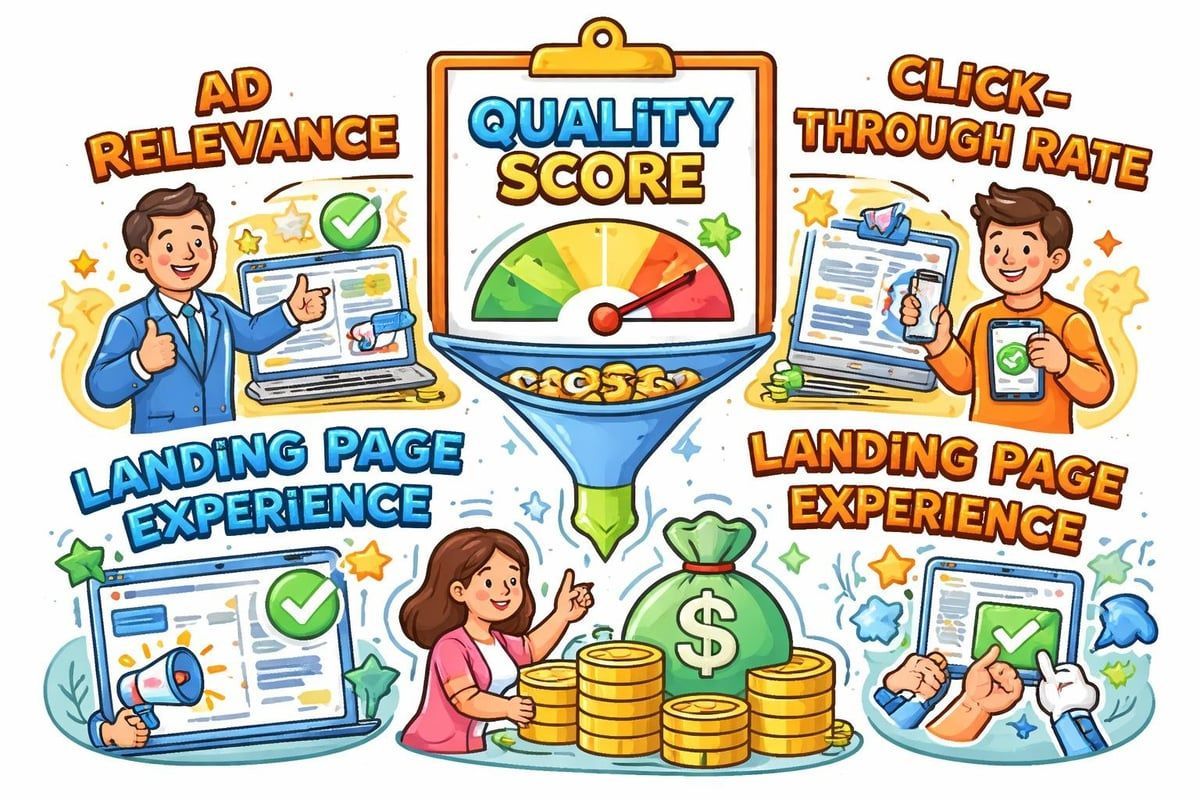
Your Quality Score plays a crucial role in determining what you actually pay. This metric, rated from 1 to 10, evaluates:
- Relevance of your ad to the search query
- Landing page experience and loading speed
- Expected click-through rate based on historical performance
- Ad format and extension usage
A higher Quality Score means Google rewards you with lower costs and better ad positions. This is where businesses can gain a significant advantage even with smaller budgets.
Geographic Targeting and Local Competition
Where you advertise significantly affects your costs. Understanding how location impacts pricing reveals that major cities like London typically command higher costs due to increased competition. However, targeting specific neighborhoods or suburbs can help you reach qualified customers at lower costs.
For businesses focused on local visibility, combining Google Ads with a verified Google Business Profile creates a powerful one-two punch that maximizes your local presence.
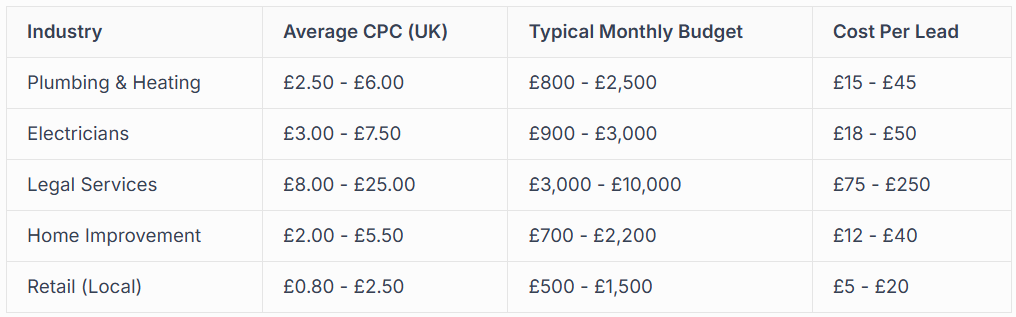
Average Costs Across Different Industries
Let's break down what businesses are actually spending. The google advertising cost varies dramatically depending on your sector and target audience.
Building Your Initial Advertising Budget
Starting with
Google Ads doesn't require thousands of pounds. Many successful local businesses begin with modest budgets and scale up based on results.
Recommended Starting Points
For trade businesses and local service providers, we recommend:
- Test budget: £300-£500 per month for the first 60 days
- Growth budget: £800-£1,500 once you've optimized campaigns
- Scaling budget: £2,000+ when you've proven ROI
The key is starting small enough to learn without risking too much, but large enough to gather meaningful data. Research shows that average advertising expenditures often correlate with industry competition levels.
Daily vs Monthly Budgeting
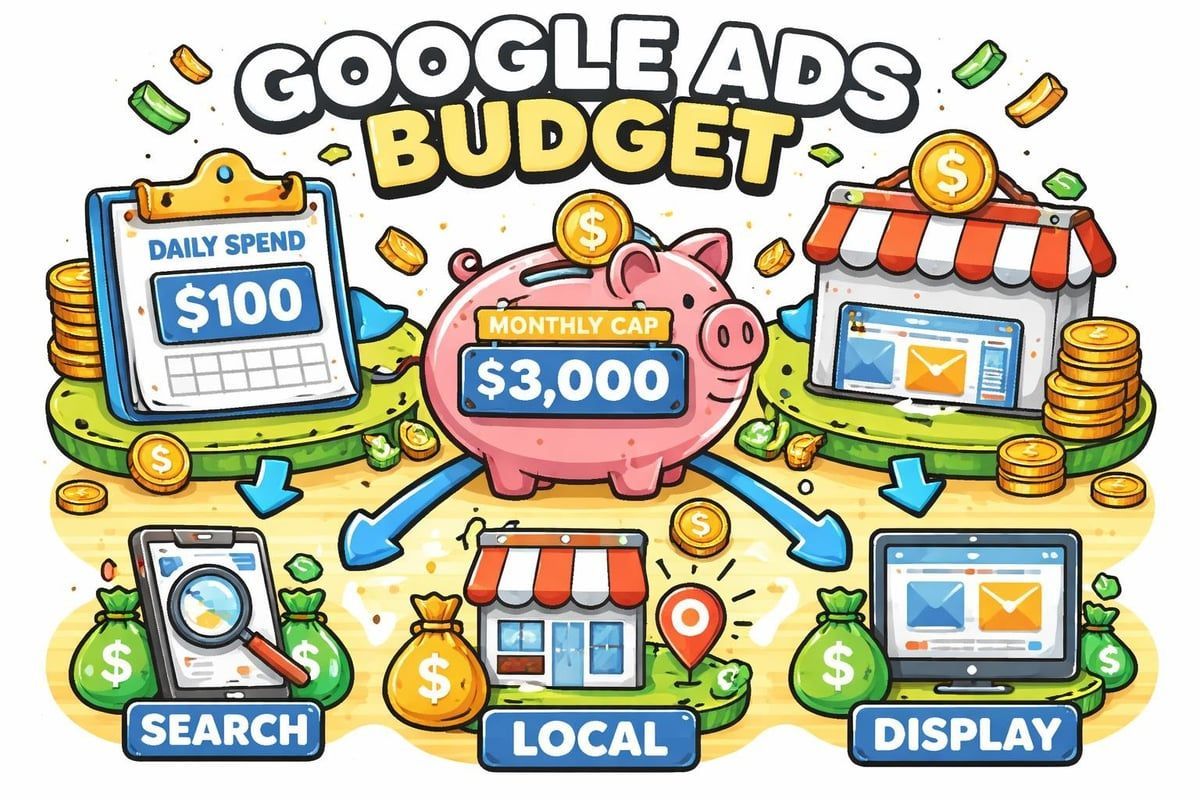
Google lets you set daily budgets, which provides excellent control over your spending. Here's how to calculate:
- Monthly budget divided by 30.4 (average days per month) = Daily budget
- Example: £900 monthly budget = £29.60 daily budget
- Google may spend up to 2x your daily budget on high-traffic days
- Monthly total never exceeds your monthly cap
This flexibility ensures you're visible during peak search times while maintaining budget control.
Factors That Increase or Decrease Your Costs
Understanding what drives your google advertising cost up or down helps you make strategic decisions.
Cost-Increasing Factors
High competition keywords naturally cost more. If you're bidding on "emergency plumber London," expect higher costs than "boiler service Croydon."
Poor landing page experience triggers lower Quality Scores, forcing you to pay more for the same positions. Fast-loading pages with clear calls-to-action significantly reduce costs.
Broad targeting wastes budget on irrelevant clicks. Being too general with your audience selection or keyword match types drives up costs without improving results.
Peak timing affects pricing. Monday mornings and weekday business hours typically see higher competition and costs for B2B services.
Cost-Reducing Strategies
Use long-tail keywords that are more specific and less competitive- Implement negative keywords to prevent irrelevant searches
- Schedule ads during high-conversion times only
- Leverage location extensions to improve local relevance
- Create tightly themed ad groups for better Quality Scores
Many businesses working with Google Ads specialists discover they can reduce costs by 30-40% through proper optimization.
Campaign Types and Their Cost Implications
Different Google advertising formats carry different cost structures. Choosing the right mix for your business objectives matters tremendously.
Search Campaigns
Traditional text ads appearing in search results remain the most popular choice. You're charged only when someone clicks, and costs vary based on keyword competitiveness.
Best for: Businesses wanting immediate leads and conversions Average CPC: £2-£8 for most local services Minimum budget: £10-£15 daily
Display Network Campaigns
Visual ads appearing on websites across Google's network typically cost less per click but may generate fewer immediate conversions.
Best for: Brand awareness and retargeting Average CPC: £0.50-£2.50 Minimum budget: £5-£10 daily
Local Services Ads
Pay-per-lead model specifically for service businesses. You're charged only when customers contact you directly through the ad.
Best for: Home services, professional services Average cost per lead: £5-£30 Requires: Background checks and license verification
For tradespeople looking to maximize local visibility, Local Services Ads combined with traditional search campaigns often delivers the best results.
Real-World Cost Examples for Local Businesses
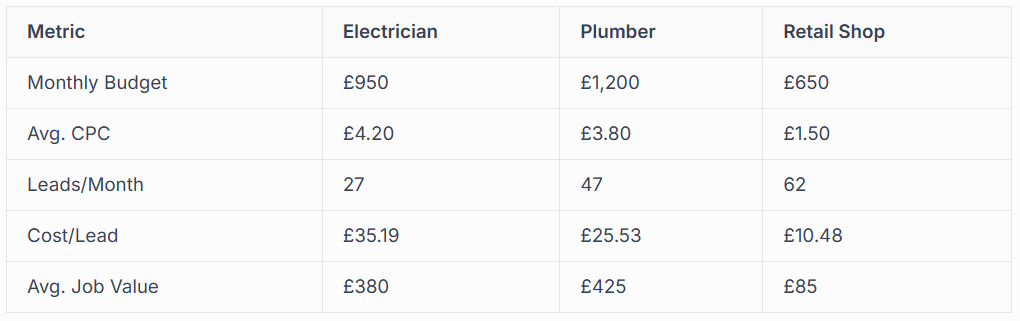
Let's look at actual scenarios to understand google advertising cost in practice.
Case Study: Independent Electrician
Monthly budget: £950 Average CPC: £4.20 Clicks per month: 226 Conversion rate: 12% Leads generated: 27 Cost per lead: £35.19
This electrician generates quality leads at a sustainable cost, with each job averaging £250-£600 in revenue. The return on investment is clear and measurable.
Case Study: Local Plumber
Monthly budget: £1,200 Average CPC: £3.80 Clicks per month: 316 Conversion rate: 15% Leads generated: 47 Cost per lead: £25.53
Higher conversion rates through better landing pages and ad copy reduced this plumber's cost per lead significantly.
Optimizing Your Return on Investment
Getting the most from your advertising budget requires ongoing attention and refinement. The google advertising cost matters less than the return you generate from that investment.
Conversion Tracking Essentials
Without proper tracking, you're flying blind. Set up:
- Phone call tracking to measure calls from ads
- Form submission tracking for online inquiries
- Conversion values to understand revenue per click
- Google Analytics integration for deeper insights
Understanding which keywords and ads generate actual business allows you to shift budget toward what works and eliminate what doesn't.
Landing Page Optimization
Your landing page can make or break campaign profitability. Key elements include:
- Fast loading speed (under 3 seconds)
- Mobile-friendly design for smartphone users
- Clear headline matching your ad copy
- Prominent phone number and contact form
- Trust signals like reviews and certifications
Businesses that invest in professional website development typically see 40-60% better conversion rates from their paid traffic.

Common Mistakes That Waste Your Budget
Many businesses overspend on Google Ads due to avoidable errors. Being aware of these pitfalls helps you maximize every pound.
Targeting Too Broadly
Trying to reach everyone means you'll connect with no one effectively. Narrow your geographic targeting to areas you actually serve. Use specific keywords that reflect buyer intent rather than general research queries.
Ignoring Negative Keywords
Without negative keywords, you'll pay for irrelevant clicks. An electrician should exclude terms like "electrical engineering degree" or "DIY electrical."
Setting and Forgetting
Google Ads requires regular monitoring and adjustment. Markets change, competitors adjust their strategies, and seasonal factors affect performance. Weekly reviews and monthly optimization sessions keep campaigns performing efficiently.
Not Testing Ad Variations
Running only one ad version means you'll never know what resonates best. Create 2-3 ad variations per ad group and let Google's system identify winners.
Maximizing Local Presence Beyond Paid Ads
While understanding google advertising cost is important, combining paid advertising with organic visibility creates the strongest market position. Your
Google Business Profile verification establishes foundational local presence.
The Synergy Effect
Businesses appearing in both paid ads and organic/map results enjoy:
- Higher credibility with potential customers
- Increased click-through rates across all listings
- Better overall visibility dominating search results
- Lower cost per acquisition from combined channels
A verified, optimized Google Business Profile supports your paid advertising by building trust and providing additional touchpoints. When potential customers see your business multiple times on one search results page, conversion rates increase significantly.
Building Long-Term Value
Paid advertising delivers immediate results, but combining it with strong organic presence builds sustainable growth. Elements that complement your paid strategy include:
- Regular Google Business Profile posts sharing updates and offers
- Collecting and responding to customer reviews
- Maintaining accurate business information across all platforms
- Publishing helpful content that establishes expertise
Many successful local businesses work with specialists who understand both paid advertising management and organic local SEO, creating integrated strategies that maximize total visibility.
Planning for Seasonal Variations
Your google advertising cost and required budget may fluctuate throughout the year based on demand patterns.
Understanding Your Busy Seasons
Different industries experience peak demand at different times:
Plumbers: Winter months (heating emergencies) and spring (annual servicing) Electricians: Summer (outdoor projects) and pre-Christmas (indoor projects) Landscapers: Spring through early autumn HVAC: Extreme weather periods
Adjust your budgets to capitalize on high-demand periods while maintaining presence during slower months.
Budget Allocation Strategy
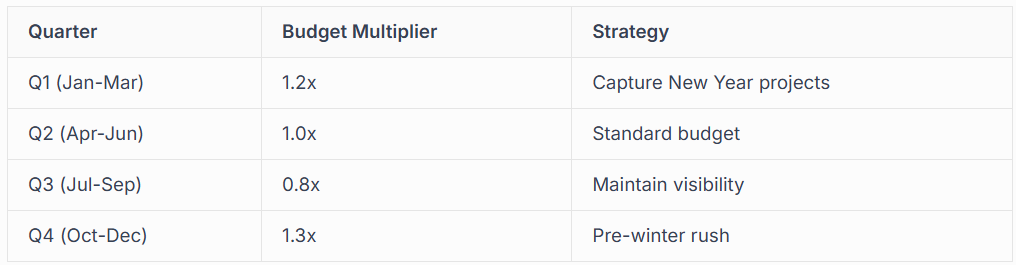
This flexible approach ensures you're competitive when customers are actively searching while conserving budget during natural slow periods.
Agency Management vs Self-Management Costs
When calculating total google advertising cost, consider whether you'll manage campaigns yourself or hire expertise.
Self-Management Considerations
Pros:
- No agency fees (typically 15-20% of ad spend)
- Direct control over daily decisions
- Immediate changes when needed
Cons:
- Steep learning curve and time investment
- Potential for costly mistakes
- Missing optimization opportunities
Professional Management Benefits
Working with
experienced PPC specialists provides:
- Advanced optimization techniques reducing wasted spend
- Industry benchmark knowledge and best practices
- Time savings allowing you to focus on your business
- Access to professional tools and reporting
- Strategic guidance based on proven results
Many businesses find that professional management pays for itself through improved performance and reduced wasted spend. A skilled manager might charge £400-£800 monthly but save you £600-£1,200 through better optimization.
Measuring Success Beyond Cost Per Click
While monitoring your google advertising cost matters, focusing solely on CPC misses the bigger picture. Return on ad spend (ROAS) and customer lifetime value provide much better success indicators.
Key Performance Indicators
Track these metrics for true campaign evaluation:
- Cost per conversion (not just cost per click)
- Conversion rate from clicks to leads
- Return on ad spend (revenue divided by cost)
- Customer acquisition cost including all marketing expenses
- Lifetime customer value for repeat business potential
A plumber paying £6 per click might initially worry about costs, but if each click has a 15% chance of becoming a £400 job, the mathematics work beautifully. That's £40 in ad spend generating £400 in revenue-a 10x return.
Attribution and Multi-Touch Analysis
Customers rarely convert on their first interaction. They might:
- See your ad on Monday
- Visit your website on Tuesday
- Check your Google Business Profile on Wednesday
- Call you on Thursday
Understanding this journey helps you value each touchpoint appropriately rather than attributing everything to the final click.
Getting Started With Confidence
Now that you understand the google advertising cost landscape, you're ready to make informed decisions about your marketing investment. Start with a clear budget based on your business goals, implement proper tracking from day one, and commit to regular optimization.
Remember that successful advertising isn't about spending the least-it's about generating the best return on your investment. A well-managed campaign with a £1,000 monthly budget will outperform a poorly managed £3,000 campaign every time.
The businesses seeing the best results in 2026 are those combining multiple visibility strategies. They maintain active Google Ads campaigns, keep their Google Business Profiles verified and updated, and create helpful content that builds authority in their local market. This integrated approach maximizes visibility while controlling costs.
Whether you're just starting with digital advertising or looking to improve existing campaigns, understanding these fundamentals puts you ahead of competitors who simply guess at what works. With clear goals, proper tracking, and consistent optimization, Google Ads becomes a reliable growth engine for your business.
Understanding google advertising cost is just one piece of building a successful local presence. The real magic happens when you combine smart paid advertising with a strong organic foundation. At Connect SEO Ltd, we specialize in helping UK businesses maximize their visibility through verified Google Business Profiles and optimized advertising campaigns. Our team handles everything from verification to ongoing optimization, so you can focus on serving customers while we ensure they can find you. Ready to dominate your local market? Connect SEO Ltd offers comprehensive solutions that get your business visible and keep it there.