
Google Ads Cost: What UK Businesses Pay in 2026
Understanding what you'll pay for Google Ads is crucial for any UK business looking to attract customers online. Whether you're a tradesperson wanting to appear in local searches or a service provider competing in a crowded market, knowing the google ads cost upfront helps you plan effectively and avoid surprises. The reality is that advertising costs vary dramatically based on your industry, location, competition, and how well you manage your campaigns. In 2026, businesses across the UK are seeing diverse pricing structures, and getting to grips with these numbers can make the difference between a profitable campaign and wasted budget.
What Determines Google Ads Cost in 2026
The google ads cost you'll encounter depends on several interconnected factors that Google's auction system evaluates in real-time. Unlike traditional advertising where you pay a fixed rate, Google Ads operates on a pay-per-click model where you're charged each time someone clicks your advertisement.
Industry competition plays the most significant role in pricing. Sectors like legal services, insurance, and finance typically see the highest costs per click because the customer lifetime value is substantial. Meanwhile, trades and local services often benefit from more reasonable rates, particularly when targeting specific geographic areas.
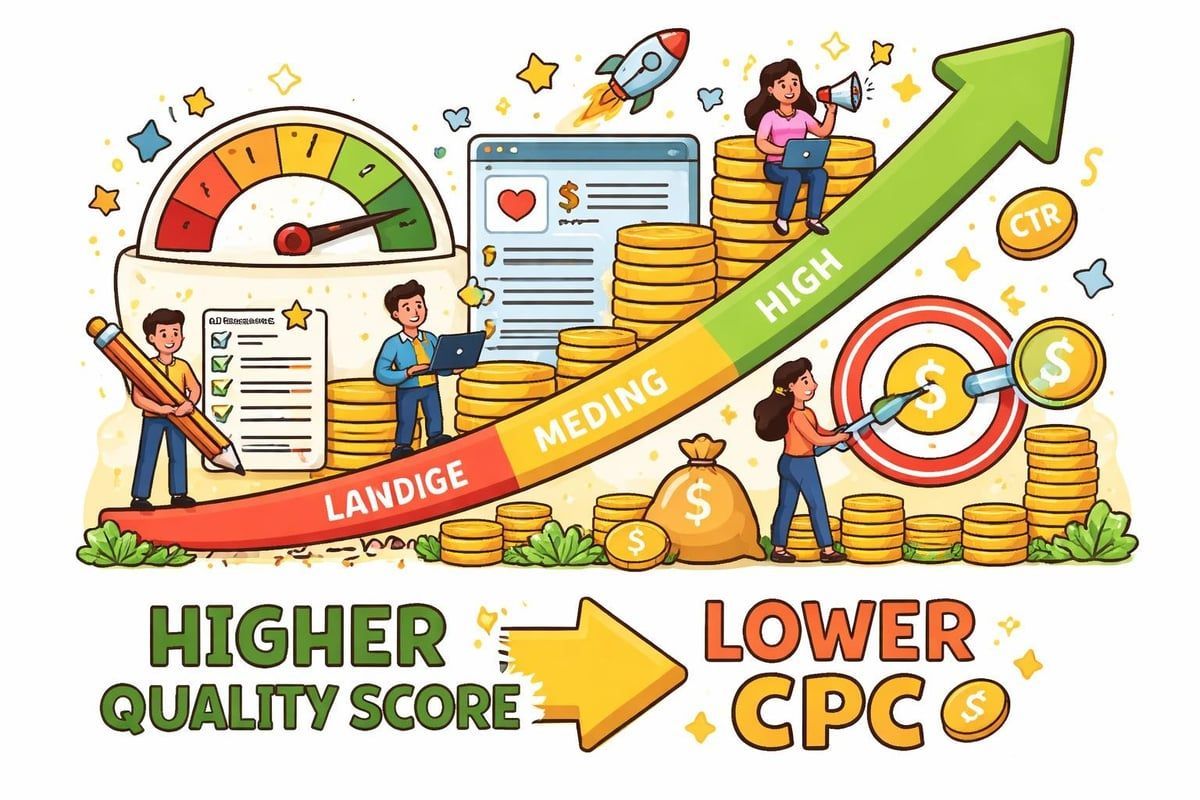
Your Quality Score directly impacts what you pay. This metric evaluates your ad relevance, landing page experience, and expected click-through rate. A higher Quality Score means Google rewards you with lower costs and better ad positions. It's worth investing time in creating compelling ad copy that matches your keywords and landing pages.
Geographic targeting significantly influences costs. Advertising in central London will typically cost more than targeting smaller towns or rural areas. For businesses offering local services through Google Business Profile, combining organic visibility with paid ads creates a powerful one-two punch.
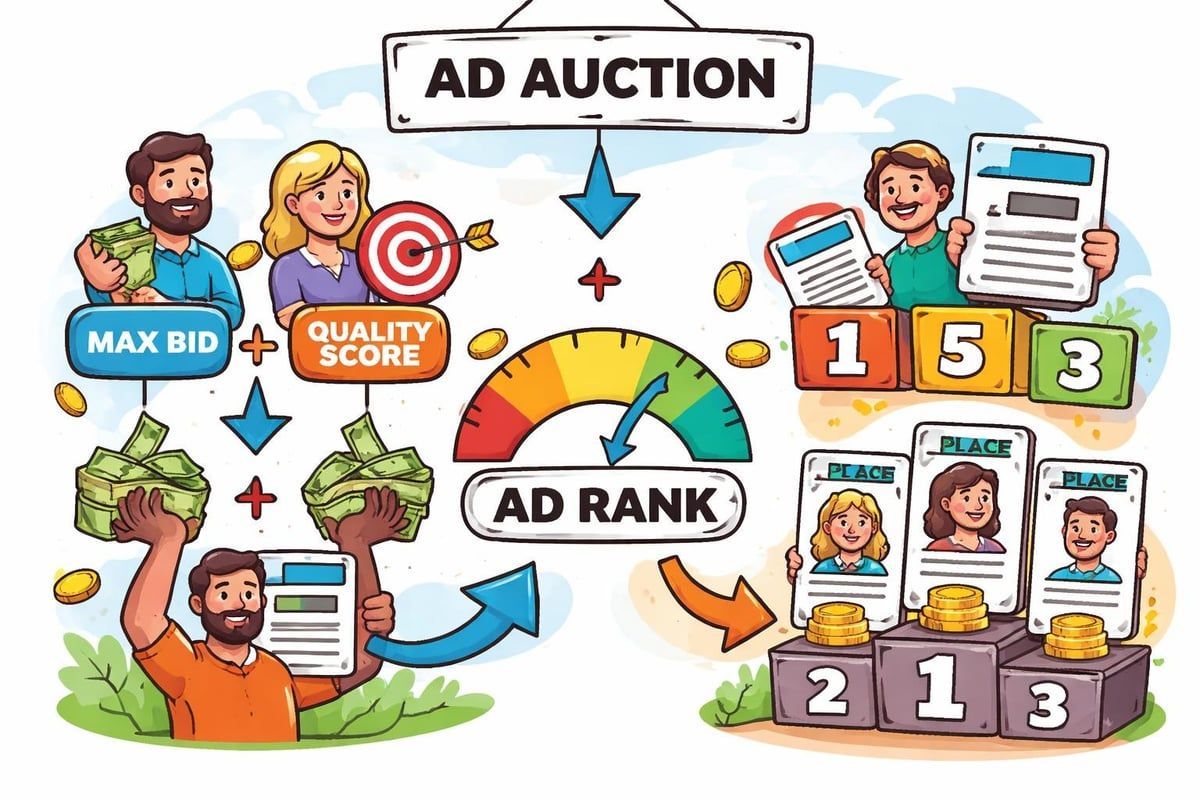
The Auction System Explained
Google doesn't simply award ad positions to the highest bidder. Instead, the platform uses an Ad Rank formula that considers your maximum bid and Quality Score. This means a business bidding £3 per click with excellent relevance might outrank a competitor bidding £5 with poor ad quality.
The auction happens instantaneously every time someone searches. Your actual cost per click is typically lower than your maximum bid, as you only pay enough to beat the advertiser below you. Understanding this system helps you set realistic budgets whilst remaining competitive.
Average Google Ads Cost by Industry
Different sectors experience vastly different pricing structures. According to recent data from industry benchmarks on Google Ads costs, here's what UK businesses are paying in 2026:
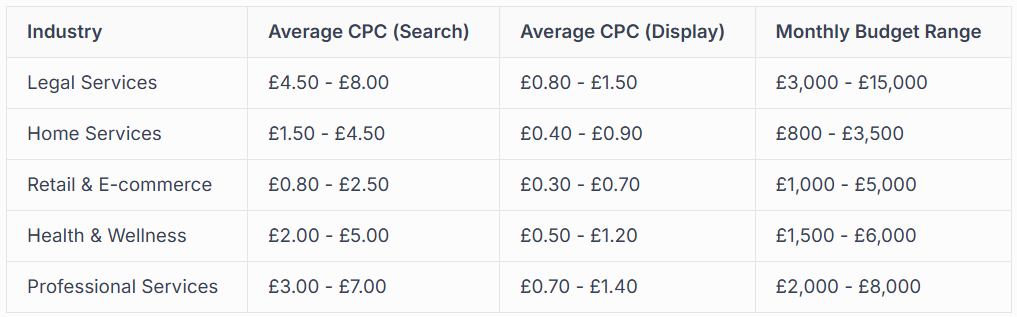
For tradespeople and local service providers, the good news is that costs remain relatively manageable compared to highly competitive sectors. A plumber in Birmingham might pay £2.50 per click, whilst a solicitor in the same city could pay triple that amount.
Search Network vs Display Network Costs
The
Search Network shows text ads when people actively search for your keywords. These clicks are more expensive because the intent is higher, searchers are actively looking for solutions, and conversion rates tend to be stronger.
The Display Network places visual banner ads across millions of websites. Costs are lower here, but so is immediate intent. Display works brilliantly for brand awareness and remarketing to people who've already visited your website.
Most businesses find the sweet spot by allocating 70-80% of budget to Search campaigns and 20-30% to Display for remarketing. This balanced approach captures high-intent searches whilst keeping your brand visible to previous visitors.
Setting Your Google Ads Budget
Determining
how much to spend requires balancing your business goals, profit margins, and customer acquisition costs. There's no universal "correct" budget, but there are smart ways to calculate what makes sense for your situation.
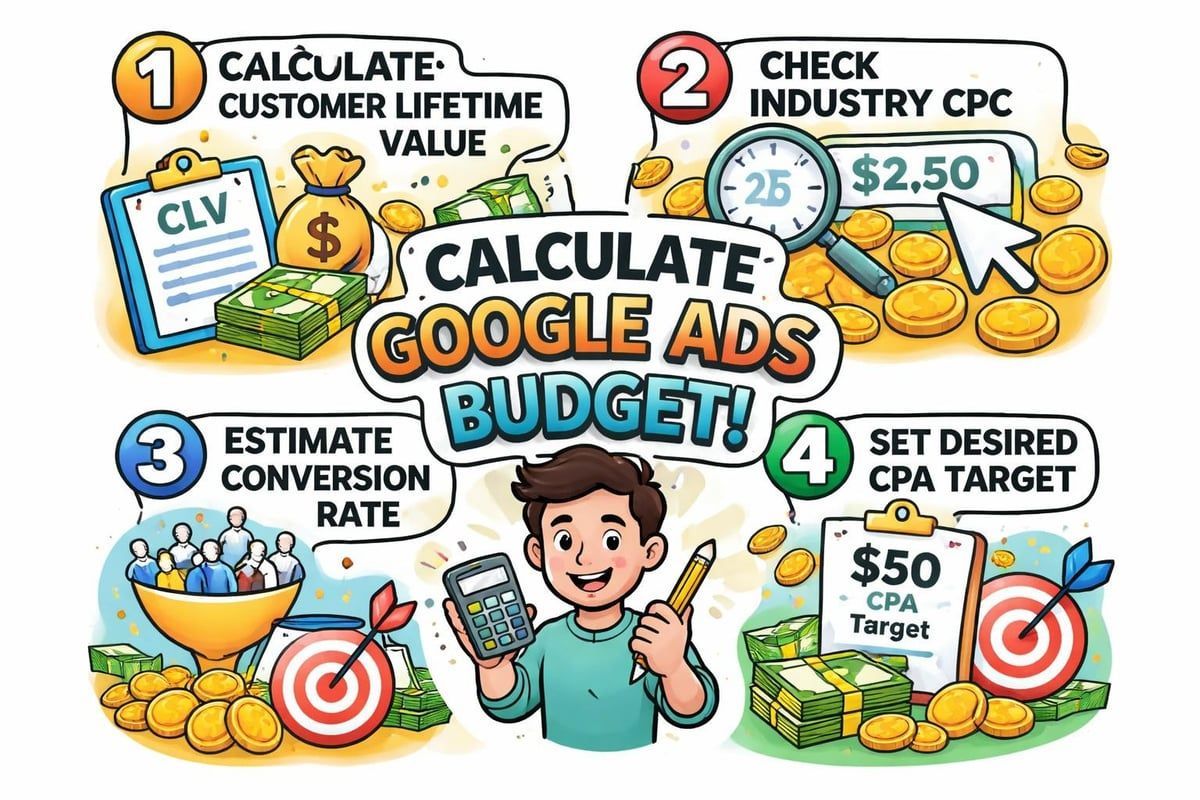
Start by understanding your customer lifetime value. If an average customer brings £500 profit over their relationship with your business, you can afford to pay more for acquisition than if they only bring £100. This fundamental calculation guides everything else.
Calculating Minimum Viable Budget
To test Google Ads effectively, you need enough budget to generate meaningful data. Here's a practical framework:
- Identify your target CPC for your industry using the table above
- Estimate your conversion rate (typically 2-5% for well-optimised campaigns)
- Calculate clicks needed for one conversion (if 3% conversion rate, you need roughly 34 clicks)
- Multiply by your CPC to find cost per acquisition
For example, at £3 CPC with a 3% conversion rate, you'd spend approximately £100 per customer acquisition. If that customer is worth £500 in profit, you've got a healthy 5:1 return on ad spend.
According to Google's official campaign budget guidance, starting with at least 2-3 times your target cost per conversion allows the algorithm to optimise effectively. Many successful campaigns start with £30-50 daily budgets, which provides £900-1,500 monthly for testing and refinement.
Hidden Costs and Additional Expenses
Beyond the direct google ads cost for clicks, several other expenses deserve consideration when budgeting for paid advertising campaigns in 2026.
Management fees represent a significant additional cost if you're working with an agency or freelance specialist. Most professional Google Ads management services charge either a percentage of ad spend (typically 15-20%) or a flat monthly fee (£300-£2,000 depending on campaign complexity).
For businesses spending £2,000 monthly on ads, a 20% management fee adds another £400 to total costs. However, professional management often improves performance enough to justify this investment through better Quality Scores, improved targeting, and higher conversion rates.
Tools and Software Costs
Serious Google Ads management often requires additional tools:
- Bid management platforms (£50-£300/month)
- Analytics and tracking software (£30-£200/month)
- Keyword research tools (£40-£150/month)
- Landing page builders (£25-£100/month)
Many businesses starting with Google Ads overlook these costs. For tradespeople managing their own campaigns, free tools like Google Keyword Planner and Google Analytics cover the basics, but scaling up often requires investment in more sophisticated platforms.
Creative development shouldn't be forgotten either. Professional ad copywriting, landing page design, and display banner creation might cost £500-£2,000 upfront, but quality creative assets significantly impact your Quality Score and conversion rates.
Industry-Specific Insights for Trades and Local Services
For plumbers, electricians, builders, and other tradespeople, the google ads cost landscape looks quite different from corporate sectors. The key advantage is that you're typically targeting local, high-intent searches rather than competing nationally.
Research from comprehensive Google Ads cost analyses shows that home service providers benefit from relatively affordable click costs when using proper geographic targeting. An electrician targeting "emergency electrician [city name]" might pay £2-4 per click, which is manageable given the typical job value of £150-500.
Combining Google Ads with Google Business Profile
The most successful local businesses don't rely solely on paid advertising. They create a comprehensive visibility strategy that includes a verified, optimised Google Business Profile alongside targeted ad campaigns.
When customers search for local services, they see multiple touchpoints:
- Local Service Ads at the very top (Google Screened/Guaranteed)
- Google Ads text advertisements below that
- Map Pack results showing nearby businesses with verified profiles
- Organic search results further down the page
Appearing in multiple positions dramatically increases your chances of winning the customer. A verified Google Business Profile costs nothing beyond the setup effort, making it an essential complement to paid advertising.
According to detailed industry breakdowns, tradespeople who combine verified Google Business Profiles with modest Google Ads budgets (£500-£1,500 monthly) typically see better overall ROI than those investing heavily in ads alone.
Maximising ROI and Reducing Wasted Spend
The difference between profitable Google Ads campaigns and money pits often comes down to optimisation discipline. Even with a perfect budget, poor execution burns through cash without delivering customers.
Negative keywords are your first line of defence against wasted spend. These tell Google which searches to avoid. For instance, if you're a premium electrician, adding "cheap," "free," and "DIY" as negative keywords prevents your ads showing to bargain hunters or people looking to do it themselves.
Quality Score Optimisation Strategies
Improving your Quality Score from 5/10 to 8/10 can reduce your costs by 30-40% whilst improving your ad positions. Focus on these elements:
- Keyword-ad alignment: Ensure your ad copy includes the exact keywords you're bidding on
- Landing page relevance: The page people land on must directly address their search query
- Mobile optimisation: Over 60% of searches happen on mobile devices in 2026
- Page speed: Slow-loading pages hurt Quality Score and conversion rates
- Clear calls-to-action: Tell visitors exactly what you want them to do
Many businesses working with specialist PPC agencies see their Quality Scores improve within 4-6 weeks of professional optimisation, leading to immediate cost reductions.
Regional Variations in Google Ads Pricing
The google ads cost varies significantly across different UK regions. London and the Southeast consistently show the highest CPCs, whilst Northern England, Wales, and Scotland often offer more affordable advertising opportunities.
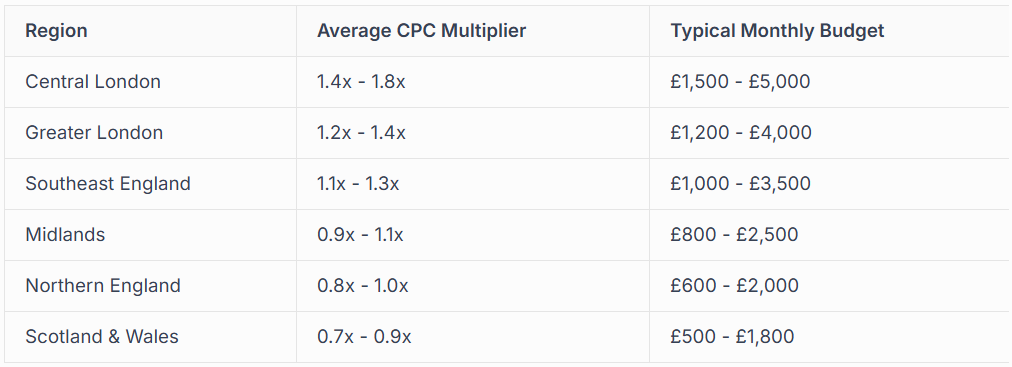
These multipliers apply to the baseline industry averages. A home services business might pay £3 per click in Manchester but £4.50 in central London for identical keywords. This geographic variation creates opportunities for multi-location businesses to allocate budgets strategically.
Businesses offering services across London need to carefully consider whether broad geographic targeting makes sense or if focusing on specific boroughs delivers better ROI. Often, targeting 3-5 high-value postcodes outperforms blanket citywide campaigns.
Smart Bidding Strategies for 2026
Google's automated bidding strategies have matured significantly. In 2026, most successful campaigns use some form of smart bidding rather than manual CPC control, though understanding the options is crucial.
Target CPA (Cost Per Acquisition) bidding tells Google your ideal cost per conversion. The algorithm then adjusts bids in real-time to achieve that target. This works brilliantly once you have conversion tracking properly set up and at least 30 conversions in the past 30 days.
Maximise Conversions automatically sets bids to get the most conversions within your daily budget. It's excellent for businesses prioritising volume over cost efficiency, particularly when you're confident in your profit margins.
Target ROAS (Return On Ad Spend) focuses on revenue rather than just conversions. If you're an e-commerce business or track customer values accurately, this strategy optimises for profit rather than simply lead volume.
For businesses just starting with Google Ads, Manual CPC with Enhanced CPC enabled provides a good learning ground. You maintain control whilst Google makes minor bid adjustments to pursue conversions.
Insights from expert pricing guides suggest that businesses transitioning to smart bidding after 60-90 days of manual campaign management typically see 15-25% efficiency improvements.
Common Budgeting Mistakes to Avoid
Even experienced advertisers fall into predictable traps that inflate the google ads cost without delivering proportional results. Awareness of these pitfalls helps you maintain profitable campaigns.
Spreading a budget too thin across dozens of keywords prevents any single campaign from gathering enough data to optimize effectively. Better to dominate 10 high-value keywords than appear occasionally for 100 low-value ones.
Ignoring day-parting means your ads run 24/7, even when nobody's available to answer the phone. For service businesses, scheduling ads during business hours (plus an hour either side to catch voicemails) eliminates wasted nighttime clicks.
Neglecting mobile bid adjustments leaves money on the table. If your conversion rate on mobile is 50% of desktop, you should reduce mobile bids by 30-50% to maintain profitability.
According to research on Google Ads pricing across platforms, businesses that regularly review search term reports and add negatives monthly spend 20-30% less whilst maintaining or improving conversion volumes.
Setting Realistic Expectations
New advertisers often expect immediate results. The reality is that Google Ads campaigns need time to gather data and optimize. Budget for at least 60-90 days of testing before making major strategic decisions.
Your first month might see £3-5 cost per click whilst algorithms learn. By month three, with proper optimisation, that often drops to £2-3.50 as Quality Scores improve and Google identifies your best-performing audiences.
Alternative Google Advertising Options
Beyond standard Google Ads, several other advertising products serve different purposes and price points. Understanding the full ecosystem helps you allocate budgets intelligently.
Local Service Ads operate on a pay-per-lead model rather than pay-per-click. You're charged when someone contacts you directly through the ad, with costs typically £5-£25 per lead depending on service type and location. For verified, Google Screened businesses, these often deliver better ROI than standard Search Ads.
Shopping Ads suit product-based businesses, showing image-based ads with pricing. These typically achieve lower CPCs than Search Ads whilst maintaining strong conversion rates for e-commerce.
YouTube Ads offer remarkably affordable awareness building, with view costs often under £0.10. Whilst not suitable for immediate lead generation, they complement Search campaigns by keeping your brand visible.
Discovery Ads appear across Google's feeds (YouTube home, Gmail promotions, Discover feed) and cost less than Search Ads whilst reaching audiences in browsing mode rather than search mode.
Comparative analysis from platform pricing guides shows that diversified campaigns across multiple Google advertising products typically outperform single-channel approaches, particularly for businesses with customer journeys spanning several touchpoints.
Professional Management vs DIY Approach
Deciding whether to manage Google Ads yourself or hire expertise significantly impacts your total google ads cost and campaign performance. Both approaches have merit depending on your situation.
DIY management saves money on agency fees but requires substantial time investment to learn the platform, monitor performance, and implement optimisations. For businesses spending under £1,000 monthly, this often makes financial sense.
Tools you'll need for effective self-management:
- Google Ads Editor for bulk changes
- Google Analytics for conversion tracking
- Google Keyword Planner for research
- Spreadsheets for budget tracking and reporting
The learning curve is steeper than most anticipate. Insights from detailed cost-per-click analyses indicate that self-managed campaigns typically achieve 60-70% of the performance of professionally managed ones during the first six months, closing the gap as expertise develops.
Professional management makes sense when monthly ad spend exceeds £1,500-£2,000. Agencies and specialist PPC services for trades bring expertise that often improves performance enough to offset their fees through better Quality Scores, smarter bidding, and higher conversion rates.
Hybrid Approaches
Some businesses find success with a hybrid model where they handle day-to-day management but engage professionals quarterly for strategic reviews and major optimisations. This balances cost control with access to expertise.
Another effective approach involves professional setup and initial optimisation followed by training for in-house management. You benefit from expert structure whilst building internal capability over time.
Tracking and Measuring True Advertising Costs
Understanding your actual google ads cost requires tracking beyond what you see in the Google Ads dashboard. Total cost of customer acquisition includes all related expenses.
Conversion tracking must be implemented properly from day one. Without knowing which clicks turn into customers, you're flying blind. Set up tracking for:
- Phone calls (using Google forwarding numbers)
- Form submissions on your website
- Online purchases or bookings
- Chat interactions
Attribution modelling becomes crucial when customers interact with multiple touchpoints. Did they click an ad, visit your Google Business Profile, then call you three days later? Proper attribution ensures you understand the full customer journey.
Calculate your true cost per acquisition by including management fees, tools, and creative development. If you spent £2,000 on clicks, £400 on management, and £100 on tools, your actual monthly investment is £2,500, not £2,000.
Seasonal Variations and Timing Strategies
Google Ads costs fluctuate throughout the year based on competition and demand. Understanding these patterns helps you budget more effectively and capitalize on opportunities.
For home services, emergency-related searches spike during extreme weather. Heating engineers see CPC increases of 40-60% during cold snaps as competition intensifies. Conversely, general maintenance keywords become more affordable during these periods as advertisers shift budgets to emergency terms.
Retail businesses face dramatic CPC increases from November through December as e-commerce competition peaks for holiday shopping. Planning for 50-100% CPC increases during this period prevents budget exhaustion.
Professional services often see quieter periods in August and late December when decision-makers are on holiday. Reducing budgets during these windows and reallocating to high-activity months improves overall efficiency.
Many successful advertisers increase budgets by 20-30% during their peak seasons whilst maintaining presence year-round. This balanced approach captures high-demand periods without completely disappearing during slower months.
Understanding google ads cost is essential for UK businesses looking to attract customers through paid search, but the numbers mean little without proper strategy and execution. The difference between profitable campaigns and wasted budgets comes down to careful planning, ongoing optimisation, and ensuring your complete online presence works together. If you're ready to make Google Ads work for your business whilst building a strong local search foundation, the team at Connect SEO Ltd combines Google Business Profile expertise with strategic advertising management to help tradespeople and service providers dominate their local markets. We understand both the technical aspects and the real-world challenges of running a trade business because we've built success through these exact strategies ourselves.