
Google Ads Pricing: Complete UK Guide for 2026
Understanding google ads pricing can feel overwhelming when you're trying to get your business visible online. Whether you're a tradesperson looking to attract local customers or a business owner wanting to compete in your market, knowing how much Google Ads will cost and what influences that price is essential for making informed decisions. The pricing model isn't fixed like traditional advertising, and several factors work together to determine what you'll actually pay each time someone clicks your ad. This guide breaks down everything you need to know about google ads pricing in 2026, helping you budget effectively and get the best return on your investment.
How the Google Ads Auction System Works
Google Ads operates on an auction system that runs every single time someone searches for a term related to your business. This isn't a traditional auction where the highest bidder always wins, though.
The platform considers multiple factors to determine which ads appear and in what order. Your maximum bid is important, but it's combined with your quality score and expected impact from ad extensions to create your ad rank. Ad rank is the metric that actually determines your position.
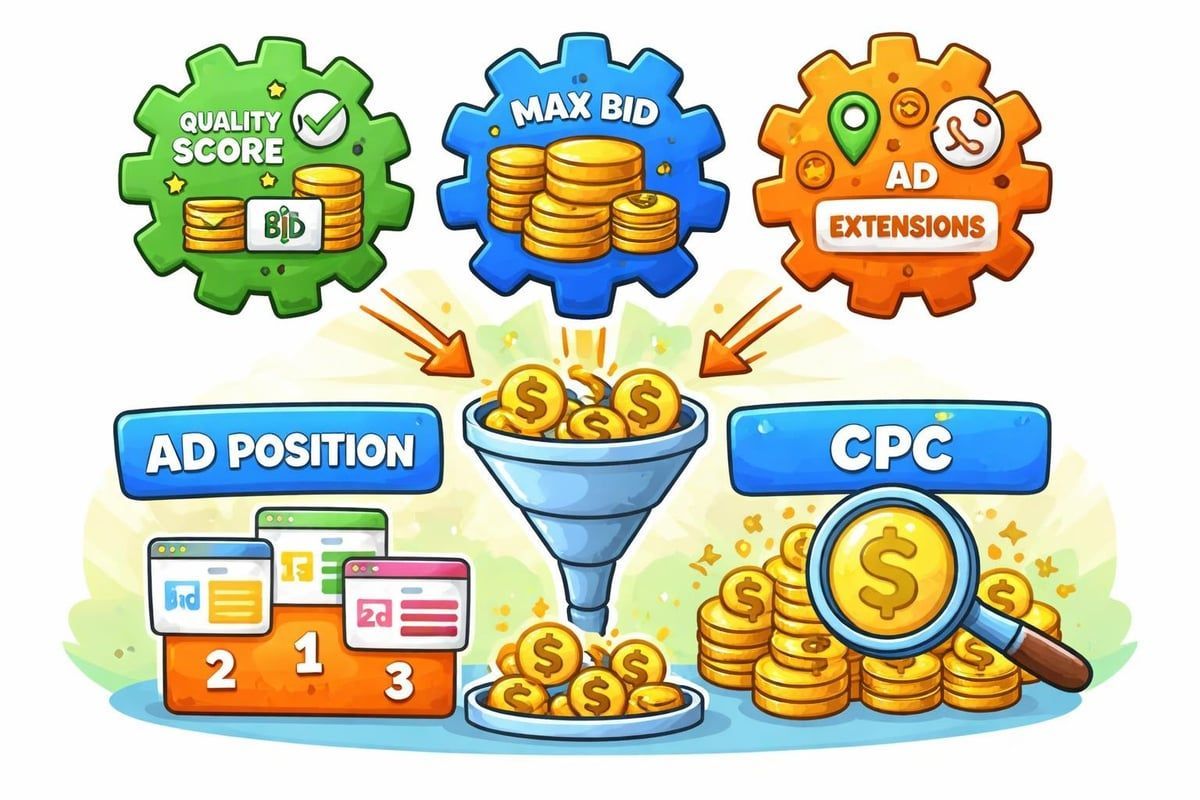
The Quality Score Factor
Quality score measures how relevant and useful your ad is to the person searching. Google evaluates three main components:
- Expected click-through rate based on historical performance
- Ad relevance to the search query
- Landing page experience including load speed and content quality
A higher quality score means you can potentially pay less per click than competitors with lower scores, even if they bid more. This rewards advertisers who create genuinely helpful, relevant ads that match user intent. Understanding quality score's impact on pricing helps you optimize campaigns beyond just increasing your budget.
What You Actually Pay Per Click
Here's where google ads pricing gets interesting. You don't actually pay your maximum bid. Instead, you pay just enough to beat the advertiser below you, plus one penny. This means if you bid £5 but the next advertiser has an ad rank that requires you to only pay £2.50 to outrank them, that's what you'll pay.
The formula looks like this: (Ad Rank to Beat / Your Quality Score) + £0.01
This system encourages advertisers to improve their ad quality rather than just throwing money at campaigns. For local businesses, this is particularly beneficial because highly targeted, relevant ads for specific services or areas often achieve better quality scores than generic national campaigns.
Average Google Ads Pricing Across Industries
Google ads pricing varies dramatically depending on your industry, competition level, and target keywords. Some sectors face intense competition that drives up costs, whilst others enjoy relatively affordable click prices.
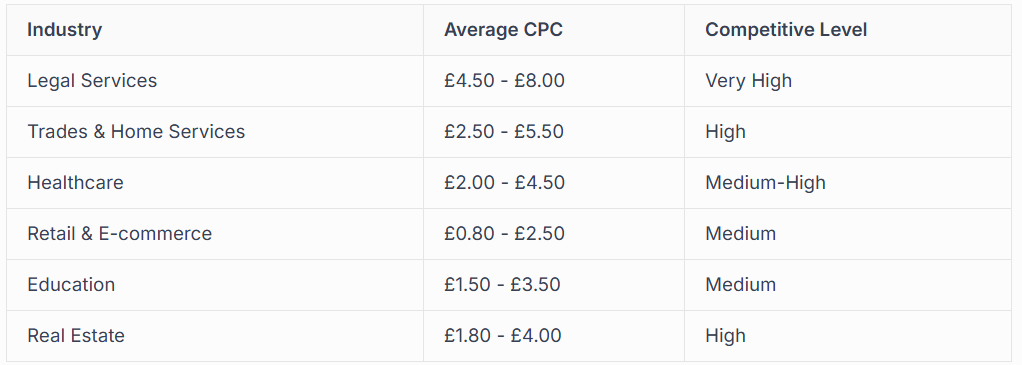
Detailed breakdowns of industry-specific costs show that B2B services and professional services typically pay more per click than consumer-facing businesses. However, the lifetime value of customers in these industries often justifies the higher acquisition costs.
Local vs National Campaign Pricing
If you're running
Google Ads campaigns in London or other major UK cities, expect to pay premium rates compared to rural areas. The competition in metropolitan areas pushes prices higher, but the volume of potential customers also increases.
Local service businesses often find better value by combining Google Ads with a strong Google Business Profile presence, which helps you appear in local pack results without paying per click.
Setting Your Google Ads Budget
Determining how much to spend on Google Ads depends on your business goals, industry, and average customer value. There's no universal "right" budget, but there are smart ways to approach it.
Daily Budget Calculations
Google Ads works on a daily budget system. You set a maximum amount you're willing to spend each day, andthe platform manages your spending to stay within that limit over the month. Keep in mind that on some days, Google might spend up to twice your daily budget if it sees opportunities for conversions, but it balances this over the billing cycle.
To calculate a sensible starting budget:
- Determine your average customer value (how much profit a typical customer brings)
- Decide your acceptable customer acquisition cost (usually 10-30% of customer value)
- Estimate your conversion rate (typically 2-5% for new campaigns)
- Calculate required clicks (conversions needed ÷ conversion rate)
- Multiply by your industry's average CPC
For example, if each customer is worth £500 to your business and you're willing to spend £100 to acquire them, with a 3% conversion rate and £3 CPC, you'd need about 34 clicks to get one customer, costing roughly £102.
Monthly Spending Recommendations
Research on typical monthly spending patterns shows that small businesses often start with £500-£1,500 per month, whilst medium-sized businesses might invest £2,000-£10,000 monthly. These ranges allow for meaningful data collection whilst keeping risk manageable.
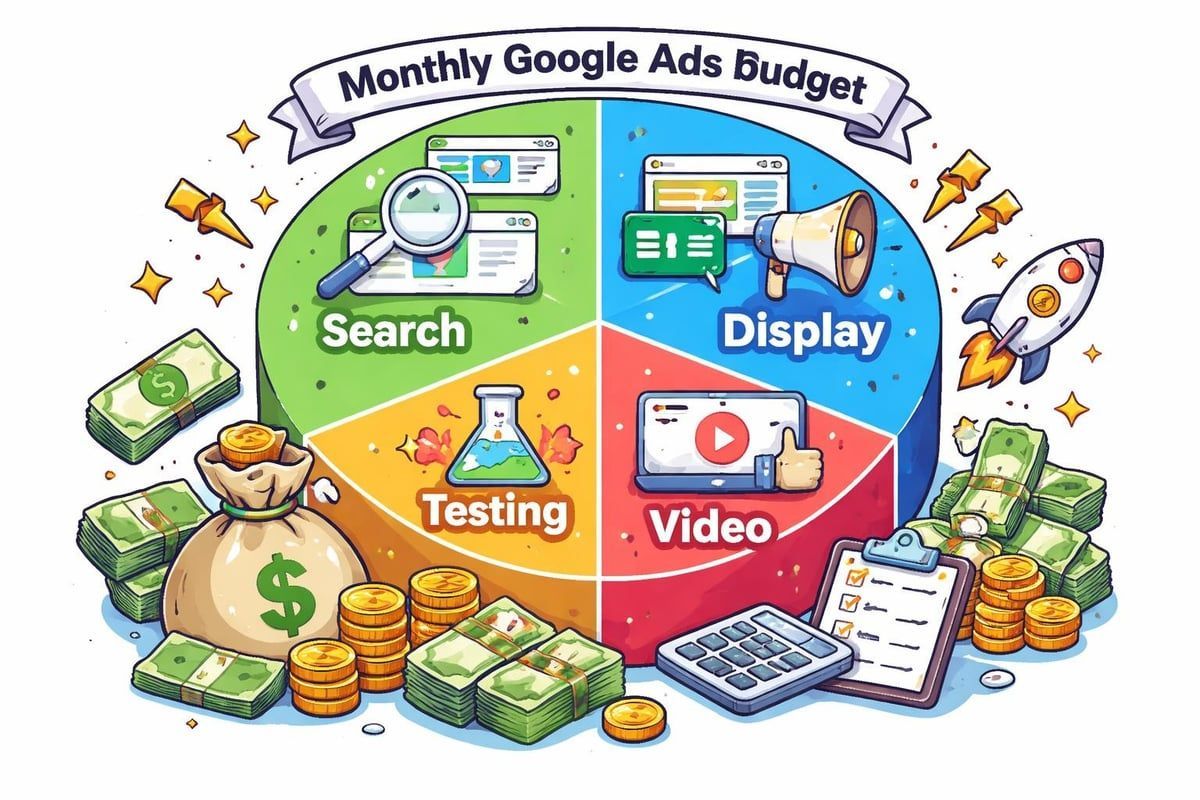
Starting smaller and scaling up based on performance is generally smarter than launching with a massive budget before you understand what works for your specific business.
Factors That Influence Your Google Ads Pricing
Beyond the auction system and industry averages, several specific factors affect what you'll pay for google ads pricing in your campaigns.
Keyword Competition and Intent
Not all keywords cost the same, even within your industry. Commercial intent keywords like "hire plumber London" or "emergency electrician near me" typically cost more than informational searches like "how to fix a tap."
High-intent keywords show that someone is ready to buy, which means more advertisers compete for those terms, driving up prices. Lower-intent keywords might be cheaper but convert at lower rates, so the overall cost per acquisition might actually be similar.
Geographic Targeting Impact
Where you target your ads significantly affects google ads pricing. Major cities command premium prices, whilst smaller towns and rural areas often have lower competition and costs.
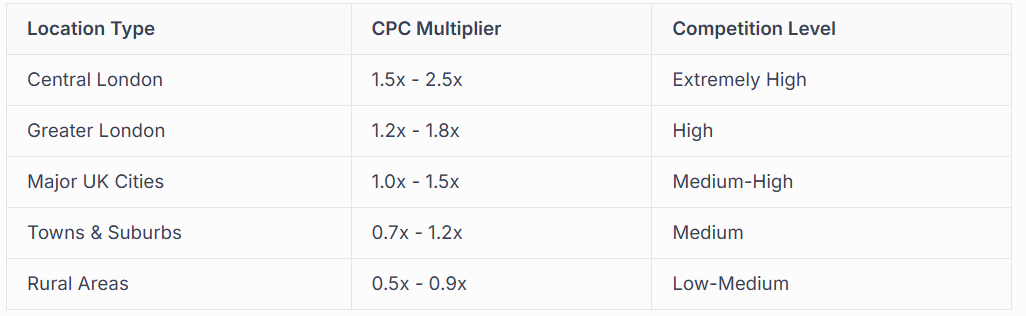
Smart geographic targeting means focusing on areas where your customers actually are, not necessarily the broadest possible reach. A plumber in Croydon doesn't need to advertise in Brighton, and the wasted spend on irrelevant clicks adds up quickly.
Time of Day and Seasonality
Google ads pricing fluctuates based on when people search and when competitors are active. Business services often see higher costs during working hours Monday to Friday, whilst consumer services might peak in evenings and weekends.
Seasonal businesses face particular challenges. Garden services, for example, see dramatic price increases in spring and summer when competition intensifies. Planning your budget to account for these fluctuations prevents nasty surprises.
Device and Network Differences
Costs vary across devices and networks:
- Search Network (Google search results) typically costs more but converts better
- Display Network (banner ads on websites) costs less per click but often has lower conversion rates
- Mobile devices sometimes offer lower CPCs but conversion rates can vary by industry
- YouTube ads use different pricing models (CPV for video views)
Comparing costs across different Google Ads networks helps you allocate budget where it performs best for your specific goals.
Maximising ROI on Your Google Ads Spend
Understanding google ads pricing is only valuable if you use that knowledge to improve your return on investment. Here's how to get more from every pound you spend.
Improving Quality Score to Lower Costs
Since quality score directly impacts what you pay, improving it should be a priority. Focus on these areas:
- Write ad copy that directly matches your keywords and landing page content
- Ensure your landing pages load quickly (under 3 seconds ideally)
- Create dedicated landing pages for different ad groups rather than sending all traffic to your homepage
- Use ad extensions to provide additional information and improve click-through rates
- Regularly test different ad variations to find what resonates with your audience
Businesses working with professional PPC management services often see quality scores improve over time as campaigns are optimised, leading to lower costs per click whilst maintaining or improving ad positions.
Smart Bidding Strategies
Google offers several automated bidding strategies that use machine learning to optimise your bids. These include:
- Maximise Conversions automatically sets bids to get the most conversions within your budget
2. Target CPA (Cost Per Acquisition) aims to get conversions at your specified target cost
3. Target ROAS (Return on Ad Spend) optimises for a specific return ratio
4. Maximise Clicks gets you the most traffic possible within budget (less recommended for conversion-focused campaigns)
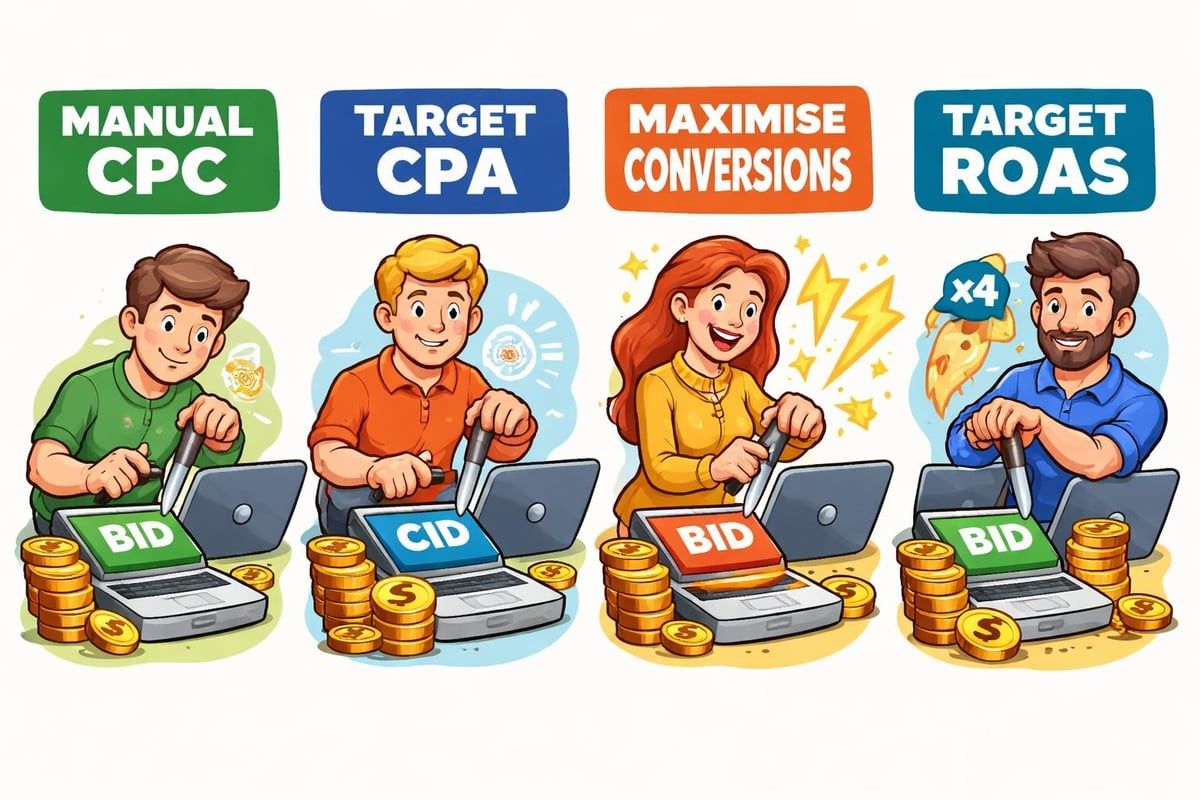
Manual bidding gives you more control but requires constant monitoring. Smart bidding can work well once you have conversion tracking properly set up and sufficient historical data (typically at least 30 conversions).
Negative Keywords and Budget Protection
One of the biggest wastes in google ads pricing comes from irrelevant clicks. Adding negative keywords prevents your ads from showing for searches that won't convert.
For example, if you offer premium electrical services, you might add negatives like "cheap," "DIY," "free," or "jobs" to avoid clicks from people looking for bargain services or employment rather than hiring your business.
Regularly reviewing search terms reports and adding negatives is essential budget maintenance that pays dividends over time.
Additional Costs Beyond Click Prices
When budgeting for Google Ads, the cost per click isn't your only consideration. Factor in these additional expenses for a complete picture.
Management and Optimisation Costs
Unless you're managing campaigns yourself, you'll need to account for management fees. These typically come in three forms:
- Percentage of ad spend (usually 10-20% of monthly budget)
- Flat monthly fee (ranging from £300 to £2,000+ depending on complexity)
- Hybrid models combining both approaches
For businesses without in-house expertise, professional Google Ads management often pays for itself through better performance and saved time compared to DIY efforts that drain resources without delivering results.
Setup and Creative Costs
Initial campaign setup requires time and sometimes additional resources:
- Keyword research and competitive analysis
- Ad copywriting and testing variations
- Landing page creation or optimisation
- Conversion tracking implementation
- Call tracking setup for phone-based businesses
Some businesses also invest in professional ad creative, particularly for Display and YouTube campaigns where visual elements matter significantly.
Tools and Software
Whilst Google Ads itself is free to use (you only pay for clicks), many advertisers use additional tools for:
- Advanced bid management and automation
- Competitor analysis and monitoring
- Call tracking and attribution
- Landing page optimisation and testing
- Reporting and client dashboards
These tools can range from £50 to £500+ monthly depending on your needs and scale.
Common Pricing Mistakes to Avoid
Many businesses waste significant portions of their Google Ads budget on preventable mistakes. Here are the most common pitfalls affecting google ads pricing efficiency.
Setting and Forgetting Campaigns
Google Ads requires ongoing attention. The auction environment changes constantly as competitors adjust bids, new advertisers enter the market, and search patterns evolve. Campaigns left unmonitored for weeks or months inevitably waste money on declining performance.
Schedule regular reviews (at least weekly for active campaigns) to check metrics, add negative keywords, adjust bids, and pause underperforming elements.
Ignoring Mobile Performance
With over 60% of searches now happening on mobile devices, failing to optimize for mobile wastes a massive portion of your budget. Check your device performance reports separately and adjust mobile bid modifiers based on actual conversion data.
If mobile users convert at lower rates for your business, reduce mobile bids. If they convert well, increase them to capture more of that traffic.
Bidding on Brand Terms Without Strategy
Whilst
understanding comprehensive Google Ads cost factors is important, many businesses waste money bidding aggressively on their own brand name when they already rank organically. Sometimes brand bidding makes sense (to defend against competitors or control messaging), but it should be a conscious strategic decision, not an oversight.
Overlooking Geographic Performance
Not all locations perform equally, even within your target area. Analyse performance by postcode or borough and adjust bids accordingly. You might find that certain areas convert at three times the rate of others, justifying higher bids there whilst reducing spend on underperforming locations.
Alternative Google Advertising Options
Beyond standard Google Ads, other Google advertising options offer different pricing models that might suit certain businesses better.
Google Local Service Ads
For trades and home service businesses,
Local Service Ads operate on a pay-per-lead model rather than pay-per-click. You only pay when someone contacts you directly through the ad (phone call or message), with costs typically ranging from £5 to £30 per lead depending on your service and area.
The verification requirements are strict, but the Google Guarantee badge builds trust and often leads to higher conversion rates than standard ads. Average spending patterns show that businesses using Local Service Ads often achieve lower customer acquisition costs despite higher per-lead prices.
Google Shopping Campaigns
For product-based businesses, Shopping campaigns use a cost-per-click model but typically achieve lower CPCs than search ads whilst displaying product images, prices, and merchant information directly in results. This pre-qualifies clicks, leading to better conversion rates.
YouTube Advertising Costs
YouTube ads use different pricing models:
- CPV (Cost Per View) for skippable video ads, typically £0.05-£0.20 per view
- CPM (Cost Per Thousand Impressions) for non-skippable ads, usually £3-£10 per thousand
- CPC for some ad formats, similar to search network pricing
Video advertising requires content creation investment but can be highly effective for building brand awareness and reaching audiences earlier in their buying journey.
Google Ads Pricing for Small Local Businesses
If you're a small business or tradesperson, google ads pricing works the same way as for larger companies, but your strategy should differ significantly.
Starting Small and Scaling
Begin with a modest budget (£300-£500 monthly) focused on your absolute best-performing keywords. This might only be 5-10 highly specific terms, but it's better to dominate a small niche than spread yourself thin across dozens of keywords.
As you gather data on what converts, reinvest profits into expanding your keyword coverage and increasing bids on proven winners. This organic growth approach matches investment to proven results rather than gambling large sums upfront.
Combining with Google Business Profile
For local businesses,
having a verified Google Business Profile complements your paid advertising perfectly. Your profile appears in local pack results without cost-per-click charges, and having a strong profile with reviews, photos, and complete information improves the performance of your paid ads.
Many potential customers research businesses they see in ads by checking their Google Business Profile before calling. A weak or unverified profile undermines your paid advertising investment. Understanding median costs by industry helps you benchmark whether your spending aligns with typical patterns for your sector.
Focus on High-Intent, Local Keywords
Rather than bidding on broad terms like "electrician," focus on specific, high-intent phrases like "emergency electrician Wandsworth" or "rewiring specialist South London." These longer-tail keywords typically cost less because they're more specific, but they convert at higher rates because the searcher has clear intent.
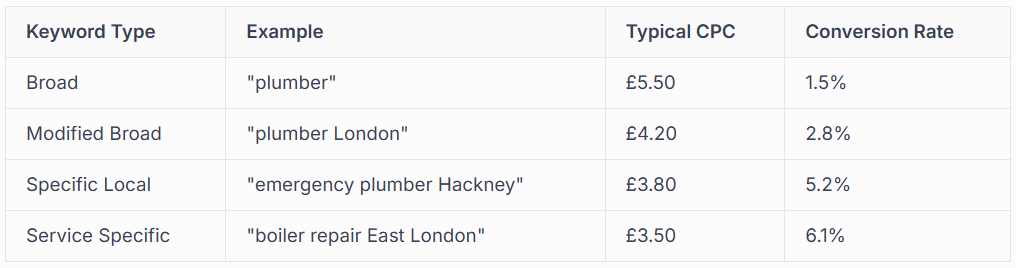
The more specific you can be whilst still maintaining search volume, the better your return on investment typically becomes.
Understanding google ads pricing empowers you to make strategic decisions about your advertising investment rather than simply hoping for results. The auction system rewards relevance and quality as much as budget size, which levels the playing field for smaller businesses willing to do the work of creating targeted, high-quality campaigns. Whether you're just starting with paid advertising or looking to optimise existing campaigns, combining Google Ads with a strong local search presence creates a powerful customer acquisition system. At Connect SEO Ltd, we help businesses like yours get verified on Google Business Profile and develop integrated strategies that maximise visibility across both paid and organic channels, ensuring every pound you invest works harder to bring in customers who are actively searching for your services.