
Pay Per Click: The Complete Guide for Local Businesses
When potential customers search for services in your area, wouldn't it be brilliant to appear right at the top of their search results? That's exactly what pay per click advertising offers local businesses. Unlike traditional advertising where you pay upfront regardless of results, the PPC model ensures you only spend money when someone actively engages with your advert by clicking through to your website. For tradespeople, service providers, and local businesses across the UK, this targeted approach has become an essential tool for generating leads and growing customer bases in an increasingly digital marketplace.
Understanding the Pay Per Click Model
Pay per click is an
internet advertising model where advertisers pay a fee each time someone clicks on their advertisement. Rather than attempting to earn visits organically, you're essentially buying visits to your site.
The process works in four straightforward steps:
- You create an advert and choose keywords related to your business
- You set a maximum bid for how much you'll pay per click
- Your advert enters an auction with other advertisers targeting the same keywords
- When someone clicks your advert, you pay the agreed amount
The beauty of this system lies in its fairness and accessibility. Small local businesses can compete with larger companies because the playing field depends on relevance, quality, and strategic bidding rather than just budget size.
How Auctions Determine Ad Placement
Search engines use sophisticated algorithms to decide which adverts appear and in what order. Your bid amount matters, but it's not the only factor considered.
Google Ads, for instance, calculates an Ad Rank based on your bid, the quality of your advert, the expected impact of ad extensions, and the context of the person's search. This means a well-crafted, highly relevant advert can outrank a competitor's advert even if they've bid more per click.
Why Local Businesses Benefit from PPC
For businesses relying on local customers, pay per click advertising offers unique advantages that traditional marketing simply can't match. You're not paying for someone to possibly see your advert on a billboard. Instead, you're paying only when someone interested enough to learn more actually clicks through.
The targeting capabilities are remarkably precise. You can show your adverts only to people searching within a specific radius of your business location. A plumber in Manchester can ensure their adverts only appear to people searching in Manchester, preventing wasted spend on clicks from Birmingham or Leeds.
Immediate Visibility in Competitive Markets
Unlike search engine optimization which can take months to show results, PPC campaigns can drive traffic within hours of launching. This immediacy proves invaluable for new businesses or those launching time-sensitive promotions.
According to recent PPC statistics, businesses make an average of £2 for every £1 spent on Google Ads. For trades and service businesses with strong conversion processes, these returns can be even higher.
Key benefits for local service providers include:
- Instant presence at the top of search results
- Budget control with daily spending limits
- Measurable results tracking every click and conversion
- Flexible campaigns that can be paused or adjusted anytime
- Geographic precision reaching only your service area
Many of our clients at Connect SEO combine PPC with a verified Google Business Profile to dominate local search results both in paid and organic listings.
Cost Considerations and Budgeting
One of the most common questions about pay per click advertising centres on cost. How much should you expect to pay, and what constitutes a reasonable budget for a local business?
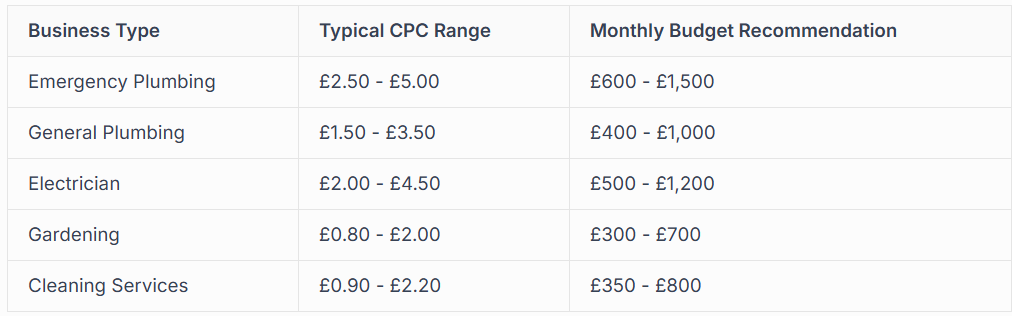
The answer varies significantly by industry, location, and competition levels. Current data shows that the average cost per click across all industries on Google Ads sits around £1 to £2, but this masks considerable variation.
Industry-Specific Pricing
Legal services and insurance companies might pay £6 or more per click due to high competition and valuable customer lifetime values. Meanwhile, a local gardener or cleaner might pay 50p to £1.50 per click in most UK markets.
These figures reflect 2026 UK market conditions and can vary by region. London and the South East typically see higher costs per click than other areas.
Calculating Your Ideal Budget
Start by working backwards from your business goals. If you need 10 new customers per month and your website converts 5% of visitors into customers, you'd need 200 clicks monthly. At £2 per click, that's a £400 monthly budget.
Most successful campaigns benefit from at least a three-month commitment to gather sufficient data and optimise performance. Many businesses using our PPC management services start conservatively and increase budgets as they see positive returns.
Creating Effective PPC Campaigns
Success with pay per click advertising requires more than simply setting up an account and choosing a few keywords. The difference between profitable campaigns and money drains often comes down to strategic planning and continuous optimisation.
Keyword Research and Selection
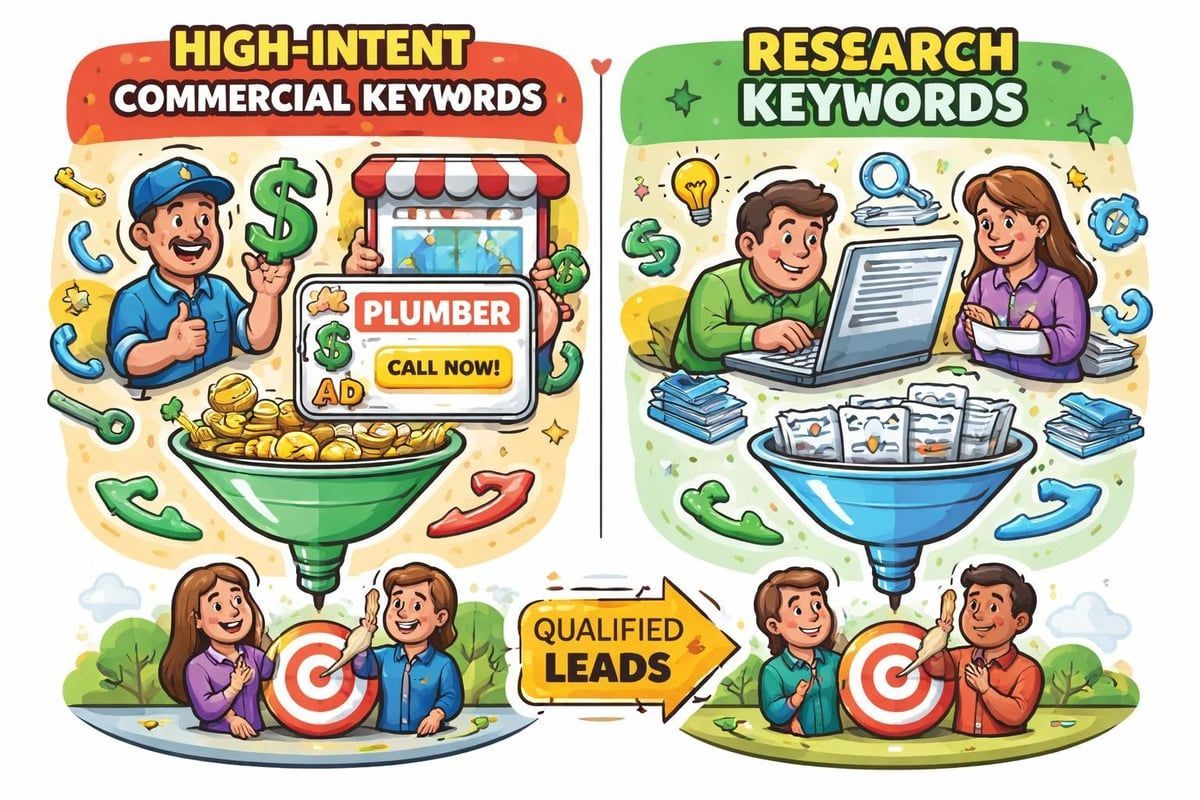
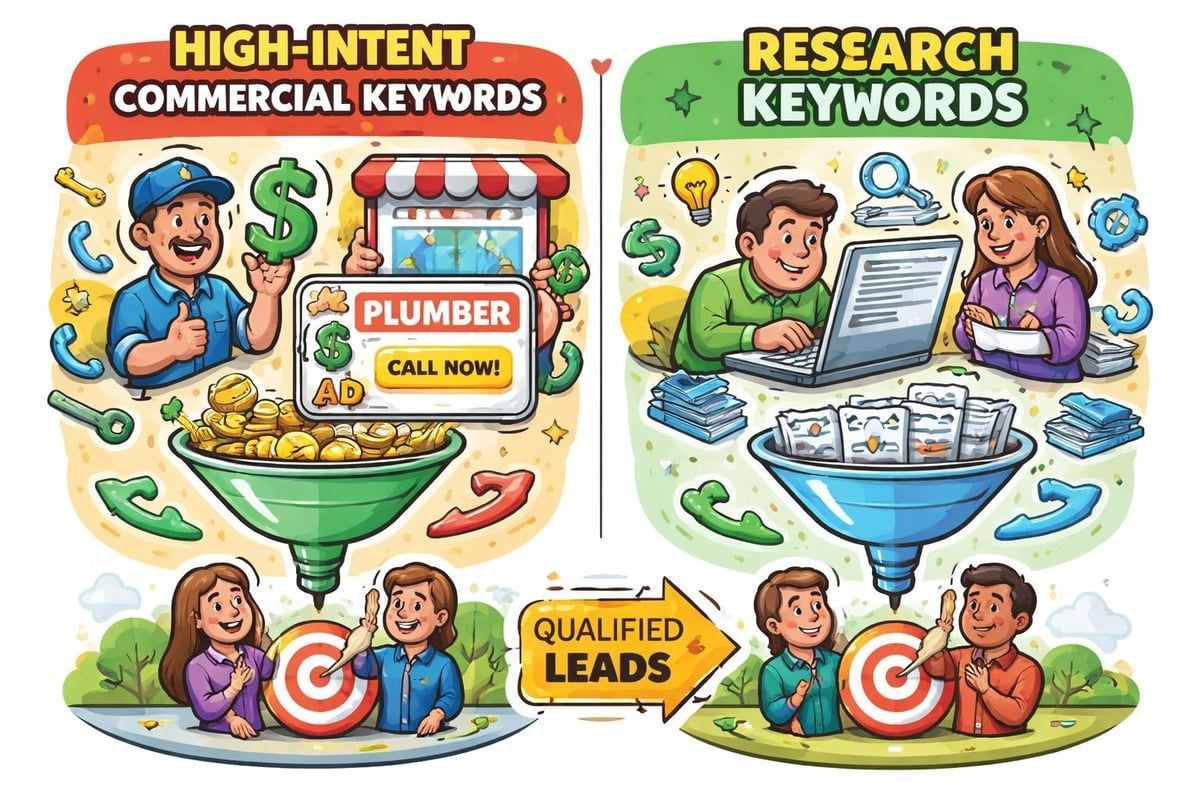
Your keyword choices determine when and where your adverts appear. Focus on commercial intent keywords that indicate someone is ready to hire or buy, rather than just researching.
For a local electrician, "emergency electrician near me" or "electrician in [your town]" represent high-intent searches. Someone using these terms needs help now. Compare this to "how to wire a plug", which indicates someone wanting to DIY rather than hire.
Effective keyword categories for local businesses:
- Emergency or urgent service keywords
- Location-specific service terms
- Problem-solution keywords
- Competitor name keywords (with caution)
- Specific service offerings
Negative keywords are equally important. These tell the platform when NOT to show your advert. An electrician might add "jobs", "courses", or "apprenticeships" as negative keywords to avoid clicks from job seekers rather than customers.
Writing Compelling Ad Copy
Your advert needs to stand out among competitors whilst clearly communicating your value proposition. You typically have very limited space, so every word counts.
Essential elements of effective PPC adverts include:
- Headline with keyword - Include the search term for relevance
- Unique selling point - What makes you different?
- Clear call to action - Tell people exactly what to do
- Relevant ad extensions - Phone numbers, locations, additional links
According to comprehensive PPC benchmarks, adverts with location extensions see 10% higher click-through rates for local businesses. This makes sense as people want to know you're actually nearby before clicking.
Optimising Landing Pages for Conversions
Getting the click is only half the battle. What happens after someone clicks your advert determines whether you've wasted money or gained a customer. Your landing page experience directly impacts both your Quality Score (affecting costs) and your conversion rate.
The fundamental rule is message match. If someone clicks an advert about emergency boiler repair, they should land on a page specifically about emergency boiler repair, not your generic homepage.
Essential Landing Page Elements
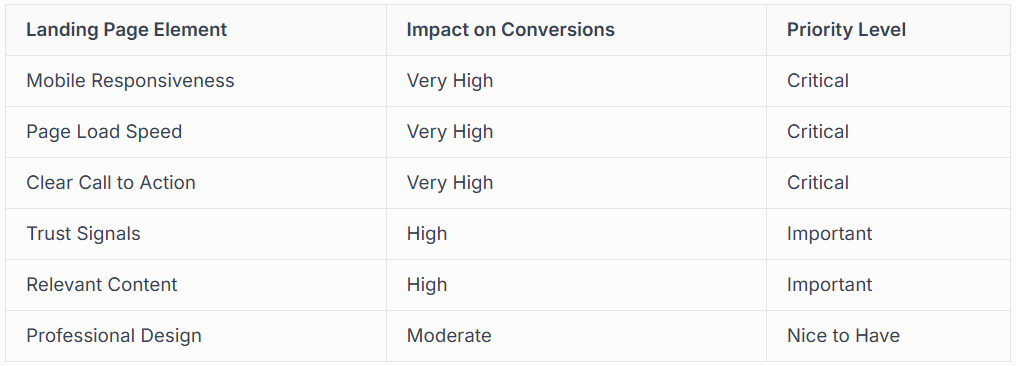
Every effective PPC landing page includes these core components:
Clear headline matching the advert promise, trust signals like reviews or accreditations, contact options prominently displayed (phone, form, chat), benefit-focused content explaining what customers gain, and mobile optimisation since over 60% of local searches happen on mobile devices.
Remove navigation menus and other distractions from dedicated landing pages. Your goal is a single conversion action, whether that's a phone call, form submission, or booking.
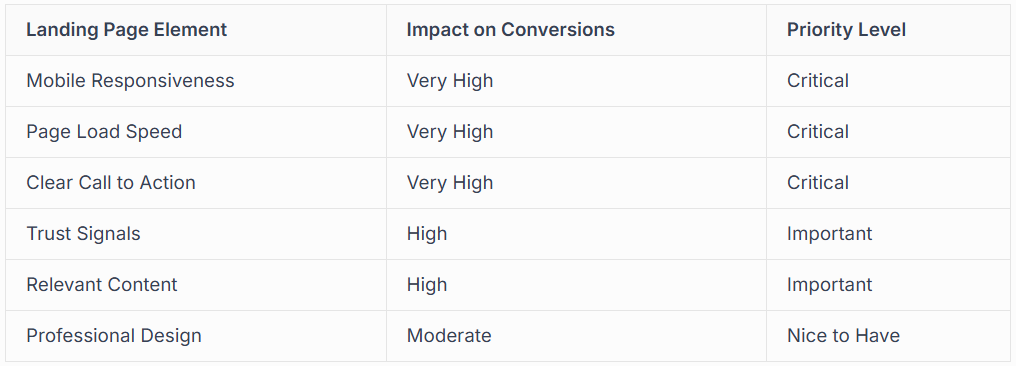
Many businesses we work with through our Google Business Profile services see dramatically improved PPC results when they optimize landing pages and ensure their GBP is verified and professional.
Measuring Success and ROI
The measurability of pay per click advertising represents one of its greatest strengths. Unlike traditional advertising where tracking results proves difficult, PPC provides detailed data on every aspect of campaign performance.
Key Metrics to Monitor
Click-through rate (CTR) shows the percentage of people who see your advert and click it. Industry averages hover around 3-5% for search ads, though this varies considerably by sector and keyword type.
Conversion rate measures how many clicks result in your desired action (phone call, form submission, purchase). For local service businesses, conversion rates between 5-15% are common for well-optimised campaigns.
Cost per acquisition (CPA) tells you how much you're paying to gain a customer. This metric matters most because it directly ties to profitability. If your average customer value is £500 and your CPA is £50, you're operating profitably.
Quality Score affects your costs and ad positions. Scores range from 1-10, with higher scores resulting in lower costs and better positions. Focus on improving this through relevant keywords, compelling ad copy, and excellent landing page experiences.
Tools for Tracking Performance
Google Ads provides built-in conversion tracking that monitors phone calls, form submissions, and other valuable actions. Setting this up properly from the start ensures you're making data-driven decisions rather than guessing.
Research indicates that businesses using conversion tracking and regular optimisation see 50% better returns than those running campaigns on autopilot. Monthly reviews of campaign performance should be standard practice.
Common Mistakes to Avoid
Even with understanding the fundamentals, many businesses waste money on pay per click campaigns through avoidable errors. Learning from these common pitfalls can save you considerable expense and frustration.

Budget and Bidding Errors
Setting inadequate budgets represents a frequent mistake. If your daily budget only allows for 5 clicks but you need 50 to generate a conversion, you'll never gather enough data to optimize or see results. Start with a sufficient budget to generate meaningful traffic.
Ignoring match types can drain budgets quickly. Broad match keywords might trigger your advert for irrelevant searches. Use phrase match or exact match for tighter control, especially when starting out.
Broad match: electrician (triggers for "electrician jobs", "electrician courses")
Phrase match: "electrician services" (triggers for "emergency electrician services")
Exact match: [electrician london] (triggers only for very close variations)
Not using negative keywords means paying for irrelevant clicks. Someone searching "free electrician advice" isn't looking to hire anyone. Add "free" as a negative keyword.
Campaign Structure Problems
Running everything in a single campaign with mixed keywords creates problems. Separate campaigns by service type, location, or urgency level for better control and optimisation.
Many of our clients using PPC and Google Ads for trades see improved performance when they restructure campaigns into focused, tightly themed ad groups.
Integration with Local SEO Strategy
Pay per click advertising works most effectively as part of a broader digital marketing strategy rather than in isolation. The combination of PPC with local SEO efforts creates a powerful presence in search results.
The Synergy Effect
When potential customers search for your services, you want to occupy as much search result real estate as possible. A verified Google Business Profile appears in the map pack, organic SEO efforts get you into the organic results below, and PPC places you in the sponsored positions at the very top.
This multi-channel presence dramatically increases the likelihood that searchers will contact you rather than competitors. It also builds brand recognition as people see your business name multiple times on the same search results page.
Benefits of combining PPC with local SEO:
Immediate visibility whilst SEO efforts build momentum
Data from PPC campaigns informs SEO keyword strategy
Verified Google Business Profile increases trust for PPC clicks
Comprehensive search result coverage
Multiple touchpoints with potential customers
Businesses with verified Google Business Profiles typically see better conversion rates from PPC traffic because the verification badge and reviews visible in their profile add credibility.
Seasonal and Strategic Campaign Use
PPC offers flexibility that organic marketing cannot match. You can scale campaigns up during busy seasons and reduce or pause them during quiet periods. A landscape gardener might invest heavily in PPC from March through June, then reduce spending in winter months.
Similarly, new business launches, special promotions, or competitive situations might warrant temporary PPC investment even for businesses primarily relying on organic traffic.
Advanced Strategies for Better Results
Once you've mastered the basics, several advanced techniques can further improve campaign performance and reduce costs. These strategies require more sophisticated understanding but deliver meaningful improvements.
Remarketing to Engaged Visitors
Not everyone who clicks your advert will convert immediately. Remarketing allows you to show adverts to people who previously visited your website, keeping your business top-of-mind as they make their decision.
Someone who viewed your emergency plumbing services page but didn't call might see your advert again the next day when they're ready to book. These remarketing clicks typically cost less than initial search clicks whilst converting at higher rates.
Time and Day Scheduling
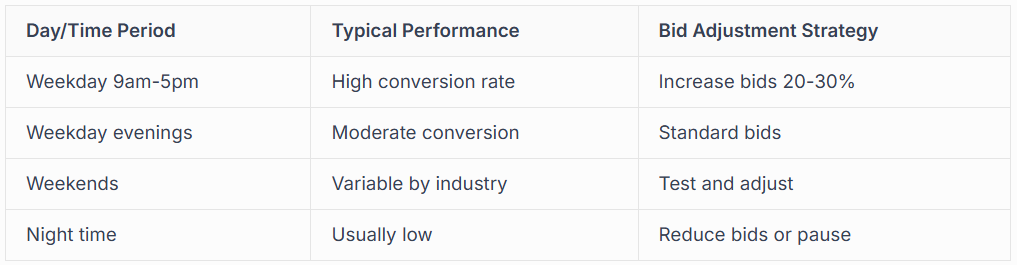
Analysis of PPC performance data shows significant variation in conversion rates by day and time. For many local service businesses, weekday daytime hours convert best because that's when people are actively solving problems and making decisions.
Adjust your bids to be more competitive during high-conversion periods and reduce or pause adverts during low-performing times. This concentrates your budget when it's most likely to generate results.
Geographic Bid Adjustments
If certain postcodes or areas within your service region convert better or have higher customer values, increase bids specifically for those locations. Similarly, reduce bids for areas that generate clicks but few conversions.
This granular control ensures you're investing most heavily where returns are strongest, maximising the efficiency of your advertising spend.
Pay per click advertising offers local businesses an unmatched opportunity to connect with customers actively searching for their services, with complete control over spending and measurable results that traditional advertising simply cannot match. Whether you're just starting with digital marketing or looking to enhance existing efforts, combining PPC with a strong local presence creates a powerful customer acquisition system. At Connect SEO Ltd, we specialise in helping tradespeople and local businesses maximise their online visibility through expert Google Business Profile verification and strategic PPC management, ensuring you're found by customers when they need you most.