Ads for Marketing: Your Complete UK Business Guide
Running a successful business in 2026 means understanding how to use ads for marketing effectively. Whether you're a tradesperson, local retailer, or service provider, advertising platforms have evolved dramatically over the past few years. The digital landscape offers unprecedented opportunities to reach your ideal customers precisely when they're searching for your services. For UK businesses particularly, combining paid advertising with a solid online presence has become essential for growth. This guide explores everything you need to know about creating and managing effective marketing ads that actually deliver results.
Understanding the Modern Advertising Landscape
The world of ads for marketing has transformed significantly since the early days of digital advertising. Today's platforms offer sophisticated targeting options that allow you to reach specific demographics, locations, and even user behaviours with remarkable precision.
Google Ads remains the dominant force for search-based advertising, whilst social platforms like Facebook, Instagram, and LinkedIn offer powerful visual and demographic targeting. For local businesses, Google Business Profile verification has become crucial because verified profiles receive preferential treatment in both organic and paid search results.
Why Paid Advertising Matters in 2026
Here's what makes ads for marketing indispensable for modern businesses:
- Immediate visibility in competitive markets
- Precise targeting based on location, interests, and search intent
- Measurable results through detailed analytics
- Flexible budgets suitable for businesses of all sizes
- Quick testing of messaging and offers
The beauty of digital advertising lies in its accountability. Unlike traditional marketing channels, you can track every pound spent and measure exact returns.
Choosing the Right Advertising Platforms
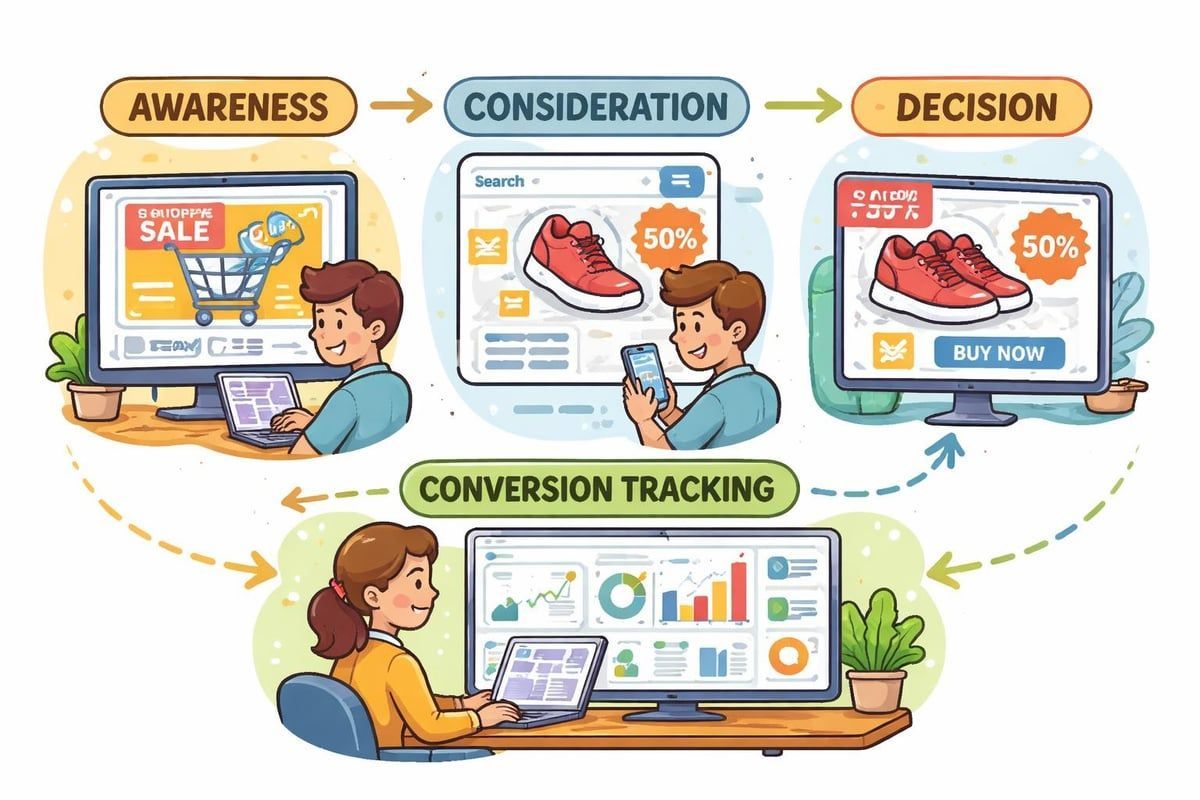
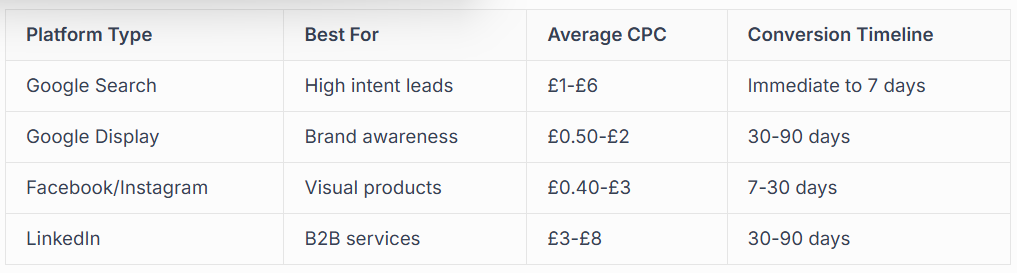
Not all advertising platforms suit every business model. Understanding where your customers spend their time online helps you allocate your budget wisely.
Search Advertising vs Display Advertising
Search ads capture intent-driven customers actively looking for solutions. When someone searches "emergency plumber near me" or "electrician in Manchester," appearing at the top of results can win you immediate business. This is where
PPC advertising companies demonstrate their value.
Display advertising works differently. These visual ads appear across websites, apps, and social media platforms. They're excellent for building brand awareness and reaching people who haven't yet realized they need your service. According to Netco Design's display advertising best practices, quality creative design and strategic audience targeting are essential for maximising ROI.
Local Advertising for Service Businesses
For tradespeople and local service providers, Google Maps advertising deserves special attention. When your
Google Business Profile is properly verified, you can run Local Services Ads that appear prominently when customers search for services in your area.
These ads come with the Google Guarantee badge, building instant trust.
They're particularly effective because:
- They appear above traditional search ads
- Customers can message or call directly
- You only pay for actual leads, not clicks
- They integrate seamlessly with your verified profile
Without a verified Google Business Profile, you're essentially invisible in local search, giving your competitors a significant advantage.
Creating Effective Ad Copy and Creative
The success of your ads for marketing hinges on compelling messaging that resonates with your target audience. Creating engaging ad copy and visuals requires understanding both your customer's pain points and your unique value proposition.
Writing Headlines That Convert
Your headline is the most critical element. It needs to grab attention whilst clearly communicating your offer.
Strong headlines typically include:
- Specific numbers or benefits ("24-Hour Emergency Response")
- Location identifiers for local businesses ("Camden's Trusted Electrician")
- Urgency or exclusivity ("Limited Slots Available This Week")
- Question format that addresses pain points ("Boiler Broken? We're Here Today")
Bold, clear language always outperforms clever wordplay. Your audience should understand exactly what you offer within two seconds of seeing your ad.
Visual Elements That Capture Attention
For display and social ads, your imagery makes or breaks performance. High-quality photos showing real work, genuine team members, or actual customers build trust far more effectively than stock images.
Professional service businesses benefit from showing:
- Before-and-after transformations
- Team members at work
- Completed projects
- Customer testimonials with faces
- Professional certifications or accreditations
The best practices for creating ads on digital platforms emphasise mobile-friendly designs with clear calls to action, as over 70% of ad views now happen on mobile devices.
Targeting and Audience Strategy
The most beautifully crafted ads for marketing fail without proper targeting. Modern advertising platforms offer sophisticated audience segmentation that goes far beyond basic demographics.
Geographic Targeting for Local Businesses
Radius targeting allows you to show ads to people within a specific distance of your business location. For emergency services or local trades, this might be 5-10 miles. For specialized services with less competition, you might extend to 25-30 miles.
Sophisticated advertisers layer location targeting with other factors:
- Time of day (showing heating engineer ads during cold mornings)
- Day of week (promoting weekend services on Thursdays and Fridays)
- Weather conditions (advertising roof repairs during rainy periods)
- Local events or seasons
Demographic and Behavioural Targeting
Understanding who buys your services shapes effective targeting.
Consider these factors:
Age ranges matter significantly. Younger homeowners often search for affordable solutions, whilst established homeowners prioritize quality and reliability.
Income levels influence purchasing decisions. Premium services should target higher-income postcodes, whilst competitive pricing appeals to broader audiences.
Homeownership status proves crucial for property-related services. Renters rarely hire major contractors, whilst homeowners represent your core market.
Budget Management and Bid Strategies
Managing your advertising spend efficiently ensures sustainable growth. Many UK businesses waste thousands annually through poor budget allocation.
Setting Realistic Advertising Budgets
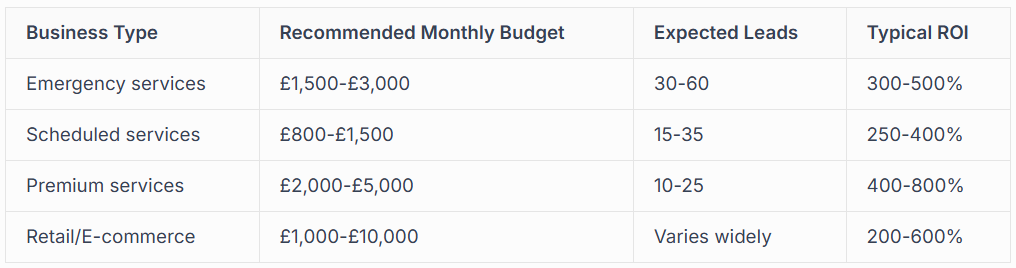
A common question: how much should you spend on ads for marketing? The answer depends on your business goals, profit margins, and competition levels.
Start with this framework:
- Calculate your customer lifetime value (how much profit one customer generates)
- Determine acceptable acquisition costs (typically 20-30% of first transaction value)
- Estimate conversion rates (usually 2-5% for local services)
- Work backwards to calculate required ad spend
Automated vs Manual Bidding
Automated bidding strategies use machine learning to optimize your bids automatically. Google's Smart Bidding adjusts bids in real-time based on conversion likelihood. These work well once you've gathered sufficient conversion data (typically 30+ conversions per month).
Manual bidding gives you complete control but requires constant monitoring. It's ideal when starting out or when you have specific cost-per-acquisition targets that automated systems struggle to meet.
For businesses exploring Google Ads management services, professional management often pays for itself through improved efficiency and reduced wasted spend.
Measuring Success and Optimization
Creating ads for marketing represents only half the equation. Continuous measurement and refinement separate profitable campaigns from money pits.
Key Performance Indicators to Track
Focus on metrics that actually impact your bottom line:
Conversion Rate tells you what percentage of clicks become leads or sales. Industry averages range from 2-5%, but well-optimized campaigns can achieve 10-15%.
Cost Per Acquisition (CPA) reveals how much you're spending to gain each customer. This must remain below your acceptable threshold to maintain profitability.
Return on Ad Spend (ROAS) shows revenue generated for every pound spent. A 3:1 ROAS means you're generating £3 for every £1 spent on advertising.
Quality Score (Google Ads specific) affects your ad position and costs. Higher scores mean lower costs and better placement. Improving your website SEO and landing page relevance boosts Quality Score.
A/B Testing for Continuous Improvement
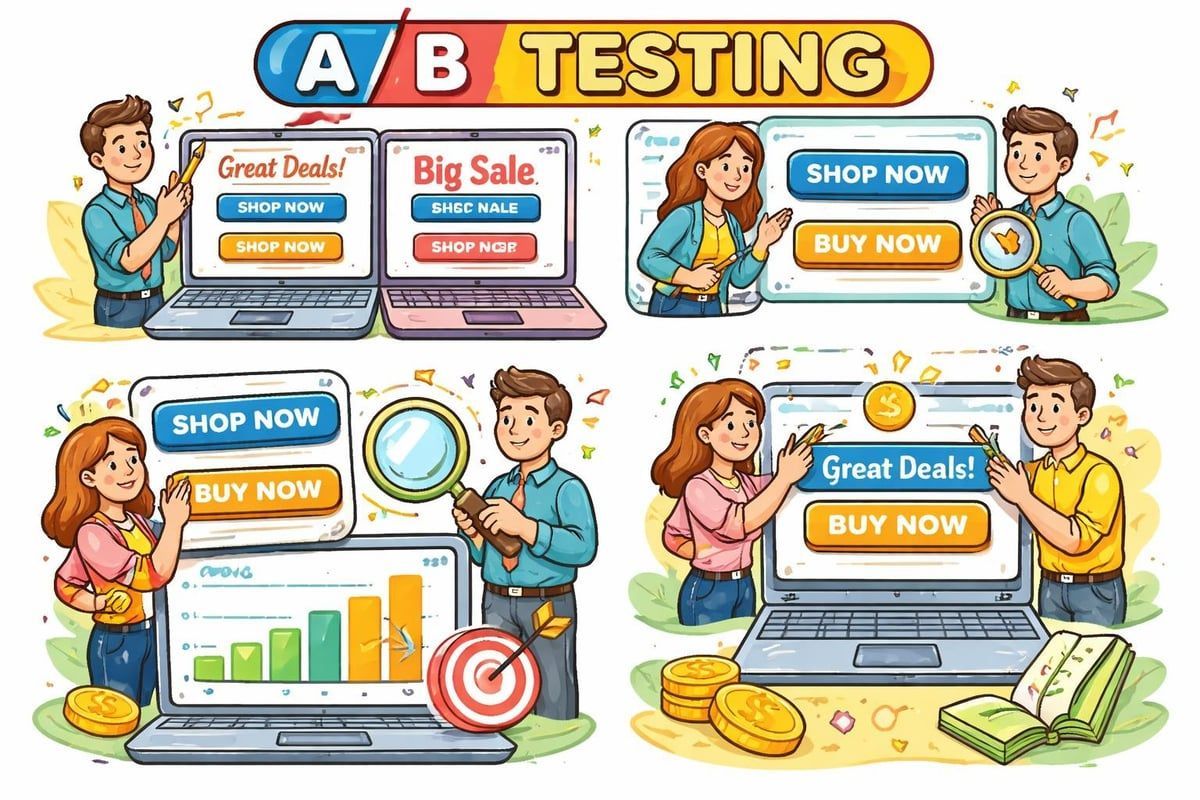
Never settle for your first ad version. Creating ads that convert requires systematic testing of different elements.
Test these components individually:
- Headlines and value propositions
- Call-to-action phrases
- Visual elements and imagery
- Landing page layouts
- Offer structures and pricing displays
Run tests for at least two weeks or until you've gathered 100+ clicks per variation. Statistical significance matters, small sample sizes produce misleading results.

Common Mistakes to Avoid
Even experienced marketers fall into traps when managing ads for marketing. Learning from common mistakes saves both money and frustration.
Neglecting Mobile Optimization
Over 75% of local searches happen on mobile devices. Yet many businesses direct mobile users to desktop-optimized landing pages with tiny text and difficult navigation.
Mobile-first design isn't optional anymore. Your landing pages must load quickly (under 3 seconds), feature large, tappable buttons, and display key information above the fold. According to best practices for effective display ads, mobile responsiveness directly impacts conversion rates.
Ignoring Negative Keywords
Negative keywords prevent your ads from showing for irrelevant searches. Without them, you'll waste budget on clicks from people seeking free information, DIY solutions, or entirely different services.
For an electrician, negative keywords might include:
- Training, courses, apprenticeships
- DIY, yourself, instructions
- Jobs, careers, vacancies
- Free, volunteer, charity
Review your search terms report weekly and add irrelevant queries to your negative keyword list.
Sending Traffic to Your Homepage
Your homepage serves multiple purposes and rarely converts well for specific ad campaigns. Instead, create dedicated landing pages that match your ad messaging exactly.
A landing page for emergency plumbing should feature:
- Clear emergency contact information
- Service area coverage
- Response time guarantees
- Pricing transparency
- Trust signals (reviews, certifications, insurance)
Advanced Strategies for 2026
As advertising platforms evolve, sophisticated techniques emerge that give early adopters competitive advantages.
Retargeting and Remarketing
Most customers don't convert on their first visit. Retargeting ads follow previous website visitors across the internet, reminding them of your services.
Retargeting works brilliantly for considered purchases. Someone researching boiler replacements might visit dozens of websites before choosing. Stay visible throughout their research process.
Set up audiences based on specific behaviours:
- Page-specific visitors (people who viewed your pricing page)
- Time-based segments (visitors from the past 7, 14, or 30 days)
- Engagement level (those who spent 2+ minutes on site)
- Cart abandoners (for e-commerce businesses)
Integration with Local SEO
The most effective marketing combines paid advertising with strong organic presence. Your
verified Google Business Profile, customer reviews, and local citations all influence both organic rankings and ad performance.
Businesses with verified profiles often see 30-50% lower cost-per-click rates because Google rewards relevant, trustworthy advertisers. If you're struggling with verification, professional verification services can resolve issues quickly.
Seasonal Campaign Planning
Plan your advertising calendar around predictable demand fluctuations. Heating engineers should increase budgets before winter, whilst gardeners ramp up in spring.
Create seasonal campaigns months in advance:
- Pre-season awareness (display ads building brand recognition)
- Peak season conversion (aggressive search campaigns)
- Off-season retention (remarketing to previous customers)
Compliance and Best Practices
Advertising regulations protect consumers but create obligations for businesses. Understanding UK advertising standards prevents costly mistakes.
ASA Guidelines for UK Advertisers
The Advertising Standards Authority requires all ads to be legal, decent, honest, and truthful.
Specific rules include:
- Substantiating claims with evidence (don't claim "best" or "cheapest" without proof)
- Clearly identifying ads as promotional content
- Pricing transparency (include VAT, mention additional fees)
- Not misleading customers about qualifications or certifications
Data Protection and Privacy
GDPR affects how you collect and use customer data from advertising campaigns.
Ensure your website has:
- Clear privacy policies
- Cookie consent mechanisms
- Secure data storage
- Opt-in email marketing processes
Violations carry substantial fines, making compliance non-negotiable for UK businesses.
Working with Advertising Professionals
Many business owners find ads for marketing overwhelming, particularly when juggling daily operations. Professional help often delivers better results whilst freeing your time.
When to Hire an Agency
Consider professional management when:
- You're spending £1,000+ monthly but seeing poor results
- You lack time to monitor and optimize campaigns daily
- Your industry faces intense competition requiring sophisticated strategies
- You're expanding to new markets or services
PPC and Google Ads specialists bring experience from managing hundreds of campaigns. They know what works, spot issues quickly, and stay current with platform changes.
What to Expect from Professional Management
Quality agencies provide:
- Strategic planning aligned with your business goals, not just running ads without purpose.
- Regular reporting showing actual business impact, not vanity metrics like impressions or clicks.
- Proactive optimization making improvements before you need to ask.
- Transparent communication explaining what they're doing and why it matters.
- Many agencies also offer creative advertising services that handle everything from ad copy to landing page design, creating cohesive campaigns that maximize conversion potential.
Building Long-Term Advertising Success
Sustainable growth through ads for marketing requires strategic thinking beyond immediate returns. The most successful businesses build advertising systems that compound over time.
Creating a Testing Framework
Develop a systematic approach to improvement:
- Week 1-2: Establish baseline performance with initial campaigns
- Week 3-4: Test headline variations
- Week 5-6: Test different offers or calls-to-action
- Week 7-8: Test audience segments
- Week 9-10: Test landing page layouts
Document everything. What worked for Christmas might fail in summer. Build a knowledge base of insights specific to your business and market.
Scaling What Works
Once you've identified winning combinations, scale gradually. Doubling your budget overnight often reduces efficiency as you exhaust your best audiences.
Increase spending by 20-30% weekly whilst monitoring key metrics. If performance remains strong, continue scaling. When efficiency drops, pause and optimize before expanding further.
Real success stories, like those featured in Microsoft Advertising case studies, demonstrate how businesses systematically test, refine, and scale their advertising efforts over months and years.
Diversifying Your Advertising Mix
Relying entirely on one platform creates risk. Algorithm changes, policy updates, or increased competition can devastate single-channel strategies.
Successful businesses typically allocate their advertising budgets across:
- Search advertising (40-50% of budget)
- Display and remarketing (20-30%)
- Social media platforms (15-25%)
- Emerging channels (5-10% for testing)
- This diversification ensures stability whilst allowing exploration of new opportunities. As you grow, certain channels might prove more valuable for your specific business, justifying reallocation.
Effective ads for marketing combine strategic planning, compelling creative, precise targeting, and continuous optimization. Whether you're just starting with paid advertising or looking to improve existing campaigns, the principles outlined here provide a foundation for sustainable growth. At Connect SEO Ltd, we understand that local businesses need more than just advertising expertise. They need partners who understand both their trade and the digital landscape, which is why our Google Business Profile verification and management services complement your advertising efforts perfectly. We ensure your business appears credible, verified, and ready to convert the traffic your ads generate into actual customers.