Google PPC Advertising: Your Complete 2026 Guide
Google PPC advertising has transformed how local businesses connect with customers actively searching for their services. Whether you're a tradesman, solicitor, or retailer, understanding how pay-per-click advertising works can dramatically increase your visibility and customer enquiries. In 2026, the landscape continues to evolve with smarter bidding strategies, better integration with Google Business Profiles, and more sophisticated targeting options. This comprehensive guide will walk you through everything you need to know about google PPC advertising, from basic concepts to advanced strategies that deliver real results for your business.
Understanding Google PPC Advertising Fundamentals
Google PPC advertising operates on a simple yet powerful principle: you only pay when someone clicks your advert. This makes it one of the most cost-effective marketing channels available because you're investing directly in potential customers who are actively searching for what you offer.
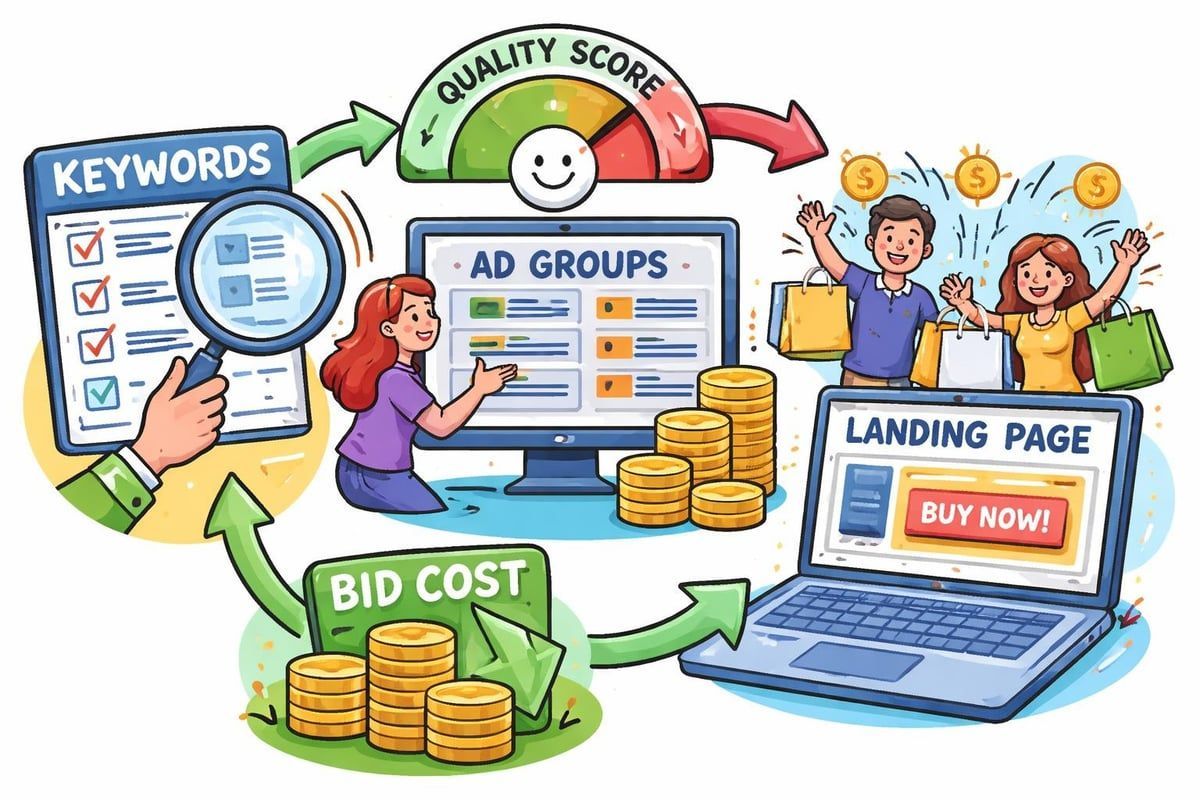
When someone types a search query into Google, an auction happens instantaneously. Advertisers competing for that keyword submit bids, and Google's algorithm determines which adverts appear based on bid amount, advert quality, and relevance. Your advert position isn't just about having the deepest pockets – it's about creating relevant, high-quality campaigns that serve user intent.
The beauty of Google PPC advertising lies in its measurability. Every click, impression, and conversion can be tracked, giving you complete transparency over your marketing spend. You'll know exactly which keywords bring in customers, what time of day performs best, and which geographical areas generate the most enquiries.
Key Components of a Successful PPC Campaign
Building an effective google PPC advertising campaign requires several interconnected elements:
- Keyword research – identifying the terms your customers actually use
- Advert copy – compelling messages that encourage clicks
- Landing pages – optimised pages where users arrive after clicking
- Bid strategy – how much you're willing to pay per click
- Quality Score – Google's rating of your advert relevance and quality
- Conversion tracking – measuring actions that matter to your business
Each component influences the others. Your Quality Score affects your cost-per-click. Your landing page experience impacts conversion rates. Your keyword selection determines who sees your adverts. Understanding these relationships is crucial for campaign success.
How Google Ads Auctions Work in 2026
The
Google Ads auction system has become increasingly sophisticated. Rather than simply awarding positions to the highest bidder, Google evaluates multiple factors to determine which adverts appear and in what order.
Ad Rank is the metric that determines your position. It's calculated by multiplying your maximum bid by your Quality Score, then adding factors like expected impact from ad extensions. This means a smaller business with highly relevant adverts and excellent landing pages can outrank larger competitors spending more money.
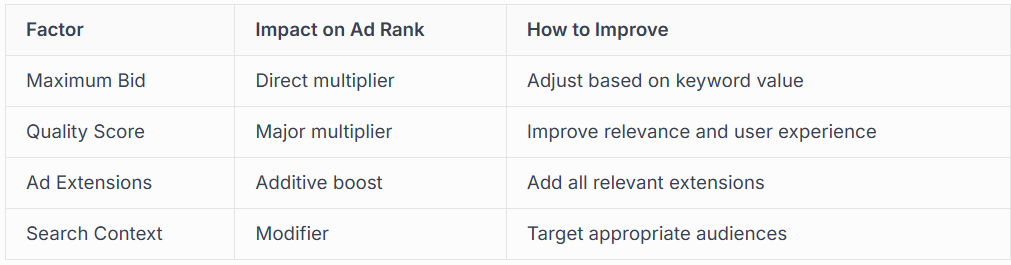
Quality Score ranges from 1 to 10 and evaluates three main areas: expected click-through rate, advert relevance, and landing page experience. Improving your Quality Score reduces costs whilst improving positions – making it perhaps the most important metric to monitor.
Smart Bidding Strategies for Local Businesses
In 2026, Google's automated bidding strategies have matured significantly. These machine learning algorithms analyse countless signals to adjust bids in real-time, optimising for your specific goals.
Target CPA (Cost Per Acquisition) bidding automatically sets bids to get as many conversions as possible at your target cost per conversion. If you know you can profitably acquire a customer for £50, this strategy works towards that goal across all your keywords.
Maximise Conversions focuses purely on getting the most conversions within your budget, regardless of cost. This works brilliantly for businesses with high customer lifetime values or those running time-sensitive promotions.
For service businesses, Target ROAS (Return on Ad Spend) can be particularly effective once you've tracked enough conversion data. The system learns which clicks are most likely to generate high-value customers and adjusts accordingly.
Connecting PPC with Your Google Business Profile
One area where many businesses miss opportunities is the integration between google PPC advertising and their
Google Business Profile. These two powerful tools work together to dominate local search results.
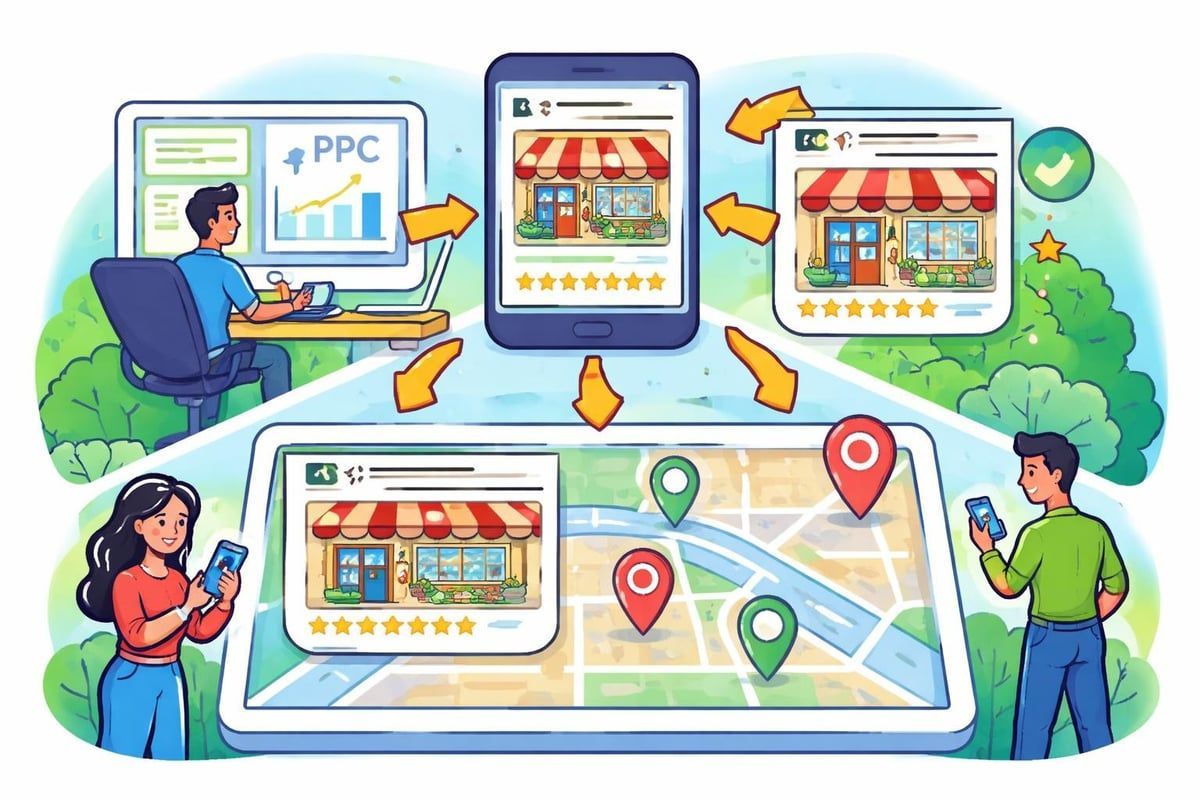
When you run location extensions alongside your PPC campaigns, your business address, phone number, and distance from the searcher appear directly in your advert. This increases trust and makes it effortless for customers to contact you.
Your Google Business Profile verification status directly impacts your advertising effectiveness. An unverified profile sends negative trust signals, potentially reducing click-through rates and increasing costs. Verified profiles with complete information, positive reviews, and regular updates create a halo effect that improves overall performance.
Consider this scenario: A customer searches for "emergency plumber near me" at 11pm. Two adverts appear with similar messaging. One shows a verified business with 47 five-star reviews, photos, and a phone number. The other has no additional information. Which gets the click?
Leveraging Profile Verification for Better Ad Performance
Managing your online reputation becomes critical when running PPC campaigns. Research shows that businesses with higher review ratings achieve better Quality Scores and lower costs-per-click.
When your Google Business Profile is properly verified and optimised, you can:
- Add location extensions that show your exact address
- Display your star rating directly in search adverts
- Trigger Local Pack appearances alongside paid adverts
- Reduce wasted spend from irrelevant geographical clicks
- Build credibility through consistency across paid and organic results
At Connect SEO Ltd, we've seen clients reduce their cost-per-acquisition by 30-40% simply by fully optimising and verifying their Google Business Profile before launching PPC campaigns. The synergy between organic local visibility and paid advertising creates compound benefits.
Budget Planning and Cost Management
Understanding
Google advertising costs prevents nasty surprises and ensures sustainable campaigns. In 2026, average costs-per-click vary dramatically by industry, competition level, and geographical targeting.
Local service businesses typically pay between £2-£15 per click for high-intent keywords. "Emergency plumber London" might cost £12 per click, whilst "plumbing tips" might only cost £0.50. The difference? Purchase intent.
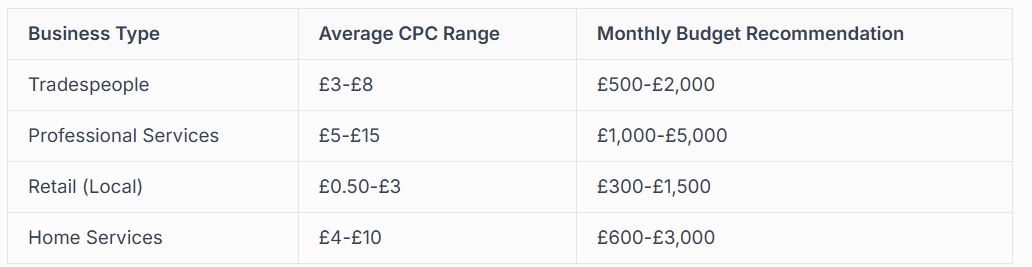
Start with a modest budget and scale what works. Many successful campaigns begin with just £500-£1,000 monthly, test various keywords and adverts, then increase investment in the highest-performing areas.
Calculating Your Target Cost-Per-Acquisition
Before launching any
Google PPC advertising campaign, calculate how much you can afford to pay for a new customer. This reverse-engineering approach prevents overspending.
If your average customer is worth £500 and you want a 5:1 return on ad spend, you can afford to pay £100 per acquisition. If 10% of clicks convert, you can afford £10 per click. These calculations guide your bidding strategy and keyword selection.
Lifetime customer value changes everything. A customer who returns quarterly for three years isn't worth the same as a one-time purchaser. Factor in repeat business when calculating acceptable acquisition costs.
Keyword Research for Maximum ROI
Effective keyword selection separates profitable campaigns from money-wasting exercises. In 2026, successful google PPC advertising campaigns use a strategic mix of keyword types and match options.
Broad match keywords now incorporate Google's advanced understanding of search intent. Whilst they offer maximum reach, they require careful negative keyword management to prevent irrelevant clicks.
Phrase match provides the sweet spot for most local businesses – capturing variations whilst maintaining relevance. "Boiler repair" in phrase match shows for "emergency boiler repair service" but not "DIY boiler repair tips".
Exact match targets specific queries with precision. These keywords typically convert best but have limited volume. Use them for your most valuable, high-intent searches.
Building Your Keyword Strategy
- Start with core services – List everything you offer
- Add location modifiers – Include your service areas
- Consider urgency – "Emergency", "same day", "24 hour"
- Think about problems – What issues do customers need solving?
- Include brand terms – Protect your business name from competitors
Don't forget negative keywords. If you're a high-end jeweller, add "cheap", "discount", and "DIY" as negatives. These prevent clicks from bargain hunters who'll never convert.
The PPC and Google Ads services we provide include comprehensive keyword research that identifies opportunities competitors overlook, particularly long-tail variations with strong commercial intent.
Writing Adverts That Convert
Your advert copy bridges the gap between search intent and click decision. In 2026, Google provides more space and formatting options than ever, but core principles remain unchanged.
Headlines matter most. With up to three 30-character headlines, you need to communicate value instantly. Include your keyword, unique selling proposition, and ideally a benefit or offer.
Effective headline formulas:
- [Service] + [Location] + [Timeframe] – "Emergency Electrician London | 1hr Response"
- [Problem] + [Solution] + [Proof] – "Boiler Broken? Fixed Today | 5* Rated"
- [Offer] + [Benefit] + [Call-to-Action] – "Free Quote | Save 20% | Call Now"
Your description lines provide supporting details. Mention guarantees, certifications, years in business, or special offers. Create urgency where appropriate, but never sacrifice honesty for clicks.
Ad Extensions Boost Performance
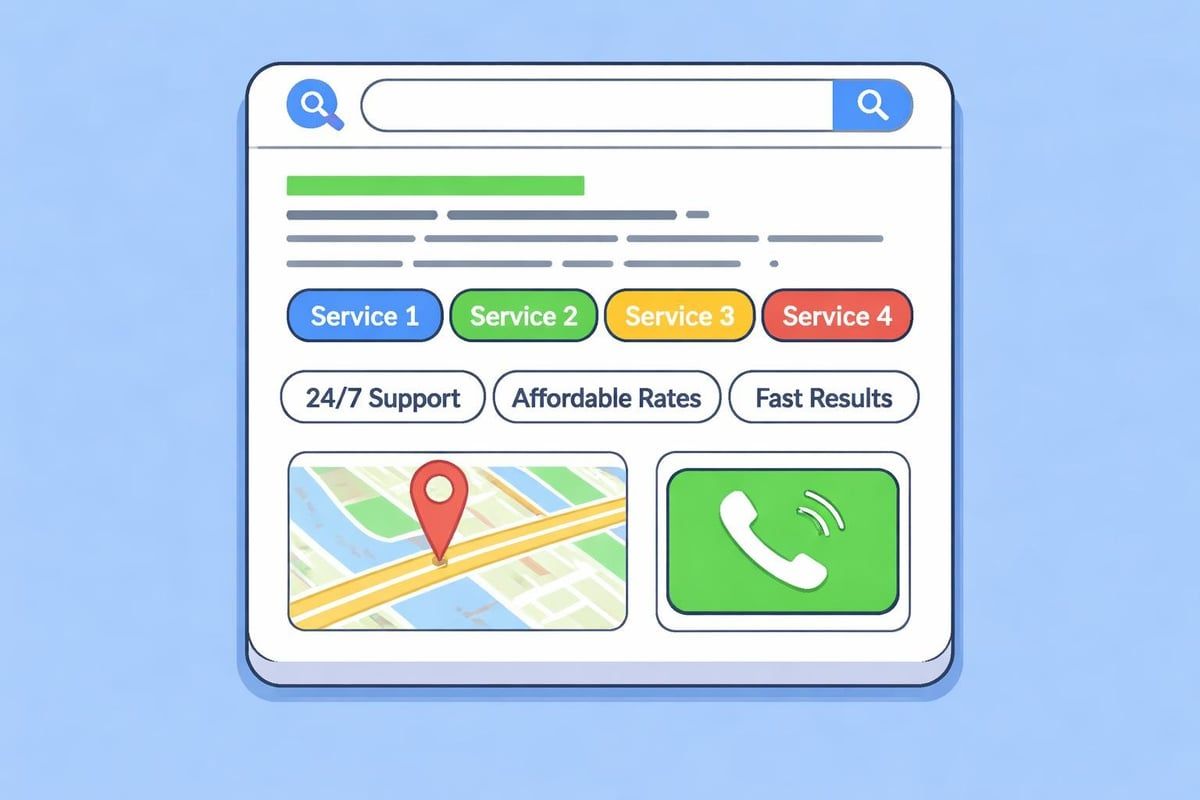
Extensions expand your advert real estate and provide additional information at no extra cost. They improve click-through rates by 10-15% on average.
- Sitelink Extensions – Direct users to specific pages
- Callout Extensions – Highlight benefits without clickable links
- Call Extensions – Add your phone number with click-to-call
- Location Extensions – Show address and distance
- Price Extensions – Display your service prices upfront
Using all relevant extensions increases your Ad Rank, potentially improving position whilst reducing costs. They also provide more ways for customers to interact with your business.
Landing Page Optimisation for PPC
Sending expensive clicks to your homepage wastes money. Dedicated landing pages aligned with search intent convert dramatically better and improve your Quality Score.
Message matches are paramount. If your advert promises "Free Boiler Survey", your landing page headline must echo that promise. Consistency builds trust and reduces bounce rates.
Key landing page elements:
- Clear, benefit-focused headline matching the advert
- Compelling hero image or video showing your service
- Trust signals – reviews, certifications, guarantees
- Simple conversion path – form or phone number
- Mobile-optimised design with fast loading speed
- Minimal navigation to reduce distraction
Your landing page should answer the question: "What happens next?" Make the next step obvious and effortless. Forms should request only essential information. Phone numbers should be clickable on mobile.
Testing and Improving Performance
Successful google PPC advertising campaigns evolve through systematic testing. A/B test one element at a time to identify what truly impacts results.
Test variations of headlines, images, form lengths, button colours, and calls-to-action. Give each test sufficient traffic (typically 100+ conversions per variation) before drawing conclusions.
Tools like Microsoft Clarity or Hotjar show how users interact with your landing pages. Heatmaps reveal where people click, scroll maps show how far they read, and session recordings expose friction points in the conversion process.
Google Ads Policy Compliance
Understanding
what types of PPC ads are prohibited prevents disapprovals and account suspensions. Google maintains strict policies to protect users from misleading or harmful adverts.
Common policy violations include:
- Misleading claims – Unrealistic promises or fake reviews
- Capitalisation abuse – WRITING ENTIRE HEADLINES IN CAPS
- Trademark infringement – Using competitors' brands without permission
- Prohibited content – Certain industries have additional restrictions
- Destination mismatches – Landing pages that don't deliver on ad promises
Stay informed about policy updates. Google regularly refines its rules, particularly around sensitive topics like healthcare, financial services, and legal advice. What was acceptable last year might not be today.
Measuring Success and ROI
Data without action wastes time. Focus on metrics that directly relate to business outcomes rather than vanity numbers.
Conversion rate matters more than traffic volume. Would you rather have 100 clicks with 10 conversions or 1,000 clicks with 20 conversions? The first scenario costs less and generates more business.
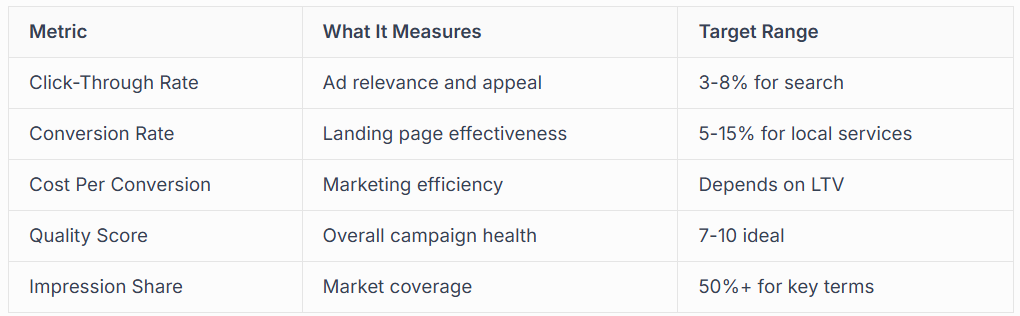
Set up conversion tracking properly from day one. Track phone calls, form submissions, and any other meaningful actions. Without accurate conversion data, you're flying blind.
Attribution and Multi-Touch Journeys
In 2026, customer journeys rarely involve a single touchpoint. Someone might see your advert today, visit your website tomorrow, and call next week. Attribution modelling helps understand the role google PPC advertising plays in your overall marketing mix.
Last-click attribution credits the final interaction before conversion. This undervalues PPC's role in awareness and consideration stages.
Data-driven attribution uses machine learning to assign credit across touchpoints based on their actual contribution to conversions. Enable this in Google Ads once you have sufficient conversion data.
Industry-Specific PPC Strategies
Different businesses require tailored approaches to google PPC advertising. A tradesperson targeting emergency call-outs needs different strategies than a boutique hotel seeking weekend bookings.
Tradespeople and home services should emphasise speed, availability, and local proximity. Use ad scheduling to increase bids during peak emergency hours. Highlight 24/7 availability, same-day service, or fast response times. The electrician advertising strategies we implement focus heavily on urgency and local trust signals.
Professional services like solicitors or accountants benefit from emphasising expertise, credentials, and free consultations. Longer sales cycles mean remarketing becomes crucial – staying visible as prospects research their options over weeks or months.
Retail businesses should leverage Shopping campaigns alongside Search campaigns. Product feeds showing prices and images capture high-intent shoppers effectively. Seasonal promotions and limited-time offers drive urgency.
Advanced Tactics for Competitive Markets
When competition intensifies, advanced tactics separate winners from also-rans. These strategies require more management but deliver substantial advantages.
Audience layering combines keyword targeting with demographic, interest, or remarketing audiences. Bid higher for users who've previously visited your website, live in high-value postcodes, or match your ideal customer profile.
Dayparting adjusts bids based on day and time. If your conversion rate doubles between 9am-11am on weekdays, increase bids during those hours. Reduce spend when conversions drop, even if traffic remains available.
Competitor targeting allows bidding on rival brand names. This controversial tactic requires careful consideration of legal and ethical implications, but can capture customers comparing options.
Remarketing Strategies That Work
Most website visitors won't convert on their first visit. Remarketing keeps your business visible as they continue researching.
Create audience segments based on behaviour:
- All website visitors – General brand awareness with softer messaging
- Service page viewers – Specific offers related to services they viewed
- Cart abandoners – Direct calls-to-action with urgency
- Past customers – Cross-sell or upsell campaigns
Frequency capping prevents ad fatigue. Showing someone your advert 50 times daily irritates rather than persuades. Limit impressions to 3-5 per day for most campaigns.
Integration with Broader Marketing Efforts
Google PPC advertising works best as part of a cohesive marketing strategy, not in isolation. Coordinate messaging across channels for maximum impact.
Your Google Business Profile management should mirror your PPC messaging. If adverts emphasise 24-hour service, ensure your profile hours reflect that. If campaigns highlight your 5-star rating, actively request reviews to maintain it.
Content marketing supports PPC through improved Quality Scores. Blog posts targeting informational keywords build topical authority, potentially reducing costs for commercial terms in the same category.
Social proof from satisfied customers amplifies campaign effectiveness. Feature testimonials on landing pages. Share case studies in ad copy. Build trust through consistency and evidence.
Mastering Google PPC advertising requires ongoing learning, testing, and refinement, but the results justify the effort when campaigns are built on solid foundations of verified profiles and strategic targeting. At Connect SEO Ltd, we combine our expertise in Google Business Profile verification with sophisticated PPC management to help local businesses dominate their markets. Whether you need profile verification, campaign setup, or comprehensive management, our team brings both technical knowledge and real-world trading experience. Ready to transform your online visibility and generate consistent customer enquiries? Partner with Connect SEO Ltd today and let's build campaigns that deliver measurable growth for your business.