
Google AdWords PPC Campaign Success in 2026
Running a successful google adwords PPC campaign requires more than just throwing money at keywords and hoping for results. Whether you're a plumber, electrician, or any trades professional looking to grow your business, understanding how to optimise your paid advertising efforts can make the difference between wasted budget and a steady stream of qualified leads. With Google Ads constantly evolving, staying on top of best practices ensures your campaigns deliver maximum return on investment whilst reaching the exact customers who need your services right now.
Understanding the Fundamentals of a Google AdWords PPC Campaign
A
google adwords PPC campaign operates on a simple yet powerful principle: you only pay when someone clicks on your advertisement. This makes it fundamentally different from traditional advertising where you pay for exposure regardless of results. For local businesses, this performance-based model offers incredible opportunities to control costs whilst targeting potential customers in specific geographic areas.
The beauty of PPC lies in its measurability and flexibility. Every click, impression, and conversion gets tracked, allowing you to see exactly which keywords, ad copy, and landing pages drive actual business results. This data-driven approach means you can continuously refine your strategy based on real performance metrics rather than guesswork.
Core Components That Drive Campaign Success
Your campaign structure forms the foundation of everything else. Think of it as building a house: without solid groundwork, everything else crumbles.
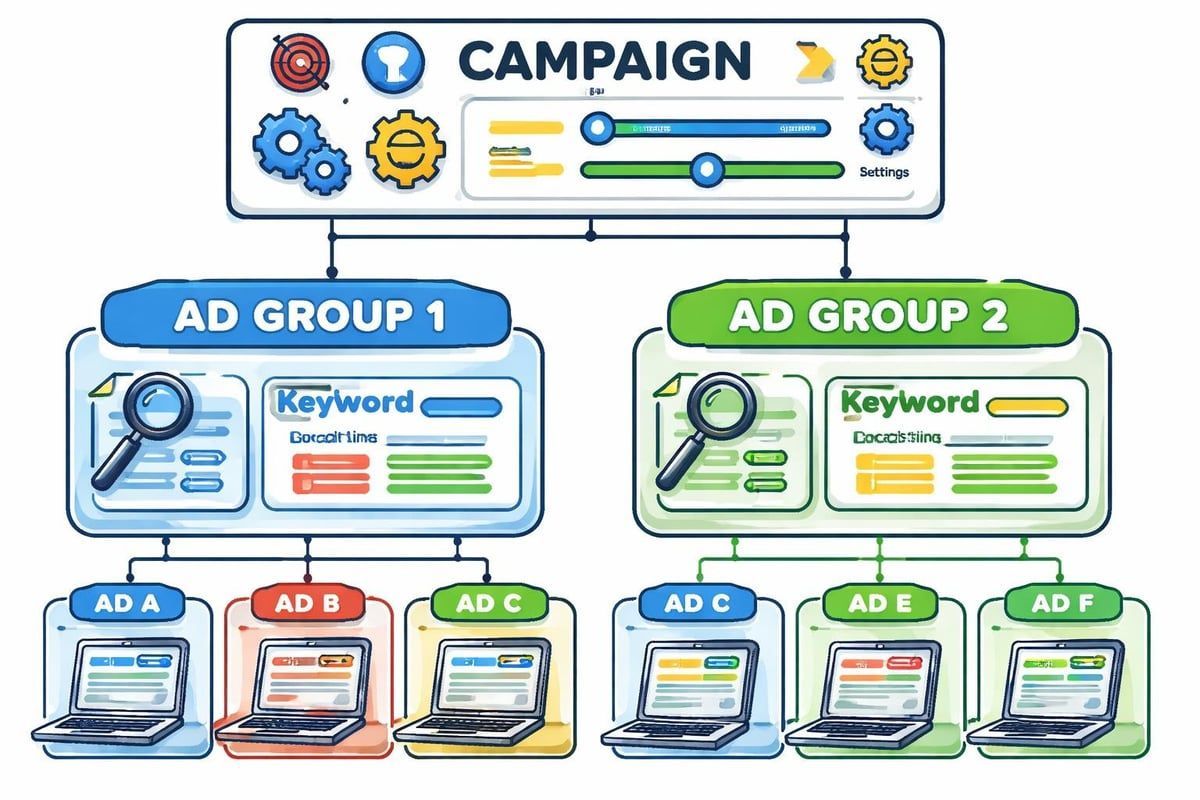
A well-organised google adwords PPC campaign typically consists of:
- Campaign level: Budget settings, geographic targeting, and scheduling
- Ad group level: Themed keyword clusters with relevant ad copy
- Keyword level: Individual search terms with match type specifications
- Ad level: Multiple ad variations to test messaging approaches
Quality Score significantly impacts your campaign performance and costs. Google assigns this rating based on your ad relevance, expected click-through rate, and landing page experience. Higher Quality Scores mean lower costs per click and better ad positions, so focusing on relevance across all elements pays dividends.
Keyword Strategy and Match Types for Maximum Impact
Selecting the right keywords represents perhaps the most critical decision in your
google adwords PPC campaign. For local trades businesses, this means understanding the difference between broad commercial intent ("plumber near me") and specific service requests ("emergency boiler repair Greenwich").
Start with thorough keyword research using Google's Keyword Planner and competitor analysis. Look for terms with sufficient search volume but manageable competition. Long-tail keywords often convert better for local businesses because they capture specific intent.
Balancing Match Types for Control and Reach
Match types determine how closely a searcher's query must match your keyword before your ad appears. Here's how each type serves different strategic purposes:
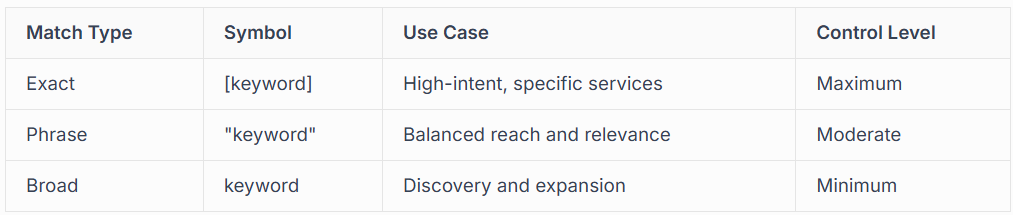
Broad match modified and phrase match keywords often provide the sweet spot for local service businesses. They capture variations whilst maintaining relevance, preventing your budget from disappearing on irrelevant searches. Many successful PPC campaigns strategies emphasise starting narrow and expanding based on search term reports.
Negative keywords deserve equal attention to your target keywords. If you're a residential plumber, adding "commercial," "wholesale," and "jobs" as negatives prevents wasting budget on unsuitable traffic. Review your search term reports weekly to identify new negative keywords and refine targeting continuously.
Crafting Compelling Ad Copy That Converts
Your ad copy serves as your first impression with potential customers, so making it count matters enormously. With limited character space, every word must earn its place. For a google adwords PPC campaign targeting local customers, incorporating location-specific elements and service differentiators helps you stand out.
Effective ad copy follows a proven structure:
- Headline 1: Include your primary keyword and location
- Headline 2: State your unique selling proposition or offer
- Headline 3: Add urgency or additional benefit
- Description lines: Explain your service, benefits, and clear call-to-action
Testing Variations for Continuous Improvement
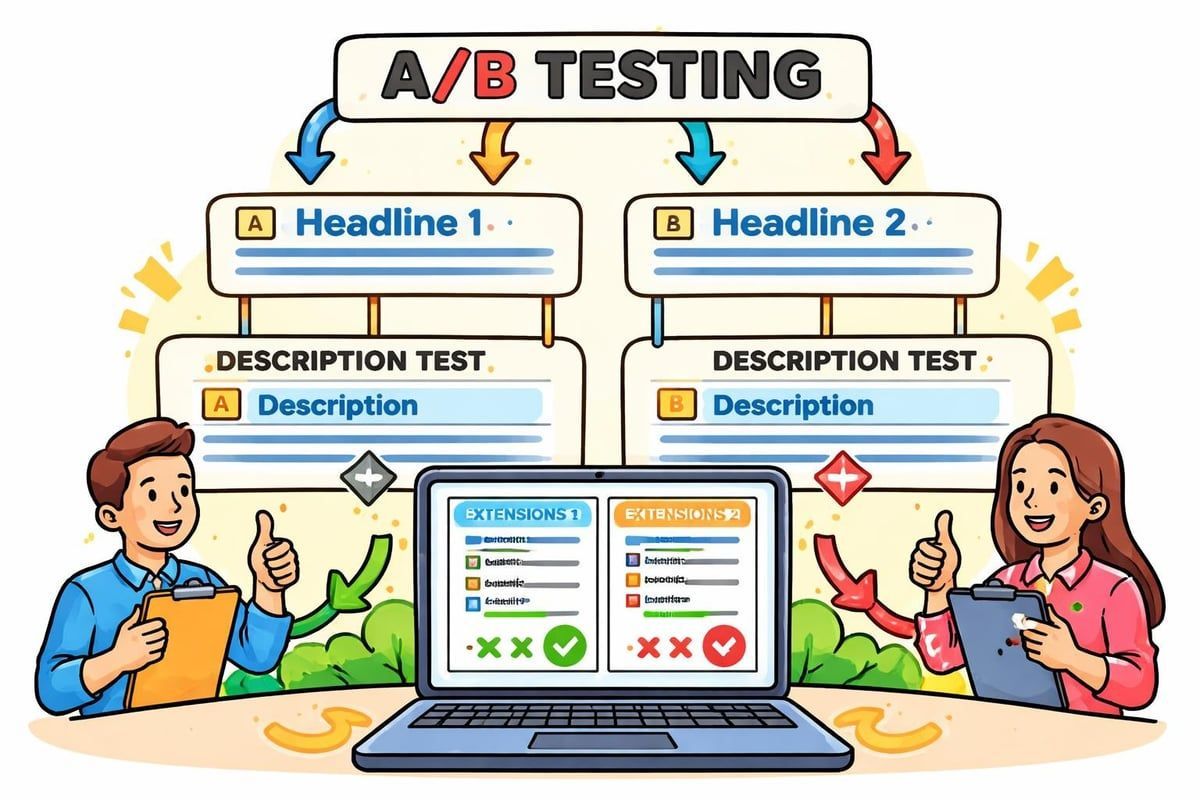
Never run just one ad per ad group. Create at least three variations testing different angles, offers, and calls-to-action. Google's responsive search ads automatically test combinations, but maintaining control with expanded text ads ensures your messaging stays on-brand.
Winning elements to test include:
- Different service benefits (speed vs. quality vs. price)
- Urgency triggers (same-day service vs. 24/7 availability)
- Social proof (years in business vs. customer reviews)
- Offer variations (free quotes vs. money-back guarantee)
Implementing ad extensions dramatically improves your ad's visibility and click-through rate. Sitelink extensions, callout extensions, and location extensions provide additional information whilst occupying more screen real estate. For Google Ads management services, these extensions often make the difference between a user clicking your ad versus a competitor's.
Bid Management Strategies That Protect Your Budget
Managing bids effectively determines whether your google adwords PPC campaign generates profit or drains resources. Manual bidding gives you complete control but requires constant monitoring. Automated bidding strategies use Google's machine learning to optimise towards your goals, but need sufficient conversion data to perform well.
For businesses just starting out, enhanced cost-per-click (ECPC) provides a sensible middle ground. It allows manual bid control whilst letting Google adjust bids up or down based on conversion likelihood. As you gather more data, transitioning to Target CPA or Target ROAS bidding can improve efficiency.
Budget Allocation Across Campaigns and Ad Groups
Never put all your budget into a single campaign. Segment spending based on performance potential:
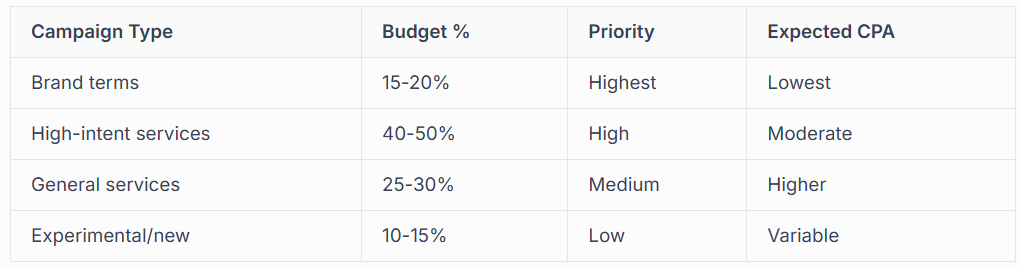
Monitor your Google advertising costs closely, especially during the first month. Start with conservative budgets and scale up winners rather than spending heavily upfront. Many best practices for PPC emphasise gradual optimisation over aggressive spending.
Dayparting allows you to show ads only during hours when you're available to answer enquiries or when conversion rates historically perform best. If you're a sole trader who can't answer calls during certain hours, pause ads during those times to avoid wasting budget on leads you can't service.
Landing Page Optimisation for Higher Conversion Rates
Your ad's job is getting the click. Your landing page's job is converting that click into a customer. Even the most perfectly executed google adwords PPC campaign fails if visitors land on a poor page. Every pound spent on clicks gets wasted if your landing experience doesn't deliver.
Page load speed ranks among the most critical factors. Google reports that 53% of mobile users abandon sites taking longer than three seconds to load. Compress images, minimise code, and use fast hosting to ensure visitors don't bounce before seeing your offer.
Essential Elements Every PPC Landing Page Needs
Your landing page should maintain a message match with the ad that brought visitors there. If your ad promises "Emergency 24/7 Boiler Repair," that exact phrase should appear prominently on the landing page. This consistency reassures visitors they've found what they searched for.
Key components for conversion-optimised pages:
- Clear, benefit-focused headline matching ad copy
- Prominent phone number and contact form
- Trust signals (certifications, reviews, years in business)
- Service details with transparent pricing information
- Strong, specific call-to-action buttons
- Mobile-responsive design for on-the-go searchers
For local service businesses, including your Google Business Profile link and encouraging reviews creates a powerful trust loop. Visitors can verify your legitimacy through genuine customer feedback, which significantly increases conversion likelihood. Understanding Google Ads campaign essentials includes recognising how landing pages and business profiles work together.
Tracking, Measurement, and Performance Analysis
You cannot improve what you don't measure. Setting up proper conversion tracking represents the difference between guessing and knowing what works in your google adwords PPC campaign. Define what constitutes a valuable action: phone calls, form submissions, bookings, or purchases.
Google Ads conversion tracking integrates with Google Analytics to provide comprehensive data about user behaviour. Install conversion tracking codes on your thank-you pages, and set up call tracking to measure phone enquiries generated by ads. This data becomes invaluable for optimising bids, keywords, and ad copy
.
Key Metrics to Monitor Weekly
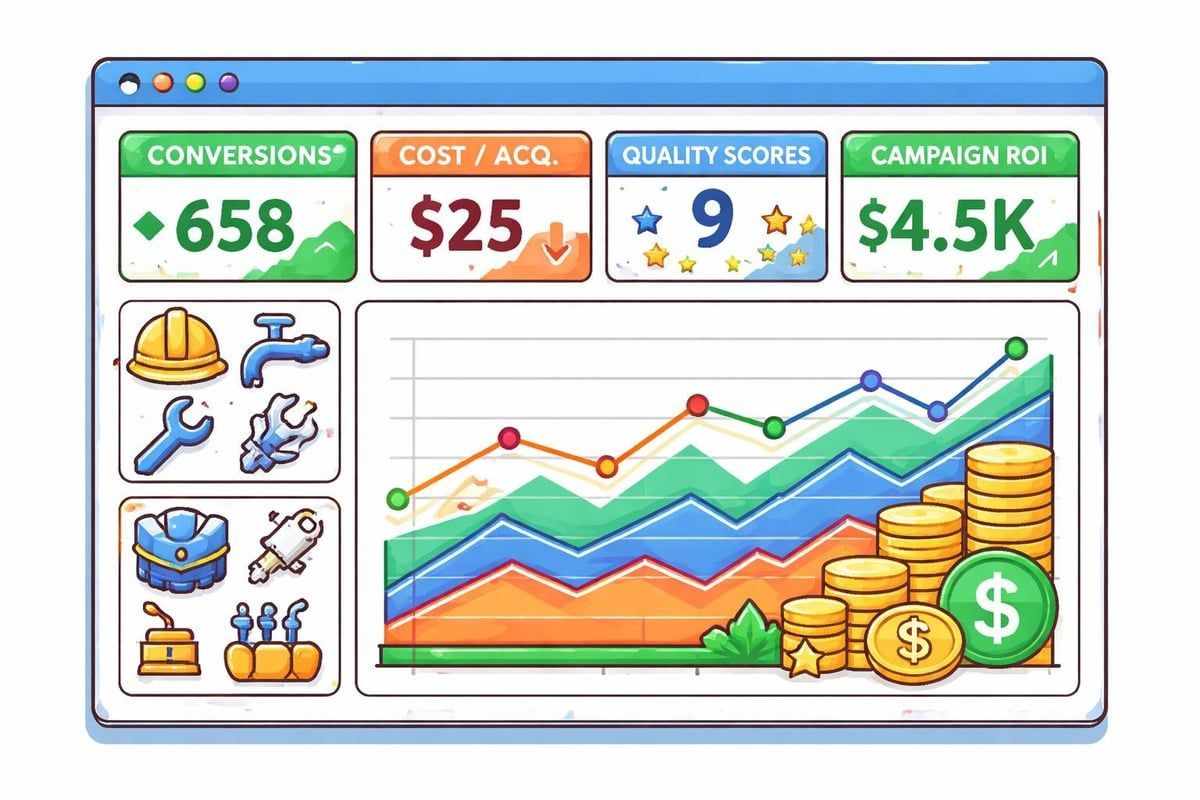
Focus on metrics that directly impact your bottom line rather than vanity numbers. Impressions look impressive but mean nothing if they don't convert to business.
Priority metrics for local service businesses:
- Conversion rate: Percentage of clicks becoming leads
- Cost per conversion: How much each lead costs
- Quality Score: Impact on costs and ad position
- Search impression share: Percentage of possible impressions captured
- Click-through rate: Ad relevance and appeal indicator
Create custom reports showing these metrics by campaign, ad group, and keyword. This granular view reveals which elements drive results and which drain budget.
Search term reports reveal exactly what queries triggered your ads. Review these weekly to identify new keyword opportunities and negative keywords. You'll often discover unexpected search phrases that convert brilliantly, allowing you to create dedicated campaigns around them.
Refining Audiences for Better Performance
Demographics and audience targeting add another layer of precision. If your services primarily appeal to homeowners rather than renters, or certain age groups, adjust your targeting accordingly. Google's in-market audiences identify users actively researching services like yours.
Remarketing campaigns target people who've already visited your website but didn't convert. These campaigns typically achieve higher conversion rates at lower costs because you're reaching warm prospects familiar with your business. For service businesses, remarketing works brilliantly for high-consideration purchases like bathroom renovations or heating system installations.
Consider how ads on Google cost varies by location and competition. Urban areas like London often have higher click costs but also higher customer lifetime values. Adjust your bids by location based on profitability rather than using uniform bids everywhere.
Seasonal Adjustments and Campaign Timing
Many trades businesses experience seasonal fluctuations in demand. Heating engineers get swamped in winter, whilst garden landscapers peak in spring and summer. Your google adwords ppc campaign should reflect these patterns through budget and bid adjustments.
During peak season, increase budgets to capture maximum demand whilst you have capacity to serve customers. During slow periods, either reduce spending or shift focus to different services that remain in demand year-round. Some businesses pause PPC entirely during very slow months, redirecting budget to peak periods.
Leveraging Automated Rules for Efficiency
Google Ads
automated rules save tremendous time whilst ensuring timely optimisations. Set rules to pause low-performing keywords, increase bids on high-converters, or adjust budgets based on performance thresholds.
Useful automated rules include:
- Pause keywords with no conversions after £100 spend
- Increase bids by 20% on keywords with conversion rates above 10%
- Send email alerts when daily budget reaches 80%
- Pause ads during non-business hours automatically
Weather-based adjustments make sense for certain services. Roofing companies might increase bids during stormy weather when emergency repairs surge. Implement these through scheduled bid adjustments or third-party tools connecting weather data to bid strategies.
Integration with Google Business Profile for Local Dominance
Running a google adwords PPC campaign without optimising your
Google Business Profile misses a crucial opportunity. These two elements work synergistically: PPC drives immediate visibility whilst your optimised profile provides social proof and local SEO benefits.
Location extensions in your ads pull information directly from your Google Business Profile, showing your address, phone number, and business hours. This integration improves click-through rates significantly because users see comprehensive information without clicking through.
Your Google Business Profile verification status directly impacts ad performance for local campaigns. Verified profiles appear more trustworthy.
Geographic and Demographic Targeting Precision
For local businesses, geographic targeting transforms a google adwords PPC campaign from wasteful to laser-focused. Rather than showing ads nationwide, concentrate the budget on areas you actually service. This might mean specific postcodes, a radius around your business location, or multiple service areas.
Radius targeting works well for emergency services where customers search "near me." Postcode targeting suits businesses serving distinct neighbourhoods or boroughs. Combine both approaches: tight radius around your location plus specific postcodes for areas with higher demand or less competition.
eading to higher conversion rates when users research your business after clicking ads. Reviews displayed on your profile provide third-party validation that ad copy alone cannot achieve.
Creating a Cohesive Local Marketing Strategy
The most successful local businesses don't treat PPC and organic local SEO as separate channels. They create integrated strategies where each element reinforces the others. Your PPC ads capture high-intent traffic immediately, whilst your optimised Business Profile builds long-term organic visibility.
Use insights from your google adwords PPC campaign to inform your Business Profile optimisation. Which services generate the most PPC conversions? Ensure those services feature prominently in your profile description and service list. Which locations deliver the best ROI? Create location-specific content on your profile targeting those areas.
Common Pitfalls and How to Avoid Them
Even experienced marketers fall into predictable traps when managing PPC campaigns. Recognising these pitfalls helps you avoid expensive mistakes that drain budgets without delivering results.
Single keyword ad groups dilute your Quality Score and complicate management. Group thematically related keywords together, but avoid throwing everything into one massive ad group. Aim for 10-20 keywords per ad group, tightly themed around a specific service or intent.
Ignoring mobile performance represents another critical error. Over 60% of local searches happen on mobile devices, yet many businesses send mobile traffic to desktop-optimised pages. Ensure your landing pages load quickly and display perfectly on smartphones, with click-to-call buttons prominently placed.
The Danger of "Set and Forget" Management
Perhaps the biggest mistake: launching a google adwords PPC campaign and then ignoring it. PPC requires ongoing optimisation to remain profitable. Competition changes, costs fluctuate, and customer behaviour shifts. What worked brilliantly last month might underperform this month.
Dedicate time weekly to campaign management:
- Monday: Review weekend performance and adjust budgets
- Wednesday: Analyse search terms and add negatives
- Friday: Check conversion data and optimise underperformers
Understanding that not all best practices are universal prevents blindly following advice that doesn't suit your specific situation. Test recommendations rather than implementing them wholesale, measuring impact on your unique metrics.
Advanced Tactics for Competitive Markets
In competitive markets like London, basic PPC tactics aren't enough. You need sophisticated strategies to outmanoeuvre established competitors whilst controlling costs. Advanced tactics separate profitable campaigns from money pits.
Bid modifiers allow granular control over when and where you're most aggressive. Increase bids by 30% for mobile devices if that's where you convert best. Boost bids 50% for top-performing postcodes. Reduce bids 20% for lower-converting days or times.
Competitor Targeting and Brand Protection
Bidding on competitor brand names can capture customers comparing options, but tread carefully. This strategy often triggers bidding wars that benefit Google more than advertisers. Focus instead on competitors' service weaknesses: "alternative to [competitor]" or "better than [competitor service]".
Protecting your own brand terms is essential. Create a dedicated campaign targeting your business name variations with high bids to ensure you appear when people search for you specifically. These clicks typically convert at the highest rates and lowest costs because searchers already know you.
Dynamic keyword insertion automatically customises ad headlines based on the search query, improving relevance. Use cautiously, as it can create awkward phrasing if not set up properly. Test extensively before scaling this tactic.
Scaling Your Campaign Profitably
Once you've established a profitable baseline, scaling your google adwords PPC campaign becomes the next challenge. Growing spend whilst maintaining or improving efficiency requires systematic expansion rather than simply increasing budgets.
Expand geographically into adjacent service areas where you have capacity. If your current area generates profitable leads, similar nearby areas likely will too. Start with small budgets to test new locations before committing significant spending.
Service Expansion and Campaign Multiplication
Add campaigns for complementary services you offer but haven't advertised. If your plumbing campaign performs well, create separate campaigns for bathroom fitting or boiler installation. This multiplication approach spreads risk whilst capturing different customer segments.
Implementing PPC tips to improve Google Ads performance systematically creates incremental gains that compound over time. Small improvements in conversion rate, Quality Score, or click-through rate multiply across all your campaigns for substantial overall impact.
Looking at successful Google Ads campaigns in similar industries provides inspiration for scaling tactics. However, always test approaches in your specific market rather than assuming what worked elsewhere will work identically for you.
Mastering your google adwords PPC campaign takes time, testing, and ongoing refinement, but the payoff in consistent, qualified leads makes the effort worthwhile. By focusing on relevance, measurement, and continuous improvement, your campaigns can deliver outstanding returns whilst you maintain complete control over costs. Whether you need help with PPC campaign management, Google Business Profile optimisation, or integrated local marketing strategies, Connect SEO Ltd brings real-world trades experience combined with proven digital marketing expertise to help your business dominate local search and convert more customers.