
Google Ads Rates Guide: Your 2026 Success Roadmap
Are you feeling the pinch as Google Ads rates climb and campaign management gets more complex in 2026? You are not alone. Many business owners and marketers are searching for ways to stretch every pound and boost their ad returns.
If you want to master Google Ads rates, you are in the right place. This guide is packed with actionable strategies to help you make sense of costs, outsmart the competition, and get the most out of your budget.
Join us as we break down rate structures, reveal key pricing factors, and share a step-by-step roadmap for maximising your ad spend. Together, we will explore bidding strategies, industry benchmarks, optimisation tips, and the latest trends shaping the future of Google Ads.
Ready to take charge of your ad success in 2026? Let us dive in.
Understanding Google Ads Rates in 2026
Navigating google ads rates in 2026 can feel overwhelming, but understanding how pricing models have evolved, what influences your costs, and where your industry stands can make a real difference. Let's break down the key elements so you can approach your campaigns with confidence.
The Evolution of Google Ads Pricing Models
The world of google ads rates has shifted rapidly in recent years. In 2026, we've seen a clear move from traditional
cost-per-click (CPC) models to more advanced, automated options. Smart Bidding and AI-driven cost-per-action (CPA) models now dominate, allowing advertisers to let algorithms optimise bids in real time.
This automation brings both opportunities and challenges. On one hand, it can boost efficiency and results. On the other, some marketers feel they have less visibility and control over how google ads rates are set. For example, in 2025, many businesses compared their manual CPC campaigns to Smart Bidding, often noticing improved conversion rates but less transparency in cost allocation.
Industry reports from 2025 revealed that average CPCs and CPAs varied widely, depending on how much automation was used. Staying informed about these changes is key to mastering google ads rates as you plan for 2026.
Key Factors Influencing Google Ads Rates
Several elements play a crucial role in shaping google ads rates. The level of competition within your industry and seasonal demand spikes can cause costs to rise or fall. Your Quality Score—a measure of ad relevance, landing page experience, and expected click-through rate—directly impacts how much you pay.
Audience targeting has also become more sophisticated. The more precisely you define your audience, the more efficiently your budget can be spent. Device and location bid adjustments are now standard, letting you focus on high-value users.
For example, finance sector keywords typically carry a much higher CPC than those in retail, reflecting intense competition for valuable leads. Being aware of these factors helps you control your google ads rates and make informed decisions.
Average Google Ads Costs by Industry in 2026
Knowing the typical google ads rates for your sector is essential for budget planning. The latest benchmarks show significant variation across industries. Legal and healthcare often see the highest average CPCs, while e-commerce and hospitality tend to be more moderate.
Year-on-year, costs have generally risen, but not evenly. Some sectors, like tech and SaaS, have seen sharper increases. According to Google Ads Benchmarks 2026, legal sector CPCs can exceed £5.00, while e-commerce averages closer to £1.50. High competition keywords, such as "personal injury solicitor," drive up rates, while niche, long-tail terms can offer more value.
Here's a quick comparison:
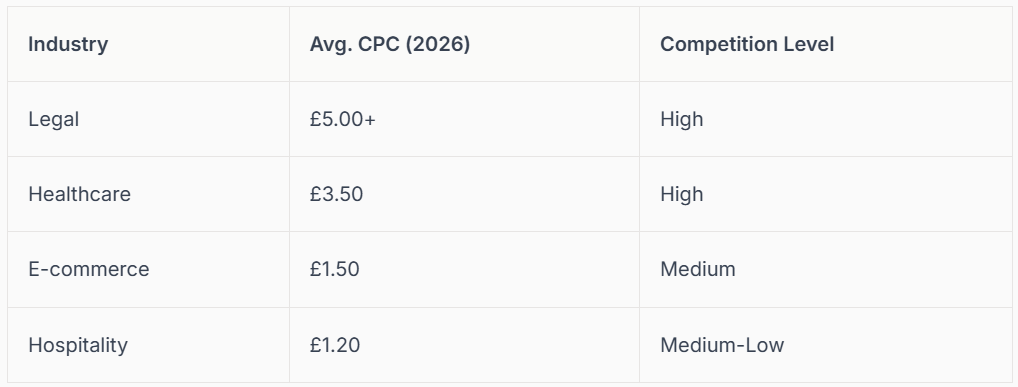
Understanding these benchmarks allows you to set realistic expectations for your google ads rates.
How Google Determines Ad Pricing
Google uses a real-time auction system to
set google ads rates for every search. Your Ad Rank (a combination of bid amount, Quality Score, and expected impact of ad extensions) determines your ad's position and cost.
Quality Score is a major driver—higher scores mean lower costs and better ad placement. For instance, if two advertisers bid the same, the one with a superior Quality Score will pay less and appear higher. Google continually updates these calculations, so rates can fluctuate throughout the day based on competition and user behaviour.
Keeping your ads relevant and optimised is the most reliable way to keep google ads rates in check.
Common Rate Myths and Misconceptions
Many myths still cloud the world of google ads rates. One common belief is that simply spending more guarantees better results. In reality, without strategic targeting and optimisation, bigger budgets can lead to wasted spend.
Another misconception is misunderstanding daily budgets versus monthly spend, which can cause surprise over- or underspending. Some fear that automated bidding always overspends, but with proper setup, it usually improves efficiency.
For example, a business that failed to set negative keywords found much of their budget drained by irrelevant clicks. Staying informed and proactive can help you avoid these pitfalls and get the most from your google ads rates.
Step-by-Step Roadmap: Planning Your 2026 Google Ads Budget
Planning your 2026 budget for google ads rates doesn't have to be overwhelming. By breaking the process into clear steps, you can create a strategy that makes every pound count. Let’s walk through each stage together, so you can approach the new year with confidence and clarity.
Step 1: Analyse Your Current Performance
Before setting your 2026 budget, take a close look at your 2025 data. Review your google ads rates by checking average
cost-per-click (CPC), cost-per-acquisition (CPA), and overall return on investment (ROI).
- Identify which keywords or campaigns delivered strong results.
- Spot underperformers that drained the budget without returns.
- Use Google Analytics and Ads reports to uncover trends.
For example, an e-commerce brand might find that certain product ads performed exceptionally well in Q4 2025, giving them a clear starting point for next year’s focus.
Step 2: Set Clear Objectives and KPIs
Define exactly what you want your google ads rates to achieve in 2026. Are you aiming for more leads, higher sales, or increased brand awareness? Set measurable KPIs so you know what success looks like.
- Choose performance metrics like CPA, ROAS (return on ad spend), and conversion rate.
- Align your ad goals with wider business targets.
- Example: A local service business might set a £30 CPA as their benchmark.
Setting these targets up front will keep your budget and campaigns on track, ensuring every pound helps move your business forward.
Step 3: Research Industry Benchmarks for 2026
Next, compare your goals with the latest industry data on google ads rates. Understanding what other businesses in your sector are paying helps you plan realistically.
- Look up average CPCs for your industry and region.
- Review competitor performance when possible.
- Benchmark your current rates against the latest trends.
For a detailed breakdown of forecasted costs, check the Google Ads Cost Analysis 2026 for sector-specific insights. For example, a SaaS company can see how its rates stack up against the broader tech sector.
Step 4: Allocate Budget by Campaign and Channel
Divide your
google ads rates budget wisely across different campaigns and channels. Not every campaign will yield the same returns, so prioritisation is key.
- Allocate more to Search, Display, Shopping, or Video depending on your goals.
- Focus on campaigns and channels proven to generate the highest ROI.
- Example: A retailer may shift more funds to Shopping Ads for Q1 2026, based on strong past performance.
This step ensures your budget supports the areas most likely to drive results.
Step 5: Forecast and Adjust for Seasonality
Finally, recognise that google ads rates fluctuate throughout the year. Use historical data to spot seasonal trends and adjust your budget accordingly.
- Identify peak periods for your industry, such as holidays or events.
- Plan to increase bids and spend during high-demand times.
- Example: The hospitality sector often boosts budgets for summer events to capture more bookings.
By forecasting and staying flexible, you can make sure your ads are always in front of your audience when it matters most.
Advanced Bidding Strategies for Lower Rates & Higher ROI
Navigating google ads rates in 2026 can feel like steering a ship through ever-changing tides. To chart a course for higher ROI, we need to embrace smarter bidding, precise targeting, and real-time optimisation. Let’s break down the advanced strategies that will help us lower costs and
maximise every pound spent.

Manual vs. Automated Bidding in 2026
Choosing between manual and automated bidding is still a hot topic for those watching google ads rates. Manual bidding gives us granular control, letting us tweak bids for individual keywords or placements. This works well for niche campaigns where every detail matters.
On the other hand, automated bidding uses Google’s machine learning to adjust bids in real time. It’s ideal for larger campaigns with lots of data. The downside is less direct control, which can feel risky if you like being hands-on. According to the Google PPC expert guide 2026, hybrid strategies are emerging where manual oversight complements automation, helping us strike the right balance for optimal google ads rates.
Leveraging Smart Bidding and AI Automation
Smart Bidding is transforming how we manage google ads rates. With options like Target CPA, Target ROAS, and Maximise Conversions, AI analyses signals such as device, location, and time to bid for the best outcome each auction. This means we can focus on strategy rather than number crunching.
Recent case studies show campaigns using Smart Bidding in 2025 achieved up to 20 percent lower cost per acquisition compared to manual methods. By trusting automation, we often see improved efficiency and reduced wasted spend. Smart Bidding is especially helpful for scaling campaigns and maintaining steady google ads rates across fluctuating market conditions.
Audience Targeting and Segmentation
Refining our
audience targeting is a powerful way to impact google ads rates. In 2026, we can create sophisticated audiences: custom intent, in-market, remarketing, and customer match. Layering these audiences lets us focus our spend on people most likely to convert.
For example, a B2B campaign might combine in-market IT buyers with website visitors who downloaded a whitepaper. This level of segmentation boosts conversion rates while keeping google ads rates in check, as we avoid paying for clicks from less relevant users.
Geo and Device Bid Adjustments
Optimising bids by location and device is a must for controlling google ads rates. If we notice higher conversions in London on mobile devices, we can increase bids for those segments, while lowering bids for lower-value areas or devices.
A local business might boost mobile bids for searches within a 5-mile radius, ensuring their ads appear at the top when it matters most. By constantly reviewing performance data, we can fine-tune our approach and allocate budget where it delivers the best value for google ads rates.
Dayparting and Ad Scheduling
Not all hours are created equal in the world of google ads rates. Dayparting, or ad scheduling, means showing ads when your audience is most likely to convert. For a restaurant, this could mean increasing bids during lunch and dinner hours.
By analysing hourly and daily trends, we can adjust our strategy so our ads appear at peak times without wasting budget during slow periods. This approach helps us squeeze more value from our spend and maintain healthy google ads rates throughout the campaign lifecycle.
Negative Keywords and Exclusion Tactics
Building a comprehensive negative keyword list is essential for keeping google ads rates under control. Negative keywords stop your ads from showing for irrelevant searches, reducing wasted clicks.
For example, an online retailer selling premium products might exclude terms like “free” or “cheap.” This ensures ads are only triggered by users with purchase intent. Regularly updating negative keyword lists keeps campaigns efficient and shields us from unnecessary costs, helping to keep google ads rates as low as possible.
Monitoring and Adjusting in Real Time
Real-time optimization is the secret sauce for managing google ads rates in 2026. With the help of automated rules, scripts, and AI-driven tools, we can make instant bid adjustments during flash sales or competitive spikes.
A retailer might use rules to increase bids for trending products or lower them if ROI drops. Frequent monitoring means we never miss an opportunity or overspend. Staying agile and proactive is key to winning the google ads rates game and driving consistent results.
Optimising Ad Quality and Landing Pages to Influence Rates
Let’s explore how you can directly influence google ads rates through ad quality and landing page optimisation. By focusing on these essentials, we can lower costs, boost conversions, and set the foundation for long-term success. Ready to unlock your full potential? Let’s dive in together.
Enhancing Ad Relevance and Quality Score
The most effective way to influence google ads rates is by improving your ad relevance and Quality Score. Google rewards ads that closely match user intent with lower
costs per click and higher ad positions.
Here’s how you can boost your Quality Score:
- Craft headlines that mirror your target keywords.
- Use clear, compelling calls to action.
- Align your ad copy with the landing page content.
Regularly A/B test your ad headlines to see which versions achieve the highest click-through rates. Small tweaks can make a big difference in how Google perceives your ads, ultimately reducing your google ads rates and improving campaign performance.
Improving Landing Page Experience
Landing pages play a crucial role in determining your google ads rates. A seamless, relevant landing page experience not only increases conversions but also signals quality to Google.
Focus on these essentials:
- Ensure your landing pages are mobile-friendly.
- Improve page load speed for faster access.
- Match the landing page message with your ad promise.
Research shows that even a one-second delay can negatively impact conversion rates and raise costs. By optimising for speed and relevance, you can keep your google ads rates competitive and make every click count.
Utilising Ad Extensions for Better Performance
Ad extensions offer extra information and increase your ad’s footprint, directly impacting google ads rates by improving visibility and click-through rates. Google rewards ads with useful extensions by lowering the cost per click.
Popular ad extensions include:
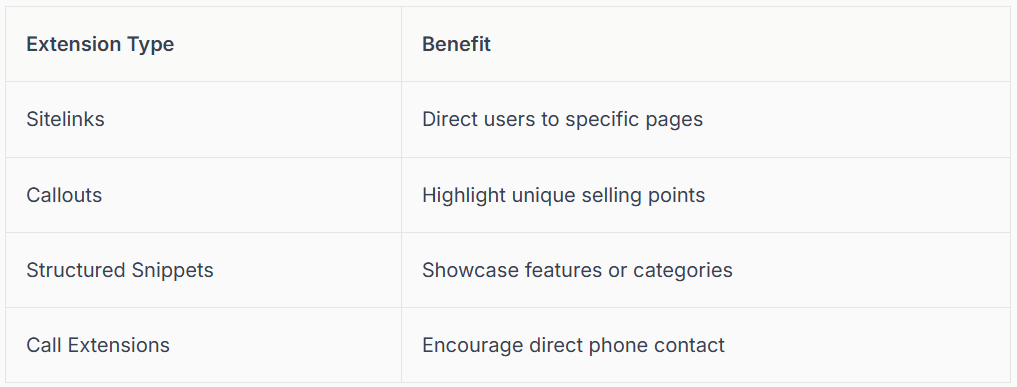
For example, local service providers can use call extensions to make it easy for potential customers to reach them. The right mix of extensions can drive engagement and help you control google ads rates.
A/B Testing and Continuous Improvement
Continuous improvement is key to mastering google ads rates. By systematically testing different ad variations and landing page layouts, you can discover what works best for your audience.
Follow this simple testing cycle:
- Test one change at a time, like a headline or button colour.
- Monitor performance for statistically significant results.
- Implement the winning version and test again.
For even more ideas, check out these proven ways to improve Google Ads performance. Consistent A/B testing will not only lower your google ads rates but also boost your return on investment.
Tracking and Analytics Integration
Measuring success is essential for optimising google ads rates. Integrate Google Analytics with your Ads account to gain deeper insights into user behaviour and campaign performance.
Benefits of advanced tracking:
- See which keywords and ads drive conversions.
- Attribute value to phone calls, form fills, and purchases.
- Identify drop-off points and areas for improvement.
For instance, a service business can track incoming calls from ads, linking them directly to specific campaigns. This data-driven approach helps you adjust strategies and keep your google ads rates as low as possible.
Common Mistakes Impacting Costs
Mistakes in setup or management can quickly inflate google ads rates. Many advertisers overlook small but critical details that drive up costs and reduce effectiveness.
Avoid these common pitfalls:
- Using irrelevant ad copy or landing pages.
- Failing to implement negative keywords.
- Ignoring quality signals and page experience.
If your ads are not converting, it’s worth reviewing the top reasons your ads don’t turn clicks into leads. By fixing these mistakes, you can protect your budget and keep google ads rates manageable.
Preparing for the Future: Google Ads Trends & Predictions for 2026
The digital advertising world is changing fast, and it is crucial for us to stay ahead of the curve. As we look to 2026, understanding the trends shaping google ads rates will help us create smarter, more effective campaigns. Let us explore the key developments that will influence your advertising strategy in the year ahead.
AI and Machine Learning Impact on Rates
Artificial intelligence is at the heart of the latest changes in google ads rates. AI-driven bidding and targeting are now the norm, helping campaigns adapt in real time. This shift means we can expect more efficient spending, as machine learning predicts which clicks are most likely to convert.
In 2025, advertisers saw improved performance from AI-powered strategies compared to manual bidding. Smart algorithms analyse user behaviour, device, and intent, adjusting bids on the fly.
In 2026, embracing AI will be essential for staying competitive and keeping your google ads rates in check.
Privacy, Tracking, and Data Changes
Privacy regulations are reshaping how we use data in advertising. With the ongoing phase-out of third-party cookies, businesses must build robust first-party data strategies. This shift directly impacts google ads rates, as targeting becomes more reliant on consented, high-quality data.
We are seeing more focus on transparency and user trust. Brands must prioritise ethical data practices and clear communication with customers. As privacy rules tighten, those adapting quickly will maintain effective targeting without inflating their google ads rates.
First-party data, such as customer lists and engagement metrics, will be your most valuable asset for success in 2026.
Rising Competition and Niche Targeting
The number of businesses using Google Ads continues to grow, making the landscape more competitive than ever. As competition rises, google ads rates for broad keywords are expected to increase.
To thrive, we need to embrace niche targeting. Hyper-focused campaigns—built around specific audiences, locations, or products—help reduce wasted spend and achieve better results.
Going niche not only helps you stand out, but also keeps your google ads rates more manageable as the market heats up.
Video and Visual Ad Formats
Video and visual ads are taking centre stage in 2026. With more people engaging on YouTube and Google Display Network, advertisers are shifting budgets to formats that capture attention.
Google ads rates for video campaigns tend to differ from those for search, often providing more reach per pound spent. Short-form videos, like YouTube Shorts, are especially popular, offering high engagement at competitive rates.
If you want to maximize impact, consider incorporating video into your strategy. This will help you keep up with changing consumer behaviours and manage your google ads rates effectively.
Voice Search and Conversational Ads
Voice search is growing rapidly, changing how users interact with ads. People now ask questions in natural language, prompting a shift in keyword strategy and ad copy.
To optimize for voice, campaigns should focus on conversational keywords and local intent. Businesses that adopt this approach can attract high-intent customers, often at lower google ads rates compared to traditional search.
For example, a local service using voice-optimised ads saw a rise in bookings and reduced cost per lead. Voice search is not just a trend—it is a new way to connect with your audience.
Sustainability and Social Responsibility in Ad Messaging
Consumers in 2026 are more conscious than ever about who they buy from. Brands that highlight sustainability and social responsibility in their ads are seeing positive results.
Including ethical messages can boost engagement and even lower google ads rates, as users respond better to authentic, purpose-driven campaigns. For example, a green business promoting eco-friendly practices saw higher click-through rates and reduced costs.
As we plan for the future, weaving social responsibility into your ad messaging is not just good for the planet—it is smart for your bottom line.
We’ve covered a lot about mastering Google Ads rates for 2026, and I know it can feel overwhelming with all the changes and choices ahead. But you don’t have to tackle it alone. If you want your business to stand out on Google Maps and in local searches, while saving time and sidestepping the usual headaches, we’re here for you. With our UK-based team who truly understands your trade and the local market, you’ll get expert support every step of the way. Ready to boost your success in 2026?
Contact connect SEO Today