
Google Display Ads: A Complete Guide for Local Businesses
When you're running a local business, getting noticed by potential customers at the right moment can make all the difference. Google display ads offer a powerful way to showcase your services across millions of websites, reaching people who might need exactly what you offer. Unlike search ads that appear when someone actively looks for your service, display campaigns put your business in front of audiences as they browse their favourite websites, watch videos, or check emails. For trades and local service providers, this visual advertising approach builds brand awareness and keeps your business top of mind when customers are ready to make a decision.
Understanding Google Display Ads and Their Reach
Google display ads are visual advertisements that appear across the Google Display Network, a collection of over two million websites, apps, and Google-owned properties like YouTube and Gmail. These banner-style ads come in various formats and sizes, allowing businesses to showcase their services with eye-catching images, compelling headlines, and clear calls to action.
The Display Network reaches approximately 90% of internet users worldwide, making it an incredibly powerful tool for businesses looking to expand their visibility. For local service providers, this means your ads can appear on news websites, blogs, hobby sites, and industry publications that your target customers visit regularly.
How Display Advertising Differs from Search Campaigns
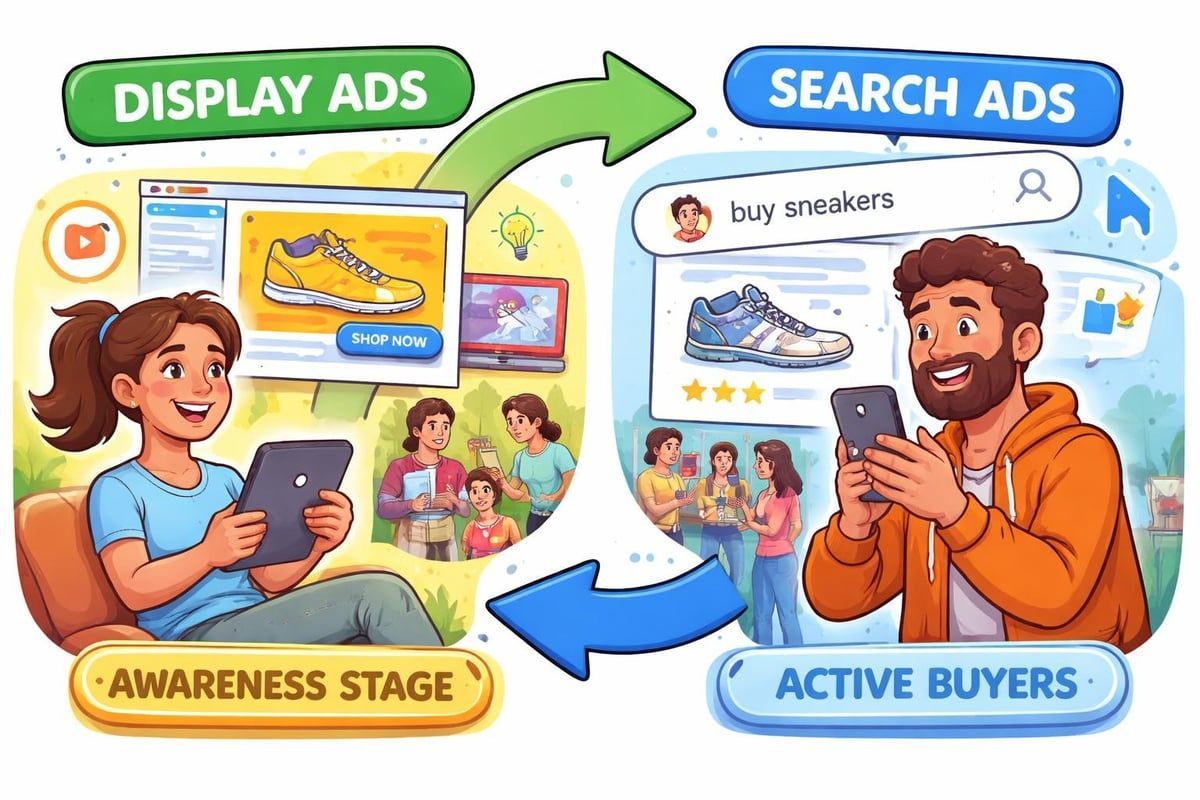
Whilst search ads target people actively looking for your services, display ads work differently. They reach potential customers earlier in their buying journey, building awareness and familiarity with your brand. Think of it as the difference between someone walking into your shop (search) versus seeing your billboard whilst driving past (display).
This distinction matters because effective Google Ads strategies often combine both approaches. Display campaigns nurture audiences who aren't quite ready to buy yet, whilst search campaigns capture those ready to take action immediately.
Setting Up Your First Display Campaign
Creating a successful display campaign requires thoughtful planning and strategic setup. The good news is that Google has streamlined the process considerably, making it accessible even for businesses new to digital advertising.
Essential Campaign Components:
- Clear campaign objective (brand awareness, website traffic, leads, or sales)
- Defined target audience with specific demographics and interests
- Budget allocation and bidding strategy
- Compelling ad creatives that reflect your brand
- Conversion tracking setup to measure results
Choosing Your Campaign Goals
Google Ads allows you to select specific goals for your display campaigns. For local businesses, the most relevant objectives typically include generating leads, driving website traffic, or building local brand awareness. Your goal determines which features and optimization options Google makes available.
For instance, if you're a plumber or electrician, a lead generation campaign might encourage people to call your business or fill in a contact form. Meanwhile, a brand awareness campaign focuses on getting your business name and services in front of as many relevant people as possible within your service area.
Audience Targeting Strategies That Work
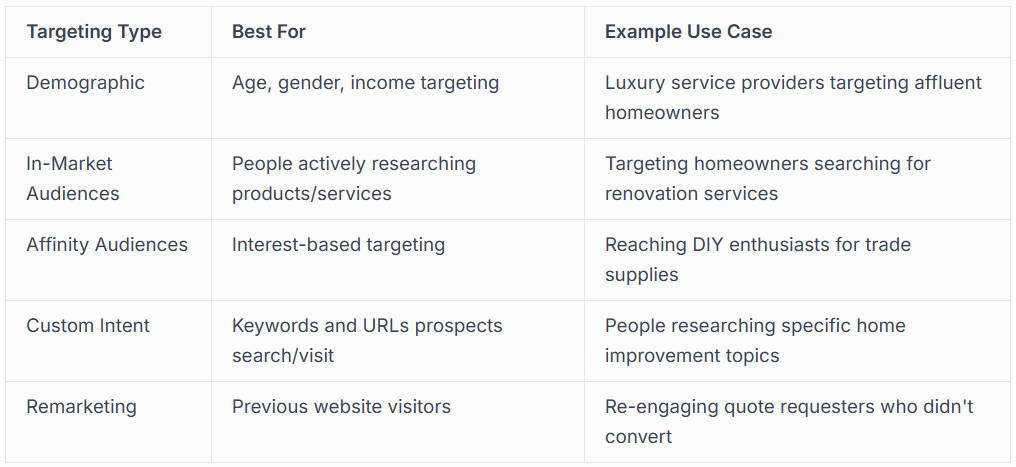
One of the most powerful aspects of google display ads is the sophisticated targeting capabilities. Rather than showing your ads to everyone, you can pinpoint exactly who sees them based on numerous criteria.
Geographic Targeting for Local Businesses
For businesses relying on
local visibility through Google Business Profile, geographic targeting becomes crucial. You can target by postcode, radius around your business location, or specific cities and regions. This ensures your advertising budget focuses on people who can actually become customers.
A roofing company in Manchester, for example, might target a 25-mile radius around their location, excluding areas they don't service. This precision prevents wasted ad spend on audiences outside your service area.
Remarketing to Warm Audiences
Remarketing campaigns target people who've already interacted with your business, perhaps by visiting your website or watching your YouTube video. These warm audiences are significantly more likely to convert because they've already shown interest.
According to proven Google Ads case studies, remarketing campaigns often deliver conversion rates two to three times higher than standard display campaigns. For local businesses, this means staying visible to potential customers who checked your services but weren't ready to commit immediately.
Creating Compelling Display Ad Creatives
Visual appeal matters enormously in display advertising. Your ads compete with website content and other advertisements, so they need to grab attention quickly whilst communicating your value proposition clearly.
Key Creative Elements:
- High-quality images that represent your services authentically
- Clear headline stating your main benefit or offer
- Strong call-to-action telling people exactly what to do next
- Brand consistency matching your website and other marketing materials
- Mobile optimization ensuring ads look brilliant on all devices
Responsive Display Ads: Your Best Starting Point
Responsive display ads automatically adjust their size, appearance, and format to fit available ad spaces. You simply upload your assets (headlines, descriptions, images, and logos), and Google's machine learning creates combinations that perform best.
This approach simplifies ad creation whilst maximizing performance. Best practices for responsive display ads recommend uploading at least five headlines, five descriptions, and multiple high-quality images to give the system enough variety to optimize effectively.

Design Principles That Drive Results
Professional-looking ads build trust and credibility. For trades and service businesses, this means using genuine photos of your work, team, or satisfied customers rather than generic stock images. Authenticity resonates with local audiences who want to know they're hiring a real, trustworthy business.
Keep text minimal and readable. Google recommends that images shouldn't contain more than 20% text overlay. Focus on one clear message per ad rather than trying to communicate everything at once.
Budget Management and Bidding Strategies
Understanding
Google advertising costs helps you set realistic expectations and allocate your budget effectively. Display campaigns typically cost less per click than search campaigns, but they also tend to have lower conversion rates since audiences are earlier in the buying journey.
Setting Your Daily Budget
Start conservatively, especially if you're new to display advertising. A daily budget of £10-20 allows you to gather data without overspending whilst learning what works. As you identify successful audiences and placements, you can gradually increase investment.
Budget Allocation Guidelines:
- Test phase (first 2-4 weeks): £10-20 daily
- Optimization phase (weeks 5-8): £20-40 daily based on results
- Scaling phase (ongoing): Increase by 20-30% increments as ROI proves positive
Choosing the Right Bidding Strategy
Google offers several bidding strategies for display campaigns. Target CPA (cost per acquisition) works well when you have conversion tracking properly configured and want to optimize for leads or sales. Maximize conversions automatically sets bids to get the most conversions within your budget.
For businesses just starting out, manual CPC (cost per click) gives you more control whilst you learn what different audiences and placements cost. You can see exactly how much each click costs and adjust bids accordingly.
Measuring Success and Campaign Optimization
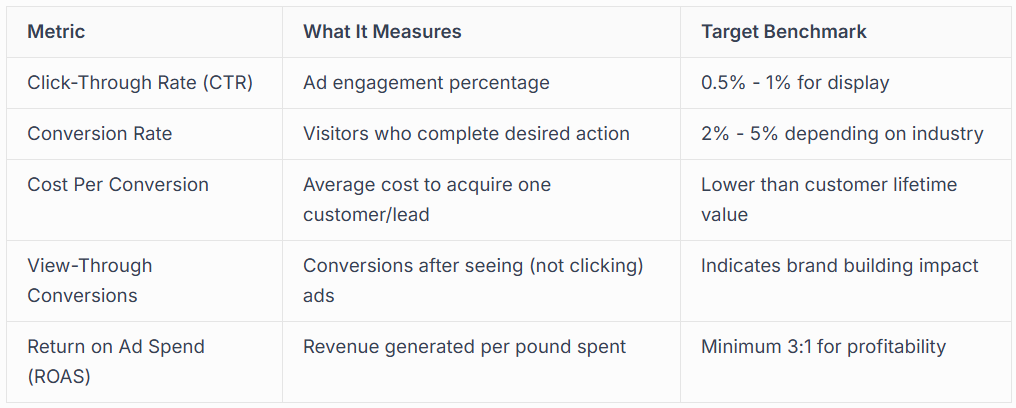
Tracking the right metrics determines whether your
google display ads investment delivers worthwhile results. Whilst clicks and impressions provide interesting data, conversions and return on ad spend matter most for business growth.
Essential Metrics to Monitor
A/B Testing for Continuous Improvement
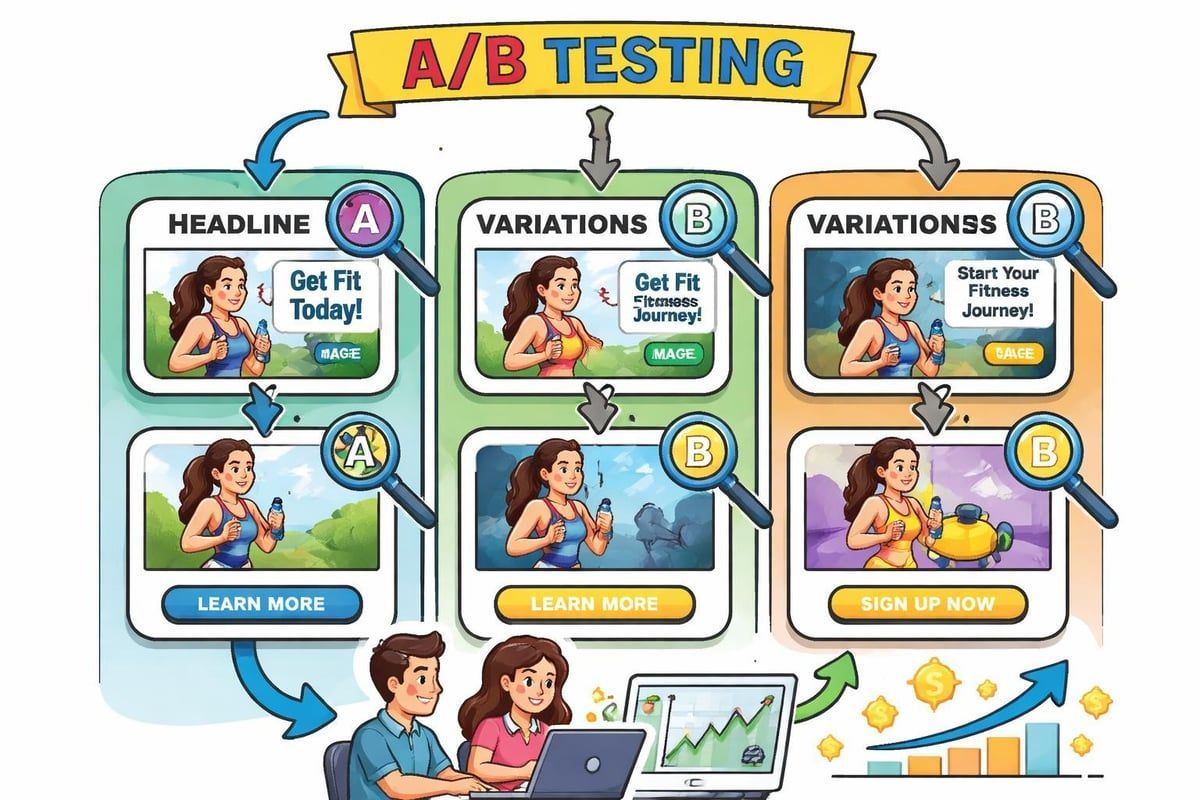
Never settle for "good enough" with your campaigns. Successful advertisers constantly test different elements to improve performance. Try variations of your headlines, images, calls-to-action, and even audience targeting to discover what resonates best.
Expert insights on creating effective Google Display Ads emphasize that systematic testing separates profitable campaigns from money-losing ones. Test one element at a time so you can clearly attribute any performance changes.
Avoiding Common Display Advertising Mistakes
Many businesses waste money on display advertising because they make avoidable errors. Learning from these common pitfalls helps you achieve better results faster.
Frequent Mistakes to Avoid:
- Running ads without conversion tracking installed
- Using poor-quality or irrelevant images
- Targeting audiences too broadly, wasting budget on unqualified traffic
- Writing vague headlines that don't communicate clear benefits
- Neglecting mobile optimization when most browsing happens on phones
- Giving up too quickly before gathering sufficient data
- Ignoring placement reports that show where ads actually appear
The Importance of Placement Exclusions
Your ads might appear on websites that don't align with your brand or attract your ideal customers. Regularly review placement reports and exclude sites that generate clicks but no conversions. This refinement improves campaign efficiency over time.
Some advertisers exclude mobile apps entirely if they notice lots of accidental clicks that never convert. Others exclude specific website categories that don't align with their business values or target audience interests.
Integration with Your Broader Marketing Strategy
Google display ads work best when coordinated with your other marketing efforts. For local businesses, this means connecting your display campaigns with your
Google Business Profile verification and optimization to create a cohesive online presence.
Connecting Display Ads to Local SEO
When potential customers see your display ads and then search for your services, having a verified and optimized Google Business Profile ensures you appear prominently in local search results. This multi-touchpoint visibility builds trust and increases conversion likelihood.
Similarly, maintaining consistency between your display ad messaging and your website content creates a seamless experience. If your ad promises "24/7 emergency service," visitors should immediately see that highlighted on your landing page.
Remarketing to Profile Visitors
People who view your Google Business Profile but don't immediately contact you represent warm prospects worth re-engaging. By adding them to remarketing lists, you can show display ads reminding them of your services as they browse other websites.
This strategy proved particularly effective in successful Google Ads case studies for local service providers, where persistence and visibility over time converted hesitant browsers into paying customers.
Advanced Tactics for Experienced Advertisers
Once you've mastered the fundamentals, several advanced techniques can enhance your display campaign performance further.
Dynamic Remarketing for Service Businesses
Dynamic remarketing shows people ads featuring the specific services they viewed on your website. Whilst commonly associated with e-commerce,
Google Display Ads best practices for online stores can be adapted for service businesses by creating ads that reference specific service categories visitors explored.
For instance, if someone looked at your emergency plumbing services page, dynamic ads could specifically mention "24-hour emergency plumbing" rather than generic plumbing services.
Similar Audiences and Customer Match
Google can find new prospects who share characteristics with your existing customers. By uploading your customer email list (with proper consent), Google identifies similar users across the Display Network who are likely to be interested in your services.
This expansion technique helps you scale beyond remarketing whilst maintaining relatively high conversion rates since these audiences resemble your proven customers.
Utilizing Smart Bidding with Audience Signals
Smart bidding strategies use machine learning to optimize bids automatically, but they work better when given audience signals. Combining smart bidding with layered audience targeting (such as in-market audiences + specific demographics + geographic location) provides the algorithm with rich data for optimization.
Recommended Audience Layering Combinations:
- Geographic radius + in-market audience + income level
- Remarketing list + similar audience expansion
- Custom intent keywords + specific age range + device type
- Affinity audience + life event targeting + location
Seasonal Campaign Adjustments
Local service businesses often experience seasonal demand fluctuations. Your display advertising should adapt accordingly, increasing visibility during peak seasons whilst maintaining brand awareness during slower periods.
A landscaping company might increase display ad budgets in spring when homeowners plan garden projects, whilst a heating engineer would boost spending approaching winter. These seasonal adjustments maximize return on investment by aligning spending with demand.
Holiday and Event-Based Campaigns
Create special campaign variations around local events, holidays, or seasonal occasions. A builder might run display ads promoting "spring renovation projects" or "before Christmas completion guaranteed" to tap into timely customer needs.
These targeted campaigns feel more relevant to audiences and typically achieve higher engagement rates than evergreen messaging. Update your ad creatives to reflect these seasonal themes for maximum impact.
Privacy Changes and the Future of Display Advertising
The digital advertising landscape continues evolving, particularly around user privacy and data tracking. Google's plan to phase out third-party cookies in Chrome browser will affect how display advertising works, though remarketing through Google's own properties should remain robust.
Preparing for a Cookie-Less Future
Smart advertisers are already adapting by focusing more on first-party data (information collected directly from customers), contextual targeting (based on website content rather than user tracking), and Google's Privacy Sandbox initiatives.
For local businesses, this shift actually creates opportunities. Strengthening direct relationships with customers through email lists, loyalty programmes, and quality website content builds first-party data assets that remain valuable regardless of cookie changes.
The Growing Importance of Transparency
Modern consumers value transparency about how their data is used. Clear privacy policies, honest advertising claims, and authentic representation in your ads build the trust that converts prospects into customers. Recent
research on Google Ads content moderation highlights how platforms are improving ad quality and user safety, which benefits legitimate businesses by reducing competition from questionable advertisers.
Google display ads offer tremendous potential for local businesses willing to invest time in understanding their audiences and optimizing campaigns systematically. By combining visual creativity with strategic targeting and consistent measurement, you can build brand awareness and generate qualified leads cost-effectively. Whether you're looking to complement your local SEO efforts or expand your customer base, the Display Network provides powerful tools to achieve your goals. At Connect SEO Ltd, we help local businesses maximize their online visibility through verified Google Business Profiles, strategic advertising, and comprehensive digital marketing support, ensuring you're found by customers exactly when they need your services.