
Google PPC: Your Complete Guide to Pay-Per-Click Success
Google PPC remains one of the most powerful tools for businesses looking to connect with customers at the exact moment they're searching for products or services. Whether you're a local tradesperson, an e-commerce store, or a B2B service provider, understanding how to leverage paid search advertising can dramatically increase your visibility, drive qualified traffic, and boost conversions. In 2026, the landscape continues to evolve with smarter automation, better targeting options, and more sophisticated ways to reach your ideal customers. This guide will walk you through everything you need to know about running successful campaigns that deliver real results without wasting your budget.
Understanding Google PPC Fundamentals
Google PPC, or pay-per-click advertising, is a model where advertisers pay a fee each time someone clicks on their ad. Rather than earning visits organically, you're essentially buying visits to your website or landing page. The beauty of this system lies in its precision and measurability.
When you set up a google PPC campaign, you're bidding on specific keywords that your potential customers are typing into Google. Your ads appear in the sponsored sections of search results, typically at the top and bottom of the page. You only pay when someone actually clicks your ad, making it a cost-effective way to drive targeted traffic.
The platform operates on an auction system, but it's not simply about who has the deepest pockets.
Google considers several factors when determining which ads to show:
- Bid amount - how much you're willing to pay per click
- Quality Score - a metric based on ad relevance, expected click-through rate, and landing page experience
- Ad Rank - calculated from your bid, Quality Score, and expected impact of extensions and formats
- Context - including search terms, location, device, and time of day
This means a well-optimized campaign with relevant ads can outperform competitors who simply throw money at poorly crafted campaigns.
Setting Up Your First Campaign
Getting started with google PPC requires careful planning and strategic thinking. Before you spend a single penny, you need to establish clear objectives and understand your target audience.
Define Your Campaign Goals
Every successful campaign starts with a clear purpose. Are you looking to generate leads, drive online sales, increase brand awareness, or promote a local service? Your objective shapes everything from keyword selection to ad copy and bidding strategy.
For local businesses, particularly tradespeople and service providers, the goal often centres on generating qualified phone calls and enquiries. This is where PPC for trades becomes especially valuable, connecting you directly with customers in your service area.
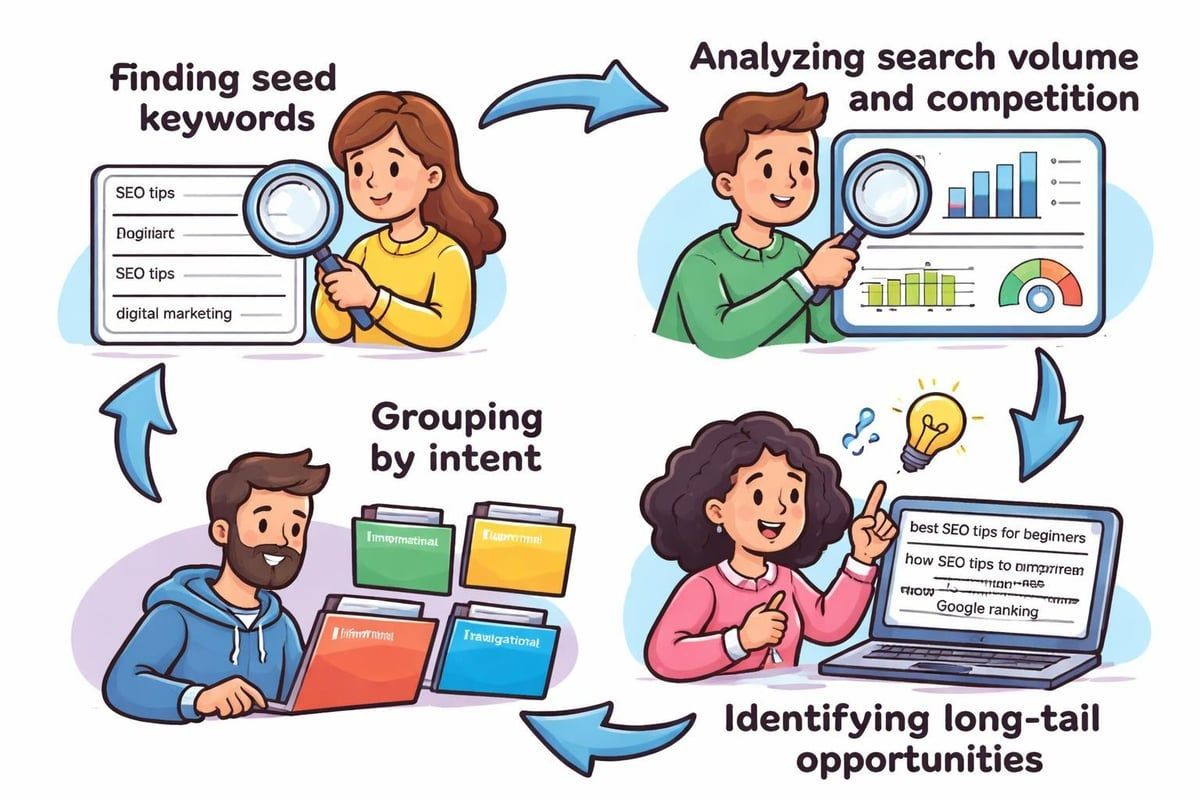
Conduct Thorough Keyword Research
Keyword research forms the foundation of any google PPC campaign. You're not just looking for high-volume terms; you need to find keywords that indicate purchase intent and align with what you actually offer.
Long-tail keywords often deliver better results than broad, competitive terms. Someone searching for "emergency plumber Hammersmith" is far more likely to convert than someone searching for "plumber."
As highlighted in effective PPC strategies, single-keyword ad groups (SKAGs) can dramatically improve campaign performance by allowing hyper-targeted ad copy that matches specific search intent.
Crafting High-Converting Ad Copy
Your ad copy is where the magic happens. You have limited space to capture attention, communicate value, and compel someone to click. Every word matters.
Structure Your Ads Effectively
Google text ads follow a specific format:
- Headlines (up to 15 headings of 30 characters each)
- Descriptions (up to 4 descriptions of 90 characters each)
- Display URL (the web address shown)
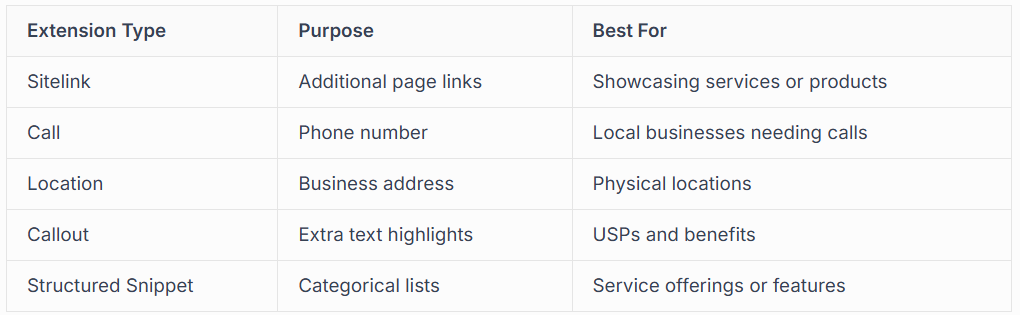
- Extensions (additional information like phone numbers, locations, or links)
The most successful google PPC ads incorporate the searcher's exact query in the headline, address a pain point or need, include a clear benefit, and feature a strong call-to-action.
According to conversion-focused PPC practices, responsive search ads allow Google's machine learning to test different combinations of your headlines and descriptions, automatically optimizing for the best-performing variations.
Include Compelling Extensions
Ad extensions expand your ad with additional information and links, making it more prominent and useful. They don't cost extra but can significantly boost click-through rates.
For businesses relying on local visibility, combining google PPC with a verified Google Business Profile creates a powerful one-two punch that dominates both paid and organic local search results.
Managing Budgets and Bidding Strategies
One of the biggest concerns for businesses new to google PPC is budget management. How much should you spend? How do you avoid wasting money on irrelevant clicks?
Determine Your Budget
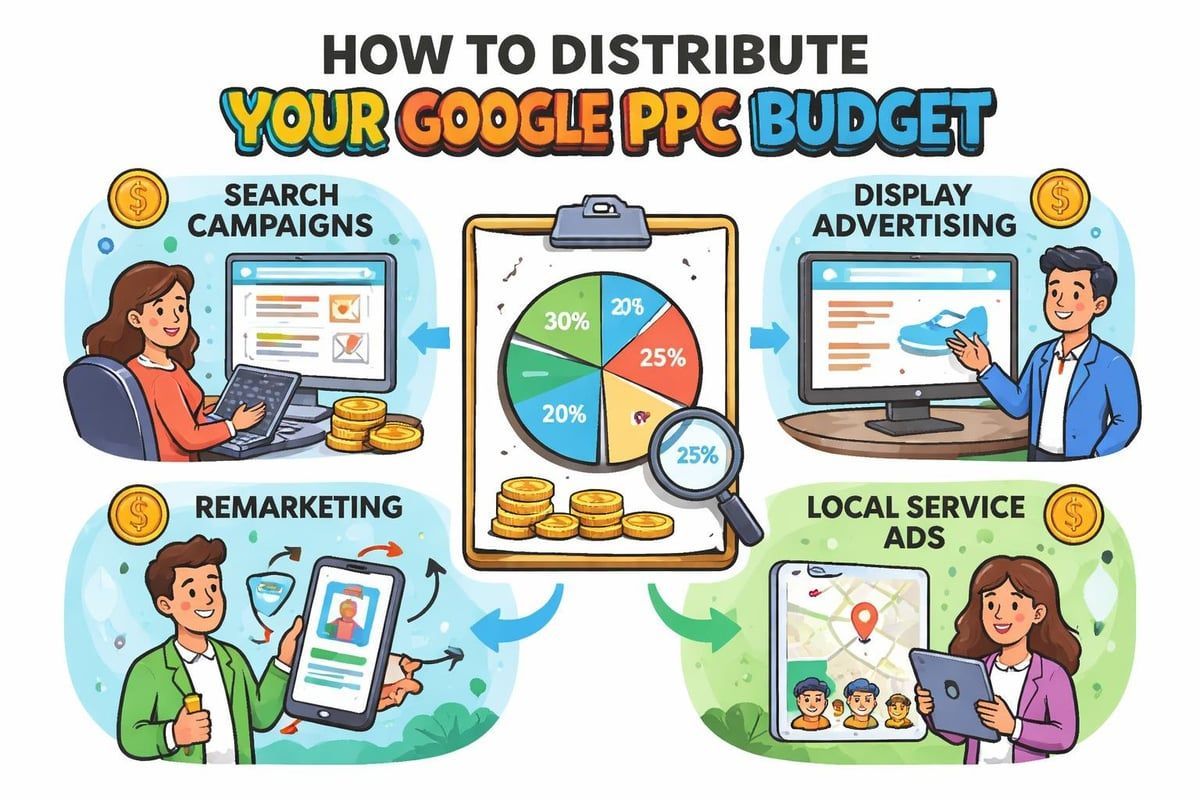
Start by calculating your customer lifetime value and acceptable cost per acquisition. If a new customer is worth £500 to your business and you're comfortable spending 20% on acquisition, you can afford up to £100 per conversion.
Your daily budget determines how often your ads can appear. Google may spend up to twice your daily budget on high-traffic days, but your monthly spend won't exceed your daily budget multiplied by 30.4 (average days per month).
Bidding strategies range from manual CPC (you set bids yourself) to automated options like:
- Maximize Clicks - gets the most clicks within your budget
- Target CPA - aims to achieve conversions at your target cost
- Target ROAS - optimizes for return on ad spend
- Maximize Conversions - gets the most conversions within your budget
Understanding Google advertising costs in your industry helps set realistic expectations and budgets from the start.
Use Negative Keywords Strategically
Negative keywords prevent your ads from showing for irrelevant searches, saving budget for qualified prospects. A plumber might add "DIY," "courses," or "jobs" as negative keywords to avoid clicks from people not looking to hire a professional.
As discussed in essential PPC practices, regularly reviewing search term reports and adding negative keywords is crucial for maintaining campaign efficiency and reducing wasted spend.
Optimizing for Quality Score
Quality Score is Google's rating of the quality and relevance of your keywords, ads, and landing pages. It directly impacts your ad position and cost per click. Higher Quality Scores mean lower costs and better positions.
The Three Components
Quality Score is determined by three main factors:
- Expected Click-Through Rate - how likely people are to click your ad when it appears
- Ad Relevance - how closely your ad matches the search intent
- Landing Page Experience - how relevant and useful your landing page is to searchers
Each component is rated as below average, average, or above average. Improving any of these elements can boost your overall Quality Score.
The landing page element is particularly important. If someone clicks your ad for "emergency boiler repair" and lands on your generic homepage, that's a poor experience. They should land on a dedicated page about emergency boiler repair services with clear pricing, availability, and a prominent way to contact you.
Common Quality Score Mistakes
Many advertisers unknowingly sabotage their Quality Scores by sending all traffic to their homepage, using generic ad copy that doesn't match keywords, or creating ad groups with too many unrelated keywords.
However, it's worth noting that not all conventional wisdom serves you well. This article about Google Ads best practices reveals six commonly recommended strategies that can actually harm campaign performance when applied without proper context and testing.
Conversion Tracking and Measurement
Running google PPC campaigns without proper tracking is like driving with your eyes closed. You need to know what's working, what's not, and where your best return on investment comes from.
Set Up Conversion Tracking
Conversion tracking allows you to see which keywords, ads, and campaigns generate actual business results, not just clicks.
You can track various actions:
- Form submissions
- Phone calls (especially important for local businesses)
- Purchases
- Sign-ups
- Downloads
Google provides a conversion tracking tag that you add to your website. When someone completes a tracked action, Google records it and attributes it to the relevant campaign, ad group, and keyword.
For businesses managing multiple marketing channels, understanding how google ppc fits into your overall strategy alongside SEO and local listings creates a comprehensive approach to digital visibility.
Key Metrics to Monitor
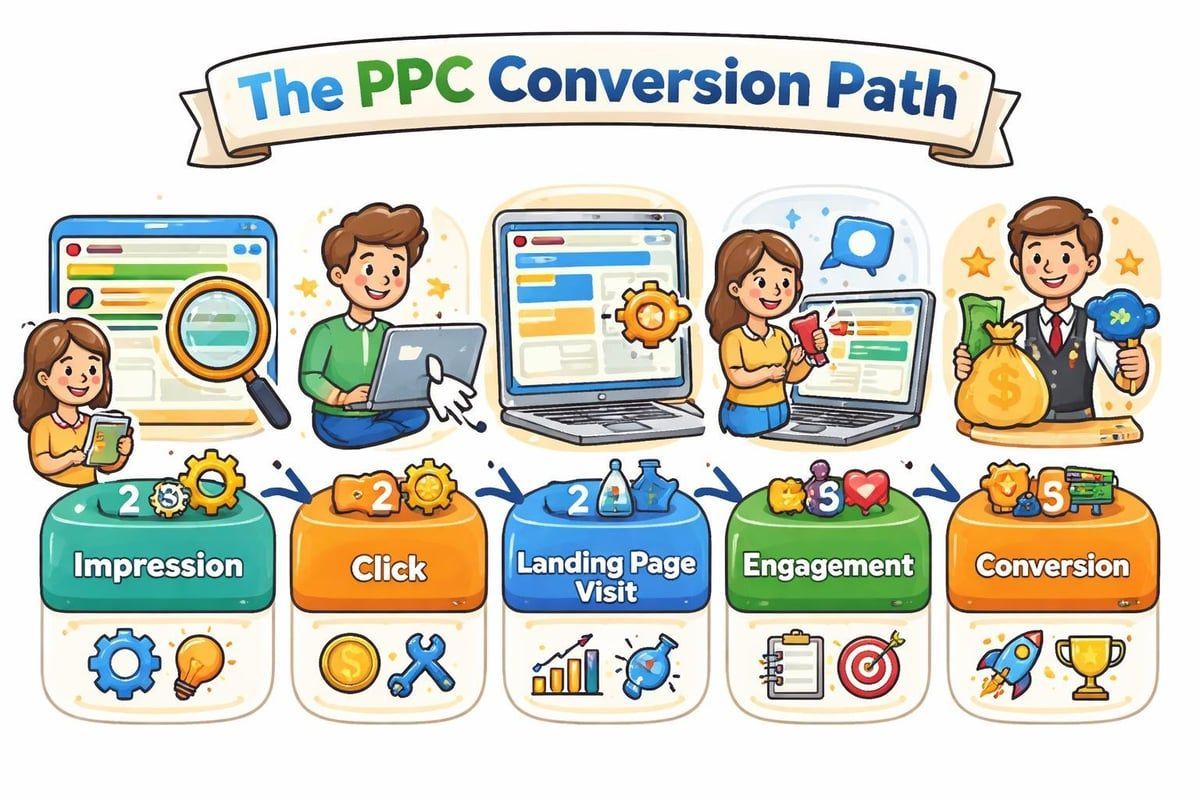
Beyond conversions, several metrics indicate campaign health:
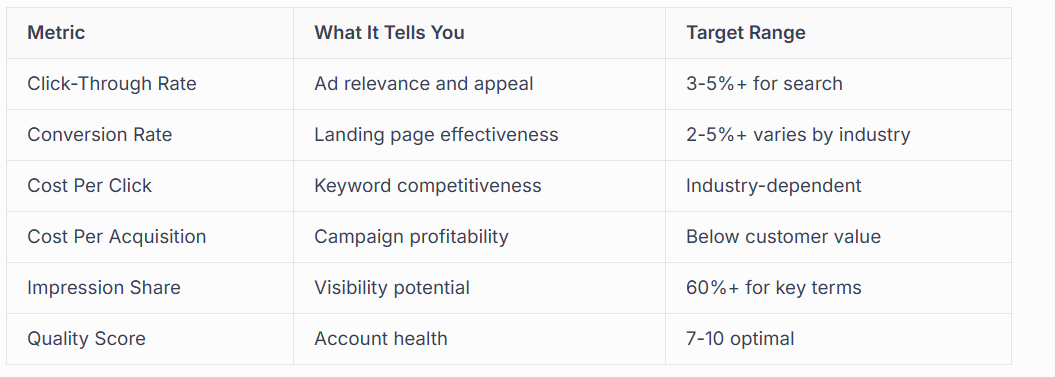
This industrial safety case study demonstrates how focusing on the right metrics led to a 44% reduction in wasted spend and a 100% increase in conversions.
Advanced Strategies for 2026
Once you've mastered the basics, several advanced tactics can take your google PPC performance to the next level.
Audience Targeting and Remarketing
You can layer audience targeting onto your keyword campaigns to reach specific demographics, interests, or behaviours. Remarketing allows you to show ads to people who've previously visited your website, keeping your business top-of-mind as they continue their research.
Customer Match lets you upload your email list, and Google will show ads to those contacts (and similar audiences) when they're searching. This is particularly powerful for B2B companies with existing customer databases.
Responsive Search Ads
These ads automatically test different combinations of your headlines and descriptions to find the best performers. You provide multiple options, and Google's machine learning determines which combinations work best for different searches and users.
Smart Bidding with Automation
Google's automated bidding strategies have become increasingly sophisticated, using machine learning to adjust bids in real-time based on hundreds of signals. While automation can be powerful, it requires sufficient conversion data to work effectively (typically at least 30 conversions per month).
Location and Schedule Optimization
Analyze when and where your best conversions happen, then adjust your bids accordingly. You might bid more aggressively during business hours or in postcodes where you have higher conversion rates.
For local businesses, ensuring your Google Business Profile is verified amplifies the effectiveness of location-targeted google PPC campaigns by building trust and credibility.
Common Mistakes to Avoid
Even experienced advertisers fall into traps that waste budget and reduce campaign effectiveness. Being aware of these pitfalls helps you sidestep them.
Broad Match Without Restraint
Broad match keywords can show your ads for loosely related searches, quickly burning through budget on irrelevant clicks. If you use broad match, combine it with smart bidding and robust negative keyword lists.
Ignoring Mobile Performance
Over 60% of searches now happen on mobile devices. If your landing pages aren't mobile-optimized or your phone number isn't clickable, you're losing conversions. Check your performance by device and adjust accordingly.
Setting and Forgetting
Google PPC requires ongoing management and optimization. Markets change, competitors adjust their strategies, and seasonal factors affect performance. Review your campaigns weekly, analyzing search terms, adjusting bids, and refining ad copy.
Not Testing Ad Variations
Running only one ad per ad group means missing opportunities to improve performance. Always test at least two ads against each other, making incremental improvements based on data.
Integrating PPC with Your Overall Marketing
Google PPC works best as part of a cohesive marketing strategy, not in isolation. The insights you gain from paid search can inform your organic SEO efforts, while your SEO keyword research can identify profitable PPC opportunities.
The Local Business Advantage
For tradespeople and local service providers, combining google PPC with local SEO creates extraordinary visibility. When your business appears in both the paid ads and the local pack on Google Maps, you dominate the search results page.
This integrated approach is especially powerful when your Google Business Profile is professionally managed, ensuring consistent messaging across all touchpoints.
Content Marketing Synergy
Use google ppc to test which messages and value propositions resonate with your audience, then incorporate those insights into your content marketing. Conversely, promote your best-performing content through PPC to attract engaged readers who are more likely to convert.
Seasonal Campaign Planning
Plan your google PPC campaigns around your business cycle. Electricians might increase spend before winter when heating systems fail. Garden services ramp up in spring. Strategic budget allocation based on seasonal demand maximizes return on investment.
Google PPC offers unparalleled opportunities to reach customers precisely when they're searching for what you offer, but success requires strategy, ongoing optimization, and integration with your broader marketing efforts. Whether you're just starting out or looking to improve existing campaigns, the fundamentals of relevant keywords, compelling ad copy, and conversion-focused landing pages remain constant. At Connect SEO Ltd, we help businesses across the UK combine professional Google Business Profile verification and management with strategic PPC campaigns to dominate local search results. If you're ready to increase your visibility and attract more qualified customers, Connect SEO Ltd can provide the expertise and hands-on support to make it happen.