
Per Click Advertising: A Complete Guide for 2026
Per click advertising has transformed how businesses connect with customers online, allowing companies to pay only when someone actively engages with their advert. This performance-based model has become essential for tradespeople, local services, and businesses looking to appear exactly when potential customers search for their offerings. Whether you're a plumber in Manchester or an electrician in London, understanding how to leverage this advertising approach can dramatically impact your visibility and customer acquisition.
Understanding the Per Click Advertising Model
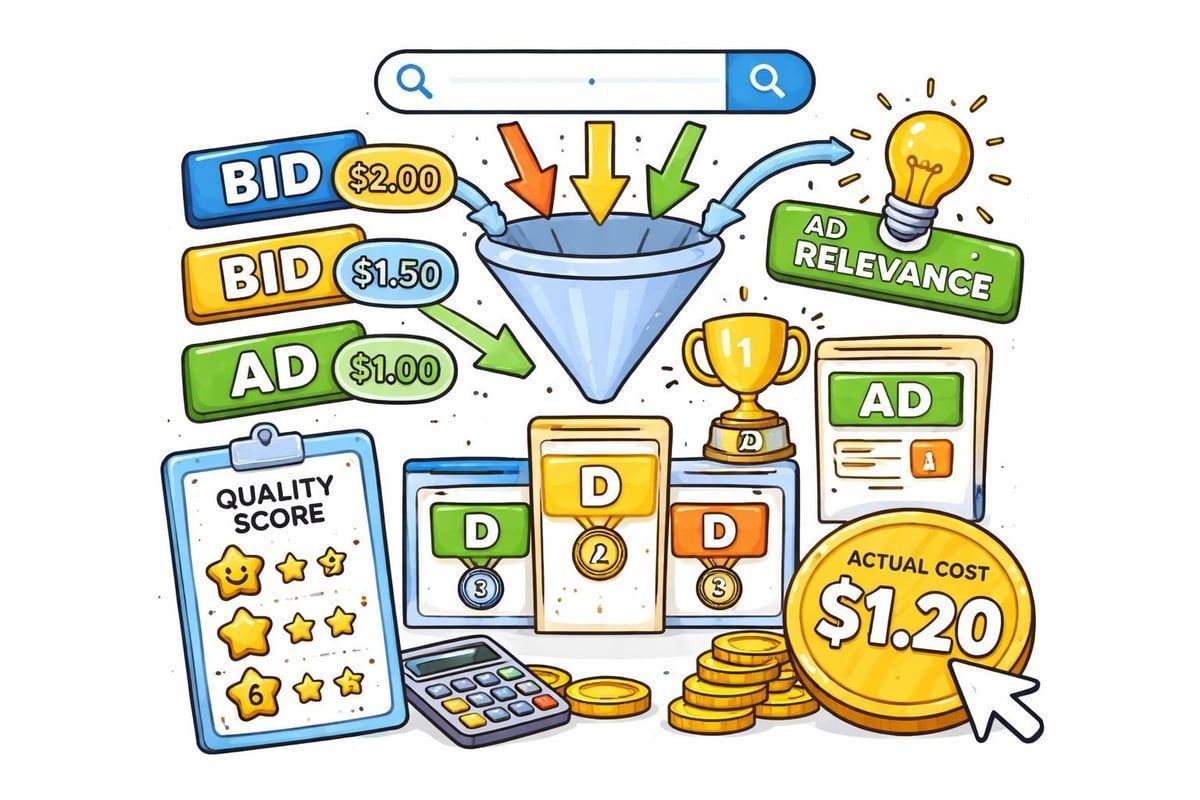
Per click advertising operates on a straightforward principle: you bid on specific keywords or phrases, create targeted adverts, and pay only when someone clicks through to your website or landing page. This differs significantly from traditional advertising where you pay for impressions or exposure regardless of engagement.
The beauty of this model lies in its measurability and control. You set your budget, choose your keywords, and track every penny spent against actual results. For local businesses, particularly those offering Google Business Profile services, this means you can target specific geographic areas and service categories with precision.
How the Auction System Works
Every time someone searches on Google, an automated auction takes place in milliseconds. Advertisers competing for that search term have their bids evaluated alongside their ad quality scores.
The auction considers several factors:
- Your maximum bid amount
- The quality and relevance of your advert
- Expected click-through rate
- Landing page experience
- Ad format and extensions
Your actual cost per click often comes in below your maximum bid, as you typically pay just enough to beat the advertiser ranked below you. This competitive bidding environment rewards advertisers who create relevant, high-quality campaigns rather than simply those with the deepest pockets.
Strategic Bidding Approaches in 2026
Modern per click advertising has evolved beyond simple manual bidding. Today's advertisers have access to sophisticated strategies that leverage machine learning and historical performance data.
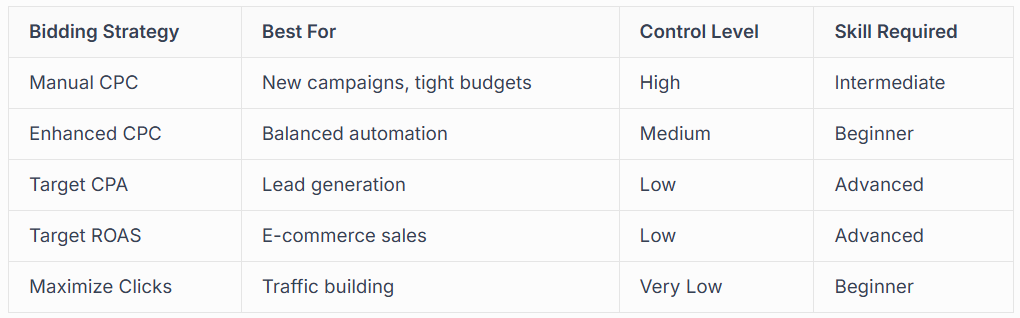
Manual bidding gives you complete control over individual keyword bids. You decide exactly how much you're willing to pay for each click, making it ideal when you're testing new markets or have specific cost constraints.
Enhanced CPC takes your manual bids and automatically adjusts them up or down based on the likelihood of conversion. This hybrid approach maintains your control whilst benefiting from Google's machine learning capabilities.
Automated Bidding Strategies
Target CPA (Cost Per Acquisition) bidding focuses on getting conversions at your specified cost. You tell Google how much you're willing to pay for a customer, and the system optimises your bids to hit that target. This works brilliantly for established campaigns with conversion tracking properly implemented.
For businesses tracking revenue, Target ROAS (Return on Ad Spend) maximises conversion value whilst achieving your target return. If you're managing Google Ads campaigns for e-commerce, this strategy can significantly improve profitability.
The various bidding strategies available each serve different campaign objectives. Choosing the right one depends on your business goals, conversion tracking setup, and campaign maturity.
Keyword Research and Selection
Successful per click advertising starts with identifying the right keywords. These aren't just terms your business uses internally, but phrases your customers actually type into search engines.
Effective keyword research includes:
- Analysing search volume and competition
- Identifying commercial intent keywords
- Discovering long-tail variations
- Reviewing competitor targeting
- Understanding seasonal trends
The Google Ads Keyword Planner provides invaluable data on search volumes, competition levels, and suggested bids. For local businesses, adding geographic modifiers like "near me" or specific areas dramatically improves relevance.
Negative Keywords Matter
Just as important as the keywords you target are those you exclude. Negative keywords prevent your adverts appearing for irrelevant searches, saving budget and improving campaign efficiency.
A Google Business Profile verification service might add negative keywords like "free," "DIY," or "how to" to avoid clicks from people looking to handle verification themselves rather than hiring a professional service.
Regular review of search term reports reveals new negative keyword opportunities. This ongoing refinement process is crucial for maintaining strong campaign performance over time.
Crafting High-Converting Ad Copy
Your advert needs to accomplish several objectives simultaneously: grab attention, communicate value, establish relevance, and compel action. All within strict character limits.
Effective ads for per click advertising campaigns speak directly to the searcher's intent. If someone searches "emergency plumber London," your ad should immediately confirm you offer emergency plumbing services in London.
Essential ad components include:
- Headline incorporating the target keyword
- Unique selling proposition (USP)
- Clear call-to-action
- Relevant ad extensions
- Trust signals (years in business, certifications)
Ad Extensions Enhance Performance
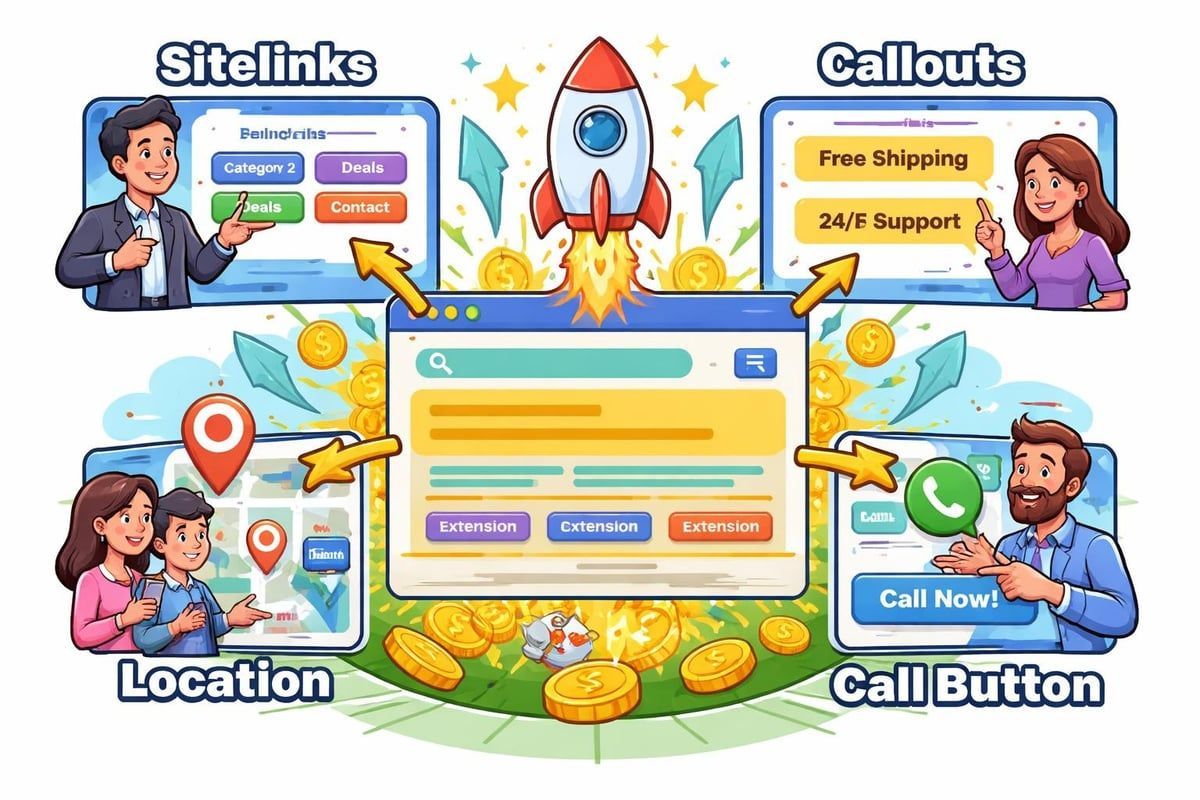
Extensions expand your advert with additional information, making it more prominent and useful. Sitelink extensions can direct users to specific services like
Google Business Profile verification, whilst callout extensions highlight key benefits.
Location extensions show your business address and distance from the searcher, particularly valuable for local service businesses. Call extensions add a clickable phone number, perfect for mobile searchers ready to contact you immediately.
Landing Page Optimization
Clicking your advert is just the beginning of the customer journey. Where you send that traffic matters enormously for conversion rates and campaign profitability.
Your landing page must deliver on the promise made in your advert. If your ad promotes Google Business Profile verification services, the landing page should focus specifically on that service rather than general digital marketing offerings.
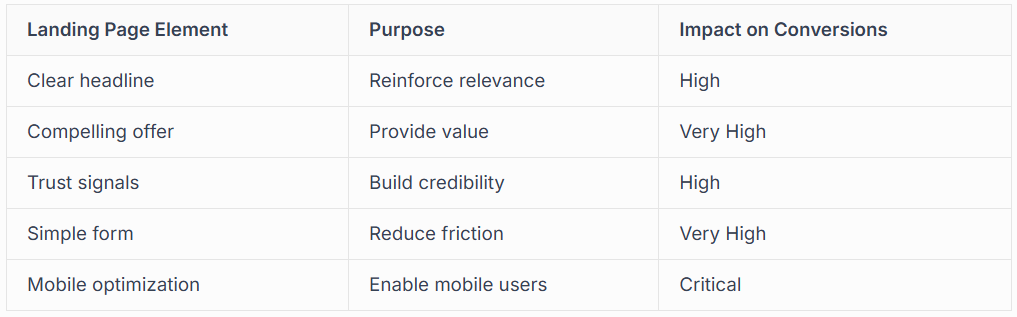
Page load speed critically affects both user experience and Quality Score. Google rewards fast-loading pages with better ad positions and lower costs per click. Every second of delay increases bounce rates and wastes advertising spend.
Conversion Tracking Implementation
You cannot improve what you don't measure. Proper conversion tracking reveals which keywords, ads, and campaigns actually generate business results.
Install conversion tracking for key actions: form submissions, phone calls, quote requests, or purchases. This data feeds back into your bidding strategies and allows meaningful performance optimization.
Many businesses focus solely on click costs without understanding their true cost per acquisition. A keyword costing £5 per click that converts at 20% delivers a £25 cost per customer. Another keyword at £2 per click converting at 5% costs £40 per customer. The cheaper click actually costs more where it matters.
Budget Management and Cost Control
Setting appropriate budgets for per click advertising requires balancing opportunity against affordability. Start conservatively, gather data, then scale successful campaigns.
Daily budgets prevent overspending whilst providing consistent visibility. Google may spend up to twice your daily budget on high-traffic days, but monthly totals stay within bounds.
Budget allocation considerations:
- Campaign priority and goals
- Historical performance data
- Seasonal demand fluctuations
- Competitive landscape
- Available conversion tracking
Monitoring and Adjusting Spend
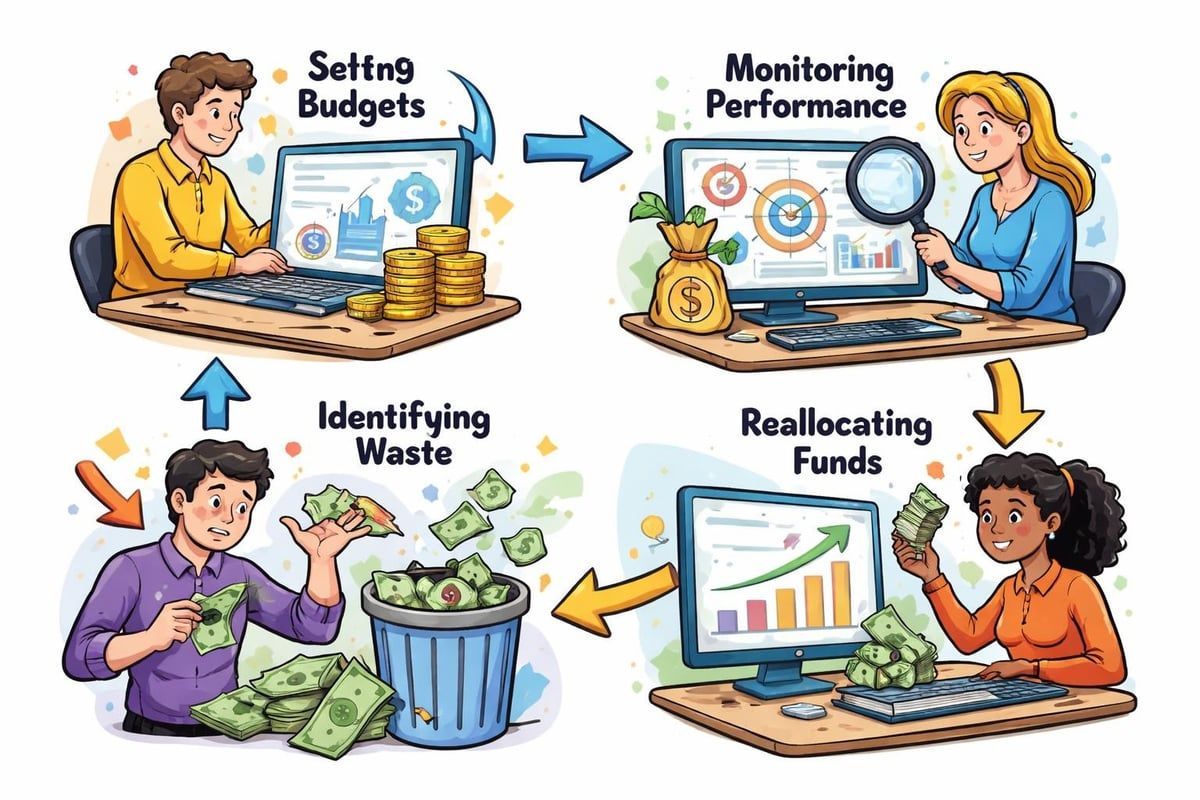
Successful per click advertising demands active management. Set up automated rules to pause poorly performing keywords or adjust bids based on performance thresholds.
Regular account audits identify wasted spend on irrelevant clicks, underperforming ad groups, or keywords with high costs but low conversion rates. The optimization techniques you implement directly impact campaign profitability.
Campaign experiments let you test different bidding strategies, ad variations, or landing pages whilst measuring impact on key metrics. This scientific approach to optimization beats guesswork every time.
Quality Score and Its Impact
Quality Score represents Google's rating of your keywords, ads, and landing pages' relevance and quality. Scored from 1 to 10, this metric significantly influences both ad position and cost per click.
Higher Quality Scores mean lower costs and better positions. A keyword with a Quality Score of 8 might achieve top position whilst paying less per click than a competitor with a score of 4.
Quality Score components:
- Expected click-through rate
- Ad relevance to the keyword
- Landing page experience
Improving these elements requires alignment throughout your campaign. Your keyword should appear in your ad copy and prominently on your landing page. The user journey should feel seamless and relevant from search to conversion.
Improving Your Quality Scores
Start by grouping tightly related keywords together. An ad group containing "emergency plumber," "24 hour plumber," and "urgent plumbing repairs" allows highly relevant ad copy. Mixing unrelated keywords dilutes relevance and damages Quality Score.
Write specific ads for each ad group rather than generic advertisements. Creating targeted campaigns that speak directly to the searcher's intent consistently outperforms broad, generic approaches.
Test multiple ad variations simultaneously. Google automatically shows better-performing ads more frequently, gradually improving your overall click-through rates and Quality Scores.
Mobile Optimization Strategies
Mobile devices now generate the majority of searches and clicks in per click advertising campaigns. Your entire strategy must prioritize mobile user experience.
Mobile searchers often have different intentions than desktop users. They're frequently looking for immediate solutions: nearby services, phone numbers, directions, or quick answers.
Mobile-specific optimizations include:
- Click-to-call buttons in ads
- Mobile-preferred ad copy
- Fast-loading mobile landing pages
- Location-based targeting
- Mobile bid adjustments
Call extensions become particularly valuable for service businesses. When someone searches "Google Business Profile help" on mobile, one tap connects them directly with your team.
Geographic and Demographic Targeting
Per click advertising allows precise audience targeting beyond just keywords. Location targeting ensures your ads only appear to searchers in your service area, essential for local businesses.
Radius targeting around your business location or specific postcodes ensures relevance. Why pay for clicks from Birmingham when you only serve London?
Demographic targeting by age, household income, or parental status refines your audience further. A premium service might target higher income brackets, whilst student-focused services target younger demographics.
Advanced Campaign Structures
As campaigns mature, organizing them effectively becomes crucial for management and optimization. Well-structured accounts make it easier to identify opportunities and problems.
Separate campaigns by service type, product category, or geographic area. This allows independent budget control and performance tracking for each business segment.
Within campaigns, create tightly themed ad groups. Each should contain closely related keywords, specific ad copy, and dedicated landing pages. This structure maximizes relevance and Quality Scores.
Remarketing Campaigns
Not everyone converts on their first visit. Remarketing campaigns target people who previously visited your website, offering second chances to win their business.
These campaigns typically achieve much lower costs per click and higher conversion rates than cold traffic. Someone who visited your Google Business Profile verification service page but didn't contact you represents warm traffic worth pursuing.
Create different remarketing lists based on user behavior: homepage visitors, service page viewers, cart abandoners, or previous customers. Each group receives appropriately tailored messaging.
Measuring Success and ROI
Effective per click advertising requires clear measurement frameworks. Define key performance indicators (KPIs) aligned with business objectives before launching campaigns.
Essential metrics to track:
- Click-through rate (CTR)
- Cost per click (CPC)
- Conversion rate
- Cost per conversion
- Return on ad spend (ROAS)
- Quality Score
Click-through rate indicates ad relevance and appeal. Low CTRs suggest poor keyword-ad alignment or weak ad copy. High CTRs with low conversions point to landing page problems or targeting issues.
Attribution and Customer Journey
The path to conversion rarely follows a straight line. Someone might click your ad on Monday, research alternatives Tuesday, and convert Thursday through organic search.
Attribution models determine how different touchpoints receive credit for conversions. Last-click attribution gives all credit to the final interaction, whilst first-click credits the initial touchpoint. Position-based models distribute credit across multiple interactions.
Understanding your customer journey helps allocate budget effectively across campaigns and channels. The machine learning approaches behind modern attribution provide increasingly sophisticated insights into marketing effectiveness.
Common Pitfalls and How to Avoid Them
Many businesses waste substantial budgets on per click advertising mistakes that are entirely preventable with proper knowledge and setup.
Broad match keywords without proper negative keyword lists often generate irrelevant clicks. Someone searching "free Google Business Profile setup" isn't looking for paid verification services, yet a broad match might trigger your ads.
Frequent costly mistakes include:
- Sending all traffic to homepage instead of specific landing pages
- Ignoring search term reports
- Setting and forgetting campaigns without ongoing optimization
- Poor mobile experience
- Inadequate conversion tracking
Learning from Campaign Data
Your campaigns generate valuable data about customer behavior, search patterns, and market demand. Regular analysis reveals opportunities others miss.
Which keywords convert best? What time of day drives quality traffic? Which ad copy resonates? These insights inform not just advertising but broader business strategy.
The optimization approaches that combine impression data with click performance enable increasingly precise targeting and bid optimization.
Integration with Other Marketing Channels
Per click advertising works most effectively as part of an integrated marketing strategy rather than in isolation.
Strong organic SEO reduces reliance on paid advertising for branded searches whilst supporting overall visibility. A verified and optimized Google Business Profile enhances local presence across both organic and paid results.
Social media builds brand awareness that increases branded search volume and click-through rates. Content marketing creates landing page resources that improve Quality Scores and conversion rates.
Channel synergies to leverage:
- Use PPC data to inform SEO keyword targeting
- Retarget website visitors from organic traffic
- Support new content launches with paid promotion
- Coordinate messaging across all touchpoints
- Test offers in PPC before broader rollout
Email marketing to existing customers often costs less than acquiring new ones through per click advertising. Balance customer acquisition with retention for sustainable growth.
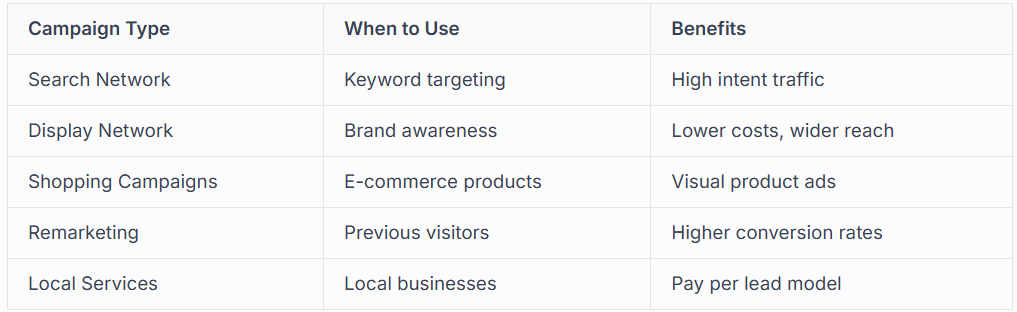
Understanding the various advertising types available helps you select the right mix for your business objectives and budget.
Industry-Specific Considerations
Per click advertising strategies vary significantly across industries. What works for e-commerce may not suit local services, and vice versa.
Tradespeople and local service businesses benefit enormously from location extensions, call extensions, and geographically targeted campaigns. Someone needing an emergency electrician wants someone nearby who answers their phone, not a beautifully designed website.
Seasonal businesses must adjust budgets and targeting throughout the year. Landscapers see peak demand in spring and summer, whilst heating engineers are busiest during winter months. Campaign scheduling and budget allocation should reflect these patterns.
Compliance and Regulations
Certain industries face advertising restrictions and requirements. Healthcare, financial services, and legal professionals must adhere to professional standards and regulations in their advertising claims.
Ensure your ads make truthful claims you can substantiate. Avoid exaggeration or misleading statements that could damage reputation and potentially violate advertising standards.
For specialized services like Google Business Profile verification, clearly communicate what customers receive and any limitations to the service.
Staying Current with Platform Changes
Per click advertising platforms constantly evolve, introducing new features, changing policies, and adjusting algorithms. Staying informed ensures you leverage opportunities whilst avoiding pitfalls.
Google regularly announces updates through official channels. Following these announcements and understanding their implications keeps your campaigns competitive.
Recent developments impacting campaigns:
- Increased automation in bidding and targeting
- Privacy changes affecting tracking and attribution
- New ad formats and extension types
- Machine learning integration in campaign optimization
- Enhanced audience targeting capabilities
Testing new features early often provides competitive advantages before they become standard practice. Be willing to experiment whilst maintaining control groups for comparison.
The best practices for PPC advertising continue evolving as platforms develop and user behaviors shift. Continuous learning separates successful advertisers from those stuck in outdated approaches.
Per click advertising offers local businesses unprecedented control over their marketing spend whilst delivering measurable results that traditional advertising cannot match. By understanding bidding strategies, optimizing for relevance and quality, and continuously refining based on performance data, you can build campaigns that deliver consistent customer acquisition at profitable costs. If you're ready to boost your local visibility and need expert guidance on Google Business Profile verification alongside strategic advertising support, Connect SEO Ltd combines hands-on trade experience with proven digital marketing expertise to help your business thrive in local search.